 |
|
|
|
|
|
|
|
|
|
|
|
|
|
|
|
|
|
|
|
|
|
|
|
|
|
|
|
|
|
|
|
|
|
|
 |
|
|
|
|
The Kingdom of Portugal
Catholics Living on the Edge |
|
|
|
 |
|
|
|
|
|
Portugal, today considered to be a relatively minor country on the western edge of Europe, is a country of much greater importance than it may seem on the surface. For Roman Catholics, it is a core part of the Church, sharing in the Pope's Supreme Order of Christ and home to one of the most important religious events in European history. Portugal also has a great deal of history from which the world should take a lesson. Even the United States could learn a thing or two from Portuguese history since, in many ways, America today is in much the same position that Portugal once was a few centuries ago.
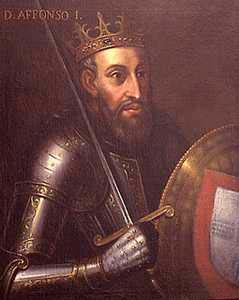
For much of its early history, Portugal was ruled by the Islamic Moors, a situation which persisted until the arrival of the Normans under Henry of Burgundy. After defeating the Moors Henry was given the title "Count of Portugal" by the Spanish King. However, it was Henry's son, Alfonso Henriques (seen at left), who continued the campaign to drive out the Muslims and in 1143 became King Alfonso I of Portugal. He was the first independent Portuguese king and also established the capital of Portugal at Lisbon in 1147. In time, the Moors would be completely driven out of Portugal and the country would become a bastian of Christianity in southern Europe. |
|
 |
|
|
|
|
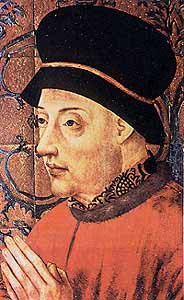
In 1385, an important date in Portuguese history, King Joao I of the House of Avis came to the throne. His reign was to see the start of Portugal's meteoric rise from minor Christian outpost to international super-power. The country prospered, the Church flourished and Portugal became known as a country on the cutting edge, in technology and learning as well as geography. In 1386, King Joao I signed an alliance with the King of England, which remains still the oldest political alliance in Europe. |
|
|
|
Portugal also became the naval leader of Europe during the reign of King Joao, thanks to the work of his famous son, Prince Henry the Navigator. There were advances in cartography, prizes for discoveries and a great deal of investment by the crown to encourage exploration. Portuguese ships blazed a trail for the rest of Europe, mapping out the west coast of Africa, going where no European had gone before. New lands and new people were discovered. By 1419 Madeira island had been (re-) discovered and Portuguese ships reached the Azores before the death of King Joao I in 1433. Over the years, new voyages were made and Portugal rose rapidly as the leader of Euopean expansion and discovery.
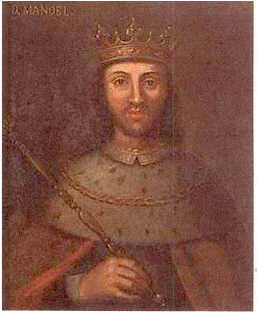
In 1488 Captain Bartolomeu Dias discovered the Cape of Good Hope at the bottom of Africa, a much more difficult and ground-breaking event than it may seem today. In 1495 King Manuel I ascended the Portuguese throne and would lead the country to it's peak of wealth, power and prestige. In 1497 Vasco de Gama sailed around Africa and mapped the eastern sea route to India. In 1500, Pedro Alvares |
|
 |
|
 |
|
|
|
Cabral discovered Brazil. Soon, Portugal ruled a vast empire that stretched from America, all |
|
|
|
|
King Joao I of Portugal |
|
|
|
|
along the coasts of Africa, to India, Indonesia, Southeast Asia and China. Contact was even made with the reclusive Empire of Japan. Portugal was, for a time, the wealthiest country in Europe.
However, along with all of this success came problems. Portugal enabled a great deal of missionary work, but it also became a major force in the use of African slavery and the establishment of the trans-Atlantic slave route. Slavery changed the face of Portugal just as the Portuguese changed their own colonies in Africa and around the world. Success also led to greed and corruption. Soon, waste was becoming common and the fortune Portugal had gathered through boldness and foresight was being squandered. Over time, the country came to be seen as ripe for the taking. In 1580, King Philip II of Spain invaded and conquered Portugal and during this period of weakness, much of the Portuguese empire was snatched up by the growing naval forces of the Netherlands, England and France. However, by 1640 the Spanish were driven out and a new dynasty, the House of Braganza, was established. |
|
|
King Manuel the Fortunate |
|
|
|
|
|
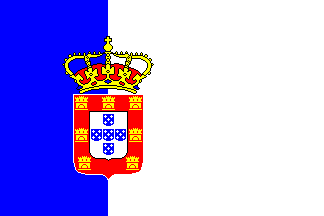
Yet, things continued to go badly for Portugal. Just as the country began to recover during the 1700's the French invaded Portugal and occupied Lisbon in 1807. Dealing with the French was a traumatic experience and was followed soon after by the loss of Brazil. In time though, Portugal recovered. in the late 1800's great progress was made in living conditions and slavery was abolished in all Portuguese colonies in 1878. Sadly, this was also the time when revolutionary liberalism was sweeping Europe. In 1908 revolutionaries assassinated both |
|
|
|
 |
|
the King and Crown Prince. The last King of Portugal was the 19-year-old King Manuel II, whose reign lasted only until 1910 when the monarchy was abolished and liberal forces turned their back on the institution that had been the driving force behind all of Portugal's past successes.
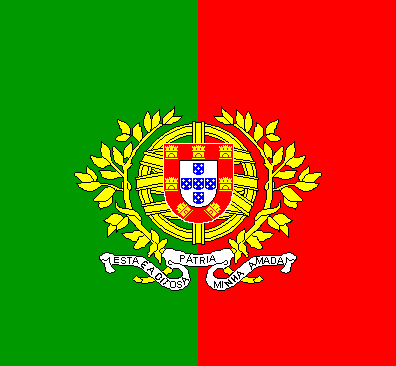
Republican rule proved to be disasterous with 18 revolutions in the first 16 years of republican rule. World War I underlined the nation's weakness and failing economy. Although not ready to fully confess that removing the monarchy had been a mistake, most Portuguese could see that their republic had been a failure. In |
|
|
|
|
 |
|
|
|
|
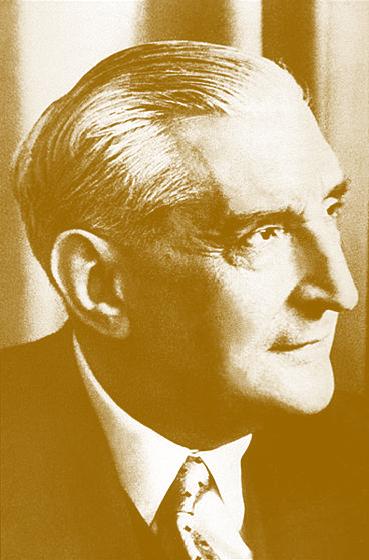
1932 Antonio de Oliveira Salazar became Premier of Portugal in an effort to stop the descent into poverty. Salazar began to establish a new form of government based on the corporatist model, with the support of the conservatives. He supported General Franco during the Spanish Civil War and, like Spain, remained neutral during World War II. Plans were developed for economic growth, but the Salazar regime would also |
|
|
|
|
 |
|
|
eventually collapse, as would ultimately the remnants of the Portuguese empire. With the conservative opposition to the current government divided, Portugal has gone along with most of the liberal European trends of today.
There does remain though a steadfast Christian and monarchist presence in Portugal, providing hope for the future of a country whose history has lived out the ancient Roman warning that all glory is fleeting. |
|
|
|
|
|
Antonio Salazar |
|
|
|
|
|