 |
|
|
|
|
|
|
|
|
|
|
|
|
|
|
|
|
|
|
|
|
|
|
|
|
|
|
|
|
 |
|
 |
|
|
Don Lucas Alaman's Mexico |
|
|
|
|
|
 |
|
|
|
|
|
 |
|
|
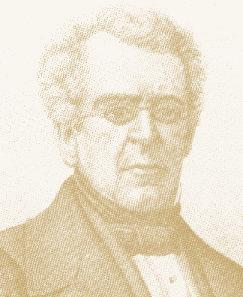
Don Lucan Alaman was truly one of the most giften and far-sighted public servants Mexico ever had. He was, it must be said, no friend of the United States, but it is also certainly true that during his time, the United States was no friend at all of Mexico. At a time when almost all of the "intellectual" elites were liberals who looked to the U.S. or revolutionary France for inspiration, Alaman was a staunch conservative who tackled the problems of his country with the intelligence and common sense of a traditionalist thinker.
Born in Guanajuato, Alaman was educated in Europe and was titled as the Marquis of San Clemente before Mexican independence from Spain. Although trained in science, his best known writings were on the subject of history and Alaman was one of the few people in the world to ever truly learn from it. He was attached to Spain |
|
|
 |
|
|
but welcomed Mexican independence because of |
|
|
|
|
|
|
the leftist influences he saw creeping in under the liberal absolutist Fernando VII. He hoped Mexico could become the sort of conservative, traditional monarchy which Spain had once been.
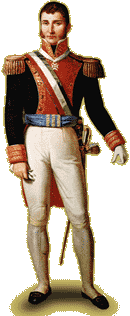
He supported the installation of a Borbon prince in Mexico, but when this was found to be impossible, like the vast majority of Mexicans, he backed the constitutional monarchy of Emperor Agustin de Iturbide. Yet, due to the schemes of powerful men, the throne of Emperador Agustin I was not to last long and after only a matter of months the Mexican monarchy was abolished. Ever loyal to his country, Alaman was content to make the best of the republic and work for it to be as conservative as possible.
One of the biggest concerns for Alaman was the United States. American settlers had long been of concern for both the Spanish and early Mexican governments, with attempts unofficially supported by the U.S. to invade and seize the province of Texas. Alaman could see that most of the Texas colonists were not being "assimilated" but were establishing an American foothold in Mexico. They did not speak Spanish, had different values and traditions and, despite their oath to do so, failed to convert to the Catholic Church. Alaman saw that these people would ultimately take Texas out of Mexico and into the United States. |
|
|
|
|
Emperor Agustin I |
|
|
|
|
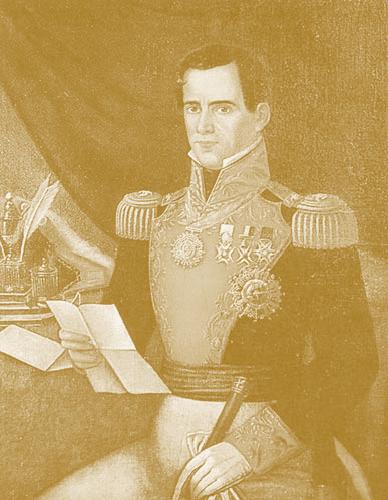
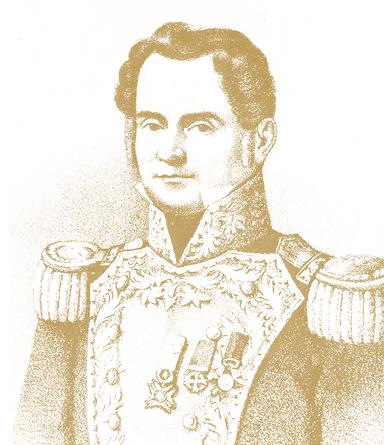
Alaman wrote a great deal on this subject and suggested drastic measures to keep Texas firmly under Mexican control and send the U.S. a stern message to forget any ideas they had of expansion at the expense of Mexico. Some of his ideas came to be accepted by the new President Antonio Lopez de Santa Anna, a man who came to power on the platform of states' rights but soon consolidated power as a dictator. Throughout his career, Santa Anna constantly changed positions if it seemed that he could benefit from it. Taking a page from Alaman he dispatched a garrison to Texas of convict soldiers under the command of his brother, Martin Perfecto de Cos. Shortly thereafter the Texas Revolution began |
|
|
and Mexico suffered a humiliating defeat when Santa Anna's army was totally destroyed and the President captured by a small rag-tag army of Texans in 1836 at San Jacinto. Texas became an independent republic for the next ten years, but Mexico never regarded this too seriously and largely chose to ignore the Texas government north of the Rio Grande. |
|
|
|
 |
|
|
|
 |
|
In 1837 the disgraced Santa Anna was re-placed by President Anastasio Bustamante, an old conservative and ally of Lucas Alaman. He had been one of the strongest supporters of the empire and identified himself as one of Iturbide's men long after the removal of the Emperor. However, only a year later Santa Anna gained new fame as a defender of Mexico, losing a leg to a punitive |
|
|
|
|
Generalissimo Santa Anna |
|
|
|
|
|
attack by the French in 1838. In 1841, riding a new wave of public support, he deposed the conservative President Bustamante and again became the President of Mexico. He would ultimately face another defeat and his own removal after the Mexican-American War, following the annexation of Texas in 1845. |
|
|
|
| Pres. Anastasio Bustamante |
|
|
|
|
|
Alaman had supported President Mariano Paredes Arillaga, a Catholic conservative, before the war. Taking a note from Alaman, he declared that Mexico did not want, "despotic dictatorship or the degrading yoke of the orator". During the Paredes administration, Alaman began to revive the idea of his dear "Plan of Iguala", first designed by Iturbide, to restore the Mexican monarchy under a proper |
|
|
European prince. He believed this was the only way for Mexico to survive the expansionism of the United States. However, in 1846 Paredes was deposed by Santa Anna and in the ensuing conflict Mexico lost more than half of her territory.
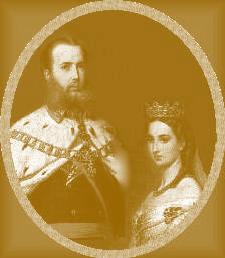
Alaman blamed the defeat on the liberals who had fragmented Mexican society and kept their government in a near constant state of chaos. When Santa Anna later reappeared, yet again, on the national scene, Alaman supported him as dictator, thinking the vain and shallow Santa Anna could be easily ruled and keep the nation in at least some state of law and order until a European prince could be persuaded to come to Mexico and save the situation. Ultimately, this was done when a Mexican delegation led by Jose Maria Gutierrez de Estrada offered the crown to the Austrian Archduke Maximilian. Alaman however, did not live to see it. He died on June 2, 1853. In all the years since, Mexico has yet to have a statesman to match him. |
|
 |
|
|
|
|
|
Emperor Maximilian & Empress Carlota |
|
|
|