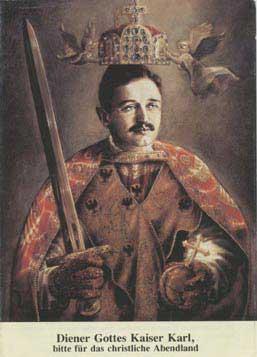
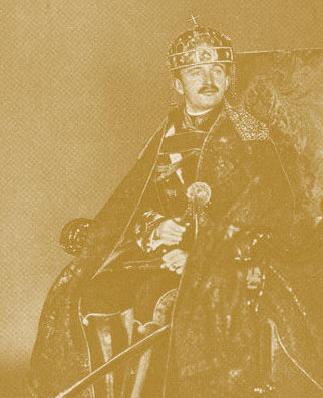

With the impending collapse of the Central Powers, and the failure of all of Charles' efforts to give a greater voice to the minorities, the governments in Vienna and Budapest began to collapse. Charles is asked to abdicate, but he refuses. He was a man who believed in sacramental kingship, and he would not simply walk away from the responsibility God had entrusted to him. Finally, with the new socialist government gaining power, Charles and his family go into exile in Switzerland. He still hoped this would only be a temporary situation and never stopped feeling that it was his duty to care for those people of all Hapsburg dominions even after so many political changes. Due to his coronation there, he also feels a special bond with the Hungarians. The country was ravaged by extremist parties and many people were begging for their king to come back to them. The situation is finally put in order by Admiral Horthy, who restores the kingdom and proclaims himself regent. However, when Emperor Charles tries to return as King of Hungary, Horthy pressures him to leave, claiming that "the time is not right". Charles agrees, but promises his loyal Hungarians he will return again soon. In his absence however, Horthy begins becoming too fond of power and entrenches himself as the one and only ruler of the country. When Emperor Charles does keep his promise and returns to Hungary, Admiral Horthy, who had previously been so quick with expressions of loyalty, betrayed the Emperor, his true king, has him arrested and turns him over to the Allied powers.
Emperor Charles, Empress Zita and the rest of their family are exiled to the island of Madeira in 1922 with absolutely nothing but their faith in God and each other. Although happy to be together again, Charles comes down with pneumonia and influenza and dies only a few weeks after his arrival. He died before the Holy Eucharist, crucifix in hand, with the name of Jesus on his lips at the age of 34 on the afternoon of April 1, 1922. Later, his cause for canonization was introduced in Rome and on October 3, 2004 he was beatified by His Holiness Pope John Paul II as an example especially to all political leaders of a true "Christian statesman".