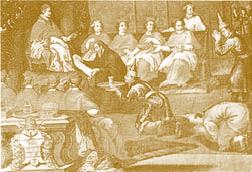
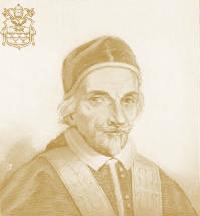
Louis XIV was hanging over the reign of Innocent XI even before he was elected. The pressure from the French monarch may have turned some cardinals onto their brother, Benedetto Cardinal Odescalchi as a candidate of defiance. In any case, the Holy Spirit was with them as their choice was a wise and holy man. A cardinal at age 34, Innocent gained a reputation early on for his preaching zeal, great virtue and intense sympathy for the poor. As Bishop of Novara he was known for his generosity as well as his strict orthodoxy worthy of St Pius V himself. He was elected on September 21, 1676 and threw himself down at the feet of his fellow cardinals, pleading with them to choose a better man.
However, Innocent was the choice of God and he was crowned Supreme Pontiff and Holy Father on October 4, 1676 and immediately set an example of austerity. He was so committed to thriftiness and stamping out greed and waste that he not only brought the Vatican out of debt, but balanced the budget and left the treasury with more money than when he found it. He also strictly opposed any sign of simony and nepotism and made it clear to his only nephew that any rewards would have to come through his own merits alone. He cut down on the lavish lifestyle of the College of Cardinals and took firm measures against any hints of heresy to uphold Catholic doctrine.
Then, there was also Louis. and Innocent immediately made it clear that the supremacy of Rome was one of the doctrines he was intent to uphold. He strongly denounced the "Gallican Articles" which asserted autonomy from the Holy See for the Church in France and even condemned Louis for his revocation of the Edict of Nantes, which gave toleration to the Protestants. Pope Innocent said, "Christ did not use this method; it is necessary to lead people to the temple, not drag them inside". This attitude, ironically, put the Pope and the Holy Roman Emperor on the same side of the political stage as the Dutch Protestants. However, he was unaware of the plot by the Dutch and British Protestants to invite an invasion of England and was quite shocked when King James II was overthrown.
However, there were victories in other areas. In 1683 King John III Sobieski of Poland turned the Ottoman Turks back from Vienna and with help from the Pope an Imperial army evicted the Muslims from Hungary and marched south to liberate Belgrade. He continued to be a model of Christian character and leadership until he was struck down by a fever and died on August 12, 1689 after reigning for 12 years, 10 months and 22 days.