 |
|
|
|
|
|
|
|
|
|
|
|
|
|
|
|
|
|
|
|
|
|
|
|
|
 |
|
|
|
|
The German Reich |
|
|
|
|
|
 |
|
|
|
|
|
|
 |
|
|
|
|
|
|
|
|
|
|
|
|
|
 |
|
|
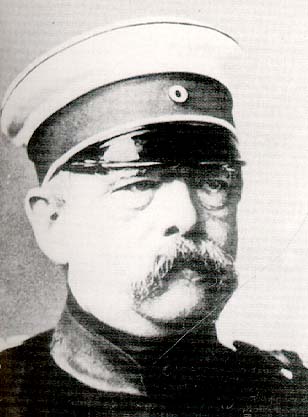
Throughout modern history, many people have been inclined to think the worse of the Germans, and unfortunately, Germany has not always behaved in a way which would discourage this. In a way, modern Germany can be categorized as an illegitimate country, the result of a few Prussian kings who began to feel a little too big for their breeches. The united Germany was created by the scheming mind of Chancellor Otto von Bismarck, a devious man in the service of an upright Calvanist monarch.
One of the first major campaigns undertaken by Bismarck once the German Empire was created (through rather unscrupulous means) was a massive oppression of the Catholic Church. Bismarck called this the Kulturkampf or culture battle. It was a big part of a larger effort to bring southern Germany, which is Catholic, more firmly under the control of the ruling, and Protestant, state of Prussia. He was suspicious of the Catholics for recognizing an earthly authority higher than the Kaiser, who he happened to rule on behalf of. |
|
|
|
|
Reichskanzler Otto v. Bismarck |
|
|
|
|
|
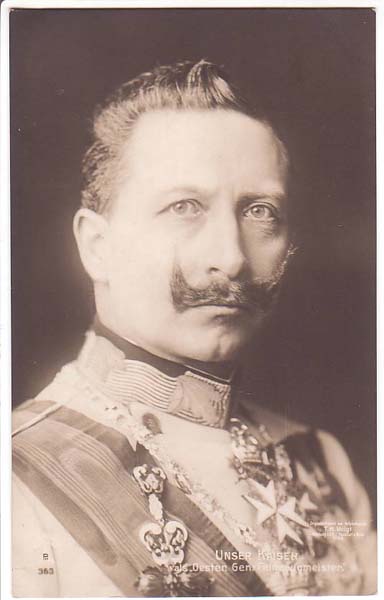
Fortunately, Bismarck's attacks came during the reign of Blessed Pope Pius IX, a man who did not know how to be frightened or bullied. Even when German bishops sided with the government against the Church, Pio Nono refused to back down in any way. Ultimately, this patient dedication would pay off. Relief finally came in 1888. The aged Kaiser Wilhelm I passed away, leaving the throne to his more liberal son Friedrich III. However, Kaiser Fritz was already extremely ill with cancer of the throat and lived to reign for only 99 days. Upon his death, the imperial crown went to his oldest son, who became Kaiser Wilhelm II. Germany would never be the same again. |
|
|
 |
|
Although a stout Protestant, Wilhelm II believed that the attitude of Bismarck toward the Catholics was "the greatest stupidity ever committed by a Prussian statesman". When the two clashed over workers rights (the Kaiser thought they had them, Bismarck did not) the new monarch sacked the old politician and declared firmly that he would be limited only by God and not by any government ministers or popular trends.
Kaiser Wilhelm II did not view Germany as a Prussian super-state, but rather as a modern reincarnation of the old Holy Roman Empire (but without that pesky Pope looking over your shoulder). The Catholic Center Party remained something of a wild card, but with Wilhelm II, they most often supported the Kaiser in major decisions. Although they held fast to the authority of the Church and the need to improve social conditions, they were never revolutionary or disloyal in any way.
With the history of German chivalry always in mind, the new Kaiser made it a point to foster good relations between all churches and went to the Vatican on more than one occasion to visit the Pope in his self-inprisonment. He believed that throne and altar were spiritually linked, and that the two should always work to support and defend each other. However, this could not hold off the outbreak of World War I in 1914. |
|
|
|
|
|
It is one of the great misfortunes of history that the blame for the Great War should be placed only on Germany and Kaiser Wilhelm II. Although German officials and generals were guilty of a great many things, they are no more or less guilty than their counterparts in Serbia, Russia, France and England for bringing the conflict on. Likewise, the Kaiser, while being quite imperfect, was in no way the monster he was portrayed as. He distrusted Catholics, and his visits to the Pope were probably just to win some political support at home, yet as much as it would pain him to admit it, he was a monarch with a very Catholic frame of mind, drawing from the Holy Roman Empire, in his attitude toward the relationship between God and His earthly monarchs. It should also be remembered that his fall ensured the overthrow of all German monarchies, Catholic and Protestant alike. Even the Catholic Bavarians who ridiculed the Kaiser, were still devoted monarchists when it came to the House of Wittlesbach, which also fell in the 1918 revolutions.
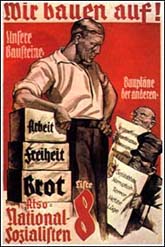
Although not emphasized today, the coming to power of Adolf Hitler represented the true fruits of the monarchist defeat. He was an avowed enemy of the Catholic Hapsburgs and tolerated the German monarchists only in order to feed off of their prestige with the conservative community and poach supporters from the German National People's Party. As soon as he seized power all |
|
|
 |
|
|
displays of royalist sympathy were banned and the German princes treated with extreme condescension. Although for a time it was whispered that a plan was in the works to restore the reich under a Bavarian Kaiser, this was likely nothing more than talk. However, it was a Catholic monarchist who made the famous attempt on Hitler's life which came closest to success, Claus Graf von Stauffenburg. It is believed that had the plot succeeded the group intended to install Crown Prince Wilhelm III as head of state.
Today, Germany seems to be suffering from the liberal disease that has infected to much of Europe, however, there is always cause for hope. Monarchist groups remain who are loyalty to the memory of the Kaisers, from what I can tell this loyalist sentiment is still stronger in the Catholic south, and there is the proud memory of the 'First Reich' to look back on for courage and inspiration. Despite the bad memories of recent times, Germany has accomplished great things in the past and may yet surprise the world in the future. |
|
|
|
|