

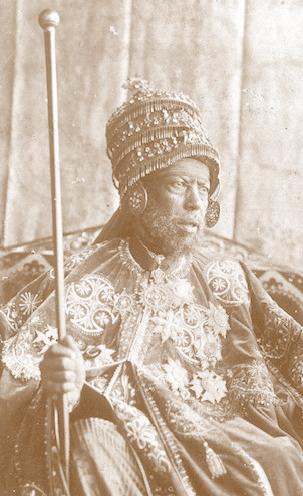
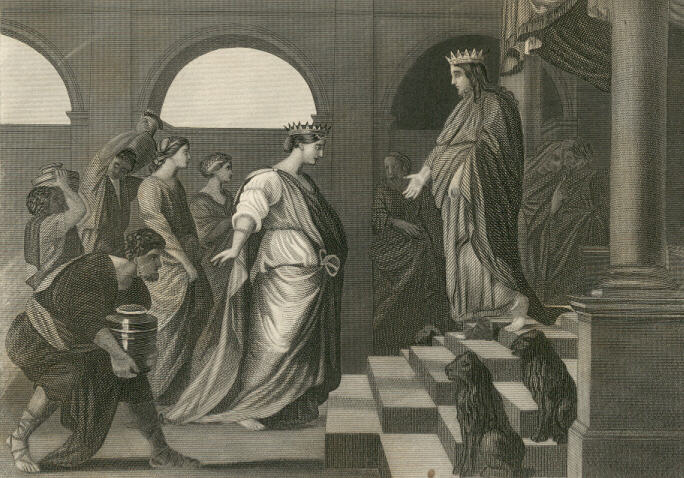
For more than a thousand years after becoming a Christian power Ethiopia ruled vast tracts of Africa, including the Ethiopian plateaus, the length of the coast of the Red Sea and even territories on the Arabian peninsula. However, the emperor's began losing much of their power in the XVI Century and Ethiopia began to break up into rival tribal kingdoms. However, this trend change in the 1880's thanks to the efforts of Emperor Menelik II (r.1889-1911). He united the people of Ethiopia, established the modern borders of the country and defeated an invasion by Italian expansionists in a stunning victory at the Battle of Aduwa in 1896.
Following the Queen's passing Ras Taffari was crowned Emperor of Ethiopia and took as his reigning name Haile Selassie or "Power of the Trinity". In the era of Menelik II and Zauditu, Ethiopia had rejoined the international community and established good relations with most of the world, though the threat of foreign incursions, particularly from the Italians, always remained. With the reign of Emperor Haile Selassie though, Ethiopia was going to show the world a new face; traditional but modern. In 1931 the Emperor granted Ethiopia her first written constitution.
However, danger still remained, particularly after the rise of militant nationalism in Europe. In 1935, still embarassed by their defeat at Aduwa, the dictator of Italy, Benito Mussolini, invaded Ethiopia with a large, highly mechanized army. This time, there was
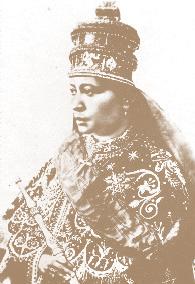
After World War II, the Emperor began a rapid program of restoration and modernization for his country. Social, economic and political reforms were enacted. Slavery was outlawed and made punishable by death and Ethiopia joined the United Nations. In 1955 a new constitution was enacted by Emperor Haile Selassie in which Ethiopians gained the right to vote for the deputies in the lower house of parliament. Eritrea was also federated with Ethiopia by a UN action. But, as is often the case, liberal radicals refused to be grateful for the new freedoms the Emperor had given them and instead launched a coup against him in 1960 while Haile Selassie was visiting Brazil.
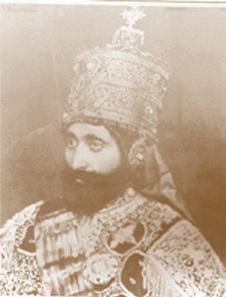
However, these revolutionaries were not loyal and soon began arresting anyone who opposed them, or who was even suspected of opposition. On September 12, the Emperor was taken prisoner and a reign of terror ensued as the republicans massacred anyone loyal to the monarchy. After enduring a long series of torture and mistreatment, with every bone in his body broken, Emperor Haile Selassie died in August. Eventually the radicals were unseated, but conditions in the country have improved very little. However, the Emperor's descendants in the Crown Council of Ethiopia are still working hard for the eventual restoration of the monarchy.