 |
|
|
|
|
|
|
|
|
|
|
|
|
|
|
|
|
|
|
|
|
|
|
|
|
|
|
|
|
|
|
|
|
|
|
In Defense of the Cause of Kings |
|
|
 |
|
|
����������� The cause of kings is an extremely ancient one, which, ultimately, cannot be separated from the cause of true religion. For all of the Western World and the entire Indo-European culture, the concept of kingship goes back at least as far as the united monarchy of Israel in the time of the Old Testament. From that time on, God and legitimate government have been inexorably bound together. It was God who chose Saul to be the first king of the united Israel, he was made aware of the powers and obligations imposed by God on a monarch and was anointed with holy oil by the pontiff Samuel, God's prophet and Vicar on earth. |
|
|
|
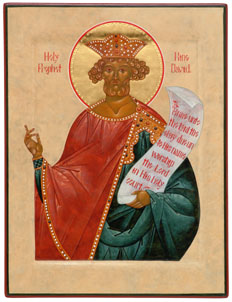
����������� Saul, however, can be seen as being simply a learning experience for Israel, in preparation for the ideal monarch, King David. With King David, monarchist government achieves its most full Biblical endorsement, exaltation and explanation. Again, David was chosen by God, anointed by the pontiff with holy oil, and lived the example of the monarch who was humble, obedient to God, loyal to the king before him as God's anointed, personally brave and devoutly pious. He was called "a man after God's own heart". With the Davidic Dynasty and the Seventh Holy Covenant we also see the birth of the much-maligned "Divine Right of Kings". |
|
|
|
|
����������� God had many and would make many covenants with his people, but this was one of the few, which was totally unconditional. It invested in the Sacred Royal House of David a "Divine Right" to rule over God's people for all time, and which no earthly power or personal imperfection could take away. God told King David that if his descendants were wicked He would punish them severely, but for the sake of David's holiness, their Divine Right would never be taken away, by the Word of God, it would stand forever. It was prophesied and later came to pass, that even the Messiah, the Son of God Himself, would be born of this Royal House of kings. God's relationship with them was clearly stated when God, speaking to King David, said of his son, the future King Solomon, "I will be called His father, and he will be called My son". God had revealed that the cause of kings was a vital part of His plan for us all. |
|
|
 |
|
|
����������� During the years Christ spent on earth, He was hailed as King of the Jews, though he never uttered one word of sedition against the Emperor in Rome. Quite the contrary, Christ knew that His destiny was to die on the cross rather than reign in the present, and though He was King of the Jews, he commanded them to "give to Caesar that which is Caesar's". Pope St Peter I likewise urged the earliest Christians to, "fear God and honor the Emperor". Even when they were martyred, they were spotless, without the slightest hint of rebelliousness. |
|
|
|
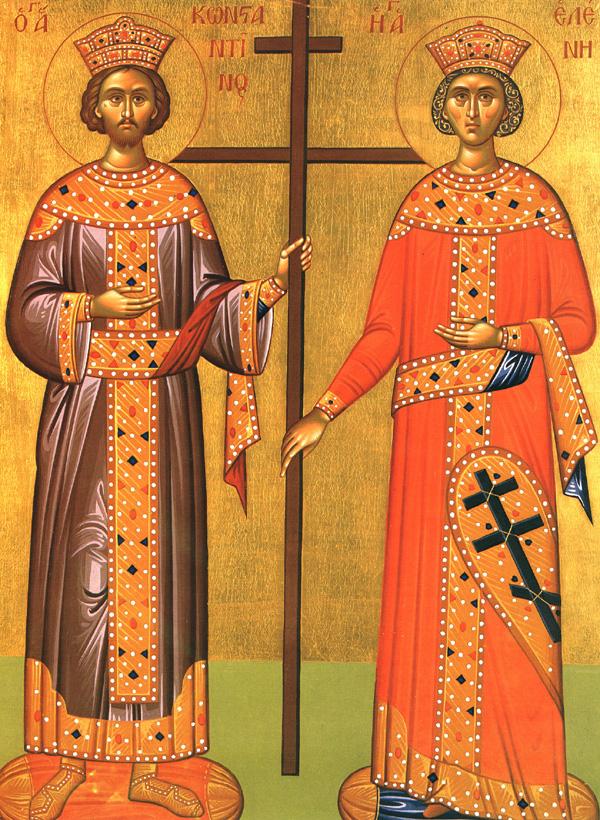
����������� In large part due to this example, more and more people were won to the Church and eventually, by the very miraculous hand of God Himself; the Roman monarchy was converted to Christianity. It started with St Helena, the Empress-Dowager, and finally the famous Emperor Constantine the Great also became a Christian. He lifted the ban against them and allowed Christianity to be spread throughout the Roman Empire. St Helena even traveled to the Holy Land to recover the True Cross, which she brought back to Rome for the veneration of the Faithful. From this time on, the Church would grow rapidly in importance, even when Rome itself faltered. As the power and wealth moved to the east, soon the Pope, the Bishop of Rome, was the most powerful figure in the Western Empire, and all that saved it from total disaster. |
|
|
|
|
����������� Even as Rome collapsed in the west, the Church remained. The once barbarian hordes that had terrorized the countryside, were won over to the Christian faith and blessed by the Church. The most famous of these was the early Christian convert Queen St Clothilde. Her husband was Clovis, King of the Franks, who, like Constantine, was won to the Christian faith after God used miraculous intervention to give him victory on the field of battle. The banner of King Clovis, which displayed frogs, was miraculously changed to the fleur-de-lys, which thereafter became the royal banner of all French kings. France would thus assume an important place in the history of the Church in the Dark Ages, and eventually be known as her eldest daughter. King Clovis had his royal authority blessed with holy oil, brought down by a dove from Heaven, which was thereafter used to consecrate each King of France. |
|
|
 |
|
|
����������� However, the problems of the Dark Ages had proven that Christianity needed stability to flourish, as had been envisioned by the idea of Christendom under Emperor Constantine the Great. Naturally, the French stood out because of royals like King Clovis and Queen St Clothilde, as well as the famous King Charles Martel who had turned back a Muslim invasion of Europe at Tours. The Western Empire had to be restored as the guardian of Christendom, especially as the east slipped farther away from their ancient loyalty to Rome. |
|
|
|
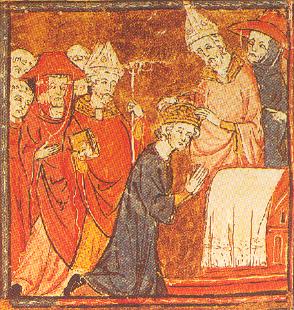
����������� Therefore, on Christmas Day of the year 800, Pope St Leo III crowned the King of the Franks, Charles the Great or Charlemagne, Emperor of the Romans. And, so it was, that Christendom was restored in the body of the new Holy Roman Empire. Like the very beginnings of royal authority in Israel, it was to be an empire focused on God, loyal to His teachings and with authority handed down from God to the monarch by the person of the Pontiff, His Vicar on earth. Again, we saw God's faithful people united by one crown and one religion on earth. |
|
|
|
| ����������� To these early Christians, criticism of monarchy itself, or separation of the Church and State would have been unthinkable. God was a monarch; He was always spoken of in monarchial terms, so of course the form of government itself could never be called into question, only the attitude of the one who wields that monarchial power. However, even here, unless the will of God Himself was challenged, nothing could warrant rebellion or disrespect. God Himself says as much when He told David that the character of his descendants on the throne would not have any bearing on their right to occupy that throne for the sake of the great king. Even the early Christians, when forced to fight to the death in the Roman Coliseum, would turn to the pagan Emperor and say, "Ave Caesar imperator, morituri te salutant" (Hail Caesar, emperor, we who are about to die salute you). |
|
|
| ����������� Fortunately, with the emergence of Christendom and the strengthening and formal organization of the Church, the relationship and attitude of the Church and the monarchy was able to improve above that in the time of the ancient Israelites when a good king was the exception rather than the rule. The West, even though Rome collapsed there first, was ultimately more fortunate due to the close ties, even more so than in the days of Israel, with the recognized power of the Roman Pontiff. The Pope was able to ensure that the kings did their duty, although he was hampered when the Holy Roman Emperors tried to rise above their station. Yet, at no time did the Church ever deny a legitimate monarchy their rights, though at the height of Papal power they were able to depose particular rulers who failed in their duty, and use such means as the interdict and excommunication to enforce proper Christian behavior on their part. At no time though, did the Church ever endorse revolution as a right or endorse popular opinion over royal power. |
|
|
| ����������� One Churchman summed it up nicely. At the height of the French Revolutionary era, when announcing the death of His Holiness Pope Pius VI to the monarchs of Europe, Ercole Consalvi said, "Too many crowned heads, alas, in our times have seen that the princely power falls when the dignity of the Church decays. Restore the Church of God to her ancient splendor: then the enemies of the Crown will shake in terror". |
|
|
 |
|
|
|
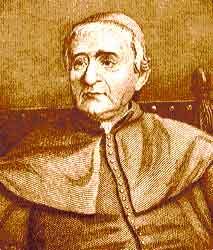
| We can also see an ideal example in the response of His Holiness Pope Gregory XVI to the rebellions in Poland against the autocratic rule of the Russian Tsar. He comforted the Poles and sympathized with them in their oppression, and did not hesitate to reprimand the Tsar himself for his cruelty toward the Poles. Yet, he also commanded them to remain loyal to the sovereign God had placed over them and to follow the example of Christ, just as St Peter had told the early Christians of the Roman Empire. He presented the perfect example of the duty of Christians: to obey God regardless of their station in life, that is, for the Tsar to be benevolent toward his people, and for his people to be loyal and "obey the king's command in regard of the oath of God". |
|
|
|
|
| ����������� Although the Church, as the Kingdom of God represented on earth, must take precedence, the situation with monarchies is somewhat similar. Nowhere in Scripture is the royal tradition itself tied to the triumphs and failures of the royal individuals. The king may suffer for his misdeeds, but the cause of kings is always maintained. In a similar way, all members of the Church are sinful, and some leaders of the Church, even the Popes on rare occasions, have been extremely immoral, yet at no time was heresy allowed to infiltrate official doctrine and never did the Church cease to be a holy institution, as a creation of Christ, it could never be unholy. So also, the role of kingship, practiced, endorsed, anointed and blessed by God could never itself be an evil or unholy institution, regardless of the personal virtue of every individual to lead it or participate in it. When Scripture attacks and admonishes kings and princes it is always made clear that it is precisely because their power is of divine origin that any negligence is so reprehensible. |
|
|
|
����������� The rule of popular opinion on the other hand, God soundly condemns. However, this is not because God wishes to force an oppressive and tyrannical monarch on His people, but precisely because He wants to protect and better them. Both Sacred Scripture and our own history prove inconclusively that the welfare of the people is never more in danger than when those claiming to be "of the people" actually hold power. The multitudes can be easily swayed, easily deceived and made to endure the most horrible of oppression under the illusion of individual power and deified "democracy". |
|
 |
|
|
|
|
����������� Democracy can be good when it benefits the public, but we must remember that the will of God always benefits everyone, and recognize the danger that can spread from the concept of democracy as a general principle to put our trust in. It invariably leads to the great sin of each individual doing what is right "in their own eyes". The only solution is a division of powers between a strong monarch, a well-informed public, and the guiding hand of the Church. |
|
|
|
����������� The French Bishop Bossuet pointed this out as the difference between monarchs who were absolute and arbitrary. Today, we have effectively replaced absolute monarchs with arbitrary politicians. They have convinced the masses that they rule on their behalf, and so are free to do as they like, recognizing no moral standards at all, in pursuit of their own aims while the public sits back quietly, confident that everything being done is being done according to their own wishes. |
|
|
|
|
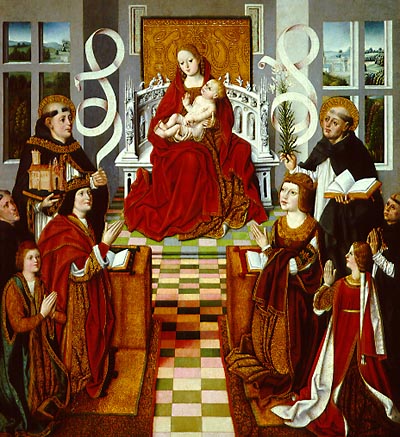
The Virgin of the Catholic Monarchs |
|
|
|
|
|
|
����������� What people must realize is that real liberty (not licentiousness) does not come from exalting "one of your own" to the highest office, but rather through greater local control over government, and a monarch who is above all classes, all parties and able to see the situation clearly, knowing that God will call him to account. This was understood by the people of the High Middle Ages, it was understood by the Jacobites who wanted home rule for Scotland and Ireland, and by the Carlists of Spain who desired a strong monarch within a more decentralized government, recognizing local autonomy. The reason why this is so hard to accomplish is because the enemies of the people recognize that, on the local level, there will be much greater influence by families and parish priests. Yet, even the pagan Romans recognized that monarchial authority with strong local governments worked the best. |
|
|
|
 |
|
|
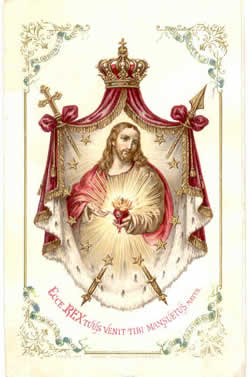
����������� Today, the Cause of Kings may seem completely lost to many, and they could point to ample evidence to prove this. However, with Christ there is always reason to hope. He is the King of all kings and has promised to be with us until the very end of time. In the Blessed Sacrament, we can see the greatest King each and every day if we choose. This is the key, and the heart of all victory is seen in the Sacred Heart. As Consalvi said, if we can "Restore the Church of God to her ancient splendor: then the enemies of the Crown will shake in terror." |
|
|
|
|
|
����������� We must emphasize Christianity, and the royal connections which it provides to truly restore all that we have lost. Of course this means prayer, but also such things as the enthronement of the Sacred Heart in every home, emphasis on the solemnity of Christ the King, of Mary as the Queen Mother, or here in the United States, of Our Lady of Guadalupe as the true "Empress of the Americas". We can help spread devotion to those like St Helena, Queen St Clothilde, St Joan of Arc, St Louis IX or support the cause of Blessed Charles I of Austria. The Infant of Prague, which stresses both the childhood and kingship of Christ, is another excellent example. The tools are here if only we will use them. It is also important to remember how we do this, as Pope Leo XIII instructed, not as aloof troublemakers, but within the system in a spirit of compassion and Christian brotherhood, recognizing that we are all children of the same God, and subjects of the same Divine King. |
|
|
|
|