
ARGENTINA
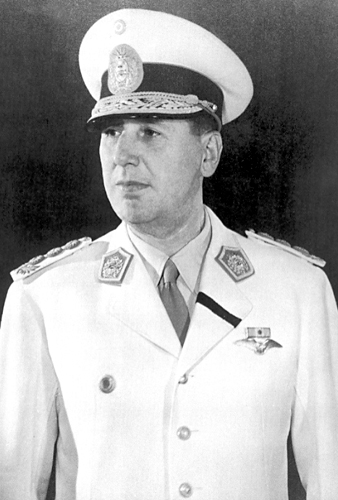

Nevertheless, Argentina managed to gain some success and grew into a major power during the 1880's. By the begining of the 20th Century, Argentina actually had a larger and more highly rated navy than even the United States. Problems, however, continued to rise up. The situation in the country, with a great deal of internal unrest, until 1946 when army Colonel Juan Peron became the President. His regime was, and remains very controversial, but it cannot be denied that he restored order, stability and prosperity to his country. Much of the criticism of his regime, from both inside and outside Argentina, is due to perception rather than actual facts.
Much of the foreign opposition came from the perception that Argentina was too friendly with the Axis nations of World War II and did not enter the war until shortly before the German surrender. This mentality is largely the result of some cosmetic similarities between the Peron regime and those of the European Fascists. Much of this stems from simple ignorance of the differences between the regimes of men like Mussolini, Hitler, Franco and Salazar. As for the war itself, it is easy to be critical, but the fact is, Argentina had no real reason to enter the war. President Juan Peron tried to project the image of himself as a devout Catholic, he encouraged economic growth and instituted strict laws for the protection of workers.
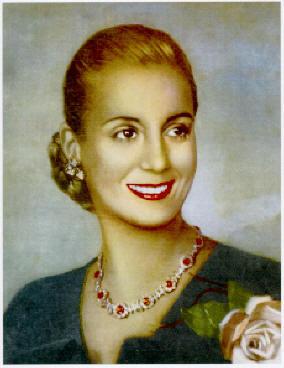
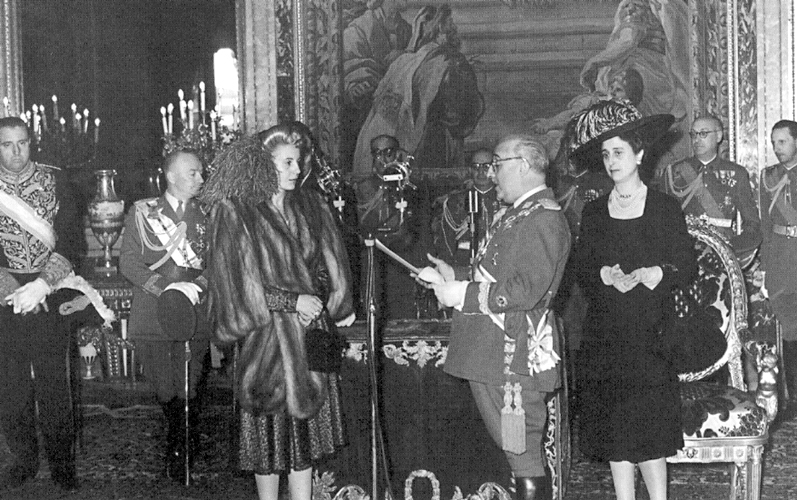
In this he was greatly aided by his captivating and controversial First Lady, Eva Duarte de Peron, or Evita. She had been an actress and model, from a very humble background and so was always despised by the traditional elites of the country who considered her an embarassment. She was though extremely popular with the common people who were her core of support. She championed the rights of workers and women and also fostered respect for the Church and respect for Argentina abroad. She went on a highly publicized tour of Europe where she met with the Pope and was decorated with the Order of Queen Isabella the Catholic by Francisco Franco in Spain.
Ultimately though, it was conflict with the Church that was blamed for bringing down the Peron regime. Actually, as usual, the Church was neutral in politics, but the name of the Church was used by opponants of the regime and blamed by Peron for any opposition. After Peron was overthrown, harsh measures followed and he was later persuaded to come home and resume power. Eventually power fell to his second wife, Isabel Peron (who he married after Evita's death) who was herself overthrown by the military in 1976. From that time until 1983 there was a horribly oppressive regime and a "Dirty War" against any who were even suspected of opposing the military. The government was opposed by the highly successful movement called the "Grandmothers of the Plaza de Mayo", but the military regime did not fall until Argentina suffered a humiliating defeat by the British over the Falkland Islands.
Today, Argentina continues to try and improve itself, but politics remain plagued by corruption and economic instability is still a major problem. The Church continues to speak out on these issues and to promote the Catholic social program, human rights and moral values.