

Overview of Environmental Chemical Analysis
Dr. Joseph Pan 潘嘉琦 博士
Southwest Research Institute, San Antonio, TX

摘要:
We human beings cannot for one minute be separated from our environment. We breath the air and drink the water, as well as eat vegetables and meats produced in our environment. Unfortunately, in the process of breathing, drinking and eating, we also take in chemicals/pollutants that may be harmful to our health. The source of chemicals/pollutants includes chemical products such as PCB's (polychlorobiphenyls, used to be used in transformers), pesticides and herbicides, and fuels such as gasoline and diesel fuel. Another main source of chemicals/pollutants is by-products of chemical processes (such as dioxins in herbicides and fungicides) and combustion (such as polycyclic aromatic hydrocarbons, PAH's in cigarette smoke and car emissions). Heavy metals and radiation also pose threats to human health. To protect ourselves from harmful chemicals and pollutants, we must first be able to detect them. The more toxic the chemicals, the lower detection limits we must achieve so that we will be safe. Since different chemicals have quite different chemical and physical properties, different techniques and instrumentations must be used to achieve the desired detection limits. The following lists different categories of chemicals/pollutants and techniques used to detection them: (1) Volatile and semi-volatile organics - Gas Chromatography with mass spectrometers or various detectors, (2) Pesticides, herbicides, and explosives - Gas chromatography and liquid chromatography, (3) Metals - Inductively Coupled Plasma (ICP), ICP mass spectrometer, Atomic Absorption Spectrometer, (4) Radioactive nuclei - Gamma spectrometer, liquid scintillation counter. Low Background alpha and beta Proportional Counter, and Geiger Counter, (5) Cations and anions - Ion chromatography, (6) Cyanides, ammonia, alkalinity and others - wet chemistry and spectrophotometer. Some basic principles and examples of these analyses will be described and illustrated along with results of some projects that may be of interests.
簡歷:
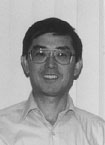 Dr. Joseph C. Pan received his B.S. degree in Chemistry from Chung-Hsing University in Taichung, Taiwan in 1973. He received his Ph.D. in Medicinal Chemistry from University of Illinois at Chicago in 1985. After nearly two years of postdoctoral study in mass spectrometry in University of Nebraska-Lincoln, he joined Roy F. Weston, Inc., an environmental engineering company. He worked for WESTON for nearly 3 and a half years in the area of gas chromatography/mass spectrometry. In early 1990, Dr. Pan joined Southwest Research Institute working in the Dept. of Analytical and Environmental Chemistry in Division 01. He is currently a Manager in charge of Mass Spectrometry - Semi-volatile section.