Temples and Families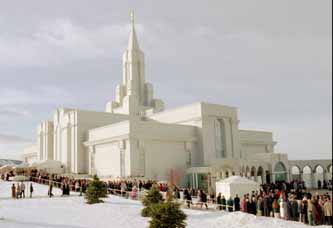 Now, for those of you who are not members of the Church, you're probably wondering about that heading there. What the heck do temples and families have in common? The answer: Everything! Temples were made for the advancement of families. Elijah delivered the temple ordinance keys to Joseph Smith on April 3, 1836 (D&C 110:13-16), just like Malachi promised more than 2200 years before. Behold, I will send you Elijah the prophet before the coming of the great and dreadful day of the Lord:By the way, those two verses are the only two quoted in all four of the standard works. You can also find them in 3 Nephi 25:5-6, Doctrine and Covenants 2:1-3, and Joseph Smith History 1:38-39. This obviously means that they're pretty important verses. So what exactly does that mean? Here, I'll explain. First, let me give you an overview of the ceremonies we do in the temple. Now, I've never personally been in the temple (alas!), but even if I had been, I wouldn't be able to explain in detail everything that happens there. It's just too sacred. If you don't really understand that, here's an analogy in reverse. Let's say your youngest daughter is about to take her first communion, or maybe she's getting baptized. Just as the climax of the ceremony arrives, the pastor all of a sudden begins talking about football and how he hopes that the Chiefs kick the Raiders' butts that day! How would you feel? You'd probably be pretty upset -- that's totally out of place and uncalled for. Those are the same types of feelings that Latter-Day Saints would feel if someone began detailing the temple ceremonies outside the temple. It's totally out of place and uncalled for. It just doesn't fit with the situation.  Okay, now
that I've said that, I can tell you about our ordinances. The services
in the temple are of three basic types: the endowment, the sealing, and
the baptism for the dead. Now, all of these can be for the dead (which
I'll explain further on), but only the first two types can be for the
living. When you get baptized into the Church, it's usually done in a
baptismal font at a chapel or somewhere else where there's a lot of water.
Anyway, the endowment symbolizes a spiritual journey and teaches you about
Heavenly Father's plan for you. You can only go through the endowment
ceremony when you're spiritually mature. If you go on a mission, you can
get it then; otherwise, you need to wait until you're married. The only
exception to those is if it doesn't look like you're going to marry and
you feel ready. The other ordinance for the living is the sealing. This
can be broken down even further, as it can be husband and wife sealed
together or children sealed to their parents. You can't be sealed as husband
and wife until you get your endowment. It's kind of a building block thing.
First you get baptized, then you get confirmed, then you get the priesthood
if you're a guy, then you get your endowment, and finally you can get
sealed. Okay, now
that I've said that, I can tell you about our ordinances. The services
in the temple are of three basic types: the endowment, the sealing, and
the baptism for the dead. Now, all of these can be for the dead (which
I'll explain further on), but only the first two types can be for the
living. When you get baptized into the Church, it's usually done in a
baptismal font at a chapel or somewhere else where there's a lot of water.
Anyway, the endowment symbolizes a spiritual journey and teaches you about
Heavenly Father's plan for you. You can only go through the endowment
ceremony when you're spiritually mature. If you go on a mission, you can
get it then; otherwise, you need to wait until you're married. The only
exception to those is if it doesn't look like you're going to marry and
you feel ready. The other ordinance for the living is the sealing. This
can be broken down even further, as it can be husband and wife sealed
together or children sealed to their parents. You can't be sealed as husband
and wife until you get your endowment. It's kind of a building block thing.
First you get baptized, then you get confirmed, then you get the priesthood
if you're a guy, then you get your endowment, and finally you can get
sealed.
Hey, what about Elijah? I bet you thought I forgot him, huh? Well, now I can start explaining that part of it. "Turning the hearts of the fathers toward the children"
"Turning the heart of the children to their fathers" One of the coolest things about the Church is that you're not automatically
condemned if you didn't hear the gospel while you were still alive.
Everybody gets a chance to hear it, whether it be here or in the Spirit
world. However, just because they're dead doesn't mean the rules change
for them. They still need to be baptized and have the other ordinances
done for them. Unfortunately, that's kind of hard to do if you don't
have a body. (Just a minor setback.) That's where we come in. In Conclusion Go to the temple! It is such an awesome place. If you're a member,
you can go and do (like Nephi) all this stuff for your families. If
you're not a member, I invite you to go visit the temple grounds. Hang
out there for about half an hour or so with an open mind, and you'll
feel the Spirit. His influence there is so strong, and you just feel
wonderful there. Then remember: If it's that powerful on the outside,
what is it going to be like on the inside?
This page was written by Beth Siler on October 26, 1999. Please
do not use without permission. |
 How does the
temple help fathers turn their hearts toward the children? Through the
sealing ordinances. By being sealed in the temple, families can be together
forever. (Hey, there's a hymn called that! It's number 300 and is playing
in the background.) When a husband and the wife are sealed together
in the temple, they are married not just "until death do us part," but
instead for all time and eternity. When children are sealed to their
parents in the temple, the whole family is assured of being together
for eternity. This doesn't just benefit the current generations -- the
influence of the temple will be felt generations down the road.
How does the
temple help fathers turn their hearts toward the children? Through the
sealing ordinances. By being sealed in the temple, families can be together
forever. (Hey, there's a hymn called that! It's number 300 and is playing
in the background.) When a husband and the wife are sealed together
in the temple, they are married not just "until death do us part," but
instead for all time and eternity. When children are sealed to their
parents in the temple, the whole family is assured of being together
for eternity. This doesn't just benefit the current generations -- the
influence of the temple will be felt generations down the road.
 All of the
ordinances in the Church, from the baptism all the way to the sealings
can be performed for the dead. Now, don't take this to mean we go dig
up dead bodies and dunk them into the baptismal font. Gross! Besides,
that would only work for a couple generations back. No, what we do instead
is baptize, confirm, endow and seal by proxy. If you are supposed to
be the proxy for someone, they tell you the name (and maybe the birth
date too -- I'm not sure) and then perform the ordinance by using that
name but with you standing in for the body.
All of the
ordinances in the Church, from the baptism all the way to the sealings
can be performed for the dead. Now, don't take this to mean we go dig
up dead bodies and dunk them into the baptismal font. Gross! Besides,
that would only work for a couple generations back. No, what we do instead
is baptize, confirm, endow and seal by proxy. If you are supposed to
be the proxy for someone, they tell you the name (and maybe the birth
date too -- I'm not sure) and then perform the ordinance by using that
name but with you standing in for the body. 