| Tor, lying at the northwest corner of the Tahari, is the principal supplying point for the scattered oasis communities of that dry vastness, almost a continent of rock, heat, wind, and sand. Caravans from Tor and other cities, import various goods to
the oases and export from them, dates, pressed-date bricks, and salt.
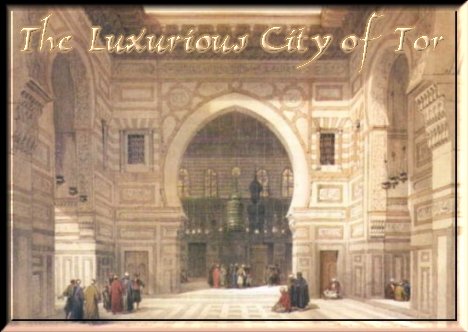
The city of Tor is the most wealthy and luxurious city of the desert region. It is famed for its splendors, comforts and pleasures. The city was constructed in concentric circles, broken by many, narrow crooked streets. The city buildings are made of mud brick and generally are no more than four stories high. The buildings are covered with colored, and often flaking plasters. The buildings have narrow, high windows and most face towards the streets. The area of Tor is hilly and rocky, with many of the buildings also being built on shelves and rises. Running down the center of the streets are gutters, where waste from the homes is thrown by slaves. There are many walled gardens adjoining the private homes, well-watered even when water is scarce. Water needed for the gardens is delivered by chains of male slaves and emptied into house cisterns, whence, later, by house slaves, it would be taken in cans and sprinkled carefully, foot by foot, through-out the garden. Few crops are grown within the walls of Tor. The city's water supply is primarily located in the center of the city, being a 'hub'. This is the most protected area of Tor. It rarely rains in Tor so water is precious, but Tor's water supply is ample in regards to her needs. The water in Tor is slightly salty and unclear. The city has two growing seasons. The greatest heat of summer is within the fourth and sixth passage hands. The city has a large Bazaar, hundreds of small merchant stalls, vending a wide variety of wares. The rugs of Tor are very famous and are similar to the Oriental rugs of Earth. It can take a girl more than a year to make some of these rugs. The specific patterns are passed down through generations within families, and sometimes the patterns are memorized by the blind. The rugs are made on simple looms and the pile is knotted onto the warp and weft. Some rugs have up to 400 knots to each square hort. Each of those knots are tied individually by the hands of a Free Woman. Most of the dyes are natural, from vegetables, bark, leaves, roots, flowers, animal products, and other sources. Rug makers are a subcaste of the cloth makers but they consider themselves a seperate caste. The card dyers and weavers are all subcastes of the rug makers.  |