Turkey White Paper 2002 international affairs
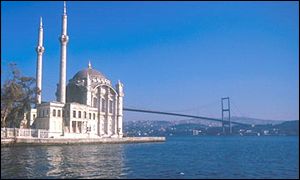 Turkey has long lain before the crossroads of civilization encapsulating and at times dominating the fault line between the east west. This first began In the days of the Ottoman Empire from its first triumph over Rome in 1453 to its reformulation as the 'Sick man of Europe' during WWI. The rebirth of Turkish nationalisim precipitated the founding of the republic in 1923, and no less effects its status as a founding member of the Atlantic Charter after WWII and is also embodied in modern day Turkey's tumultuous transition towards secularized democracy. The Founder of the modern day republic, Mustafa Kemal Atatürk, envisioned that Turkey should pursue a program of "Peace at home and Peace in the world." This involved social and infrastructural modernization, as well as a multidimensional foreign policy that favored constructive engagement with the west.
The key issues facing Turkey today are more complex though no less important to the legacy and responsibility of the Turkish nation. The Key elements of debate center upon EU integration, the War in Iraq, Turkish minority policies, the Greek-Cyprus question, and role in NATO. This paper will attempt an expository White Paper on the aforementioned issues from the hypothetical perspective of the Government in Ankara.
Turkey's historical committement to international affairs begins with the founder of the Turkish Republic, Mustafa Kemal Autaturk. He envisioned that Turkey had to "..reach the level of contemporary
civilization"...Peace at home, Peace in the world." These views still remain paramount to the government of Turkey. While Turkey has undergone major political and economic transformation since 1923 when the republic was founded these issues have not receded in importance.
Secularisim was desireable because it afforded the economic objectivity necessary for modernization. Modernization inevitably entailed contact and engagement with the west. Today that relationship has existed in the form of Turkey as one of the founding members of the Atlantic charter, NATO, and middle east facillilatator of a 'special relationship' with the United States.
Turkey as a secular nation still must contend with its historical traditions and culture. This has complicated its security relationship with US military and intelligence officials, rather Turkey questions the overall effect of regime change in Iraq--that the likely scenario will create a power vacumn and also incite Kurdish uprisings in Turkey as well.
While Turkey agrees that Saddam Hussein is a looming menace it favors a strong international coalition that can effectively force Iraq to comply with UN Security council mandated weapons inspectors. As a state Turkey shares a border with Iraq --fear abounds that regime change in Iraq will destabilize Turkey.
Prime Minister Bulent Ecevit has said "We know that the United States cannot carry out this operation without us," he said last week. "That is why we are advising that it abandon the idea. We're telling Washington that we are worried about the matter." (New York Times, 10/28/02)
url: http://www.nytimes.com/2002/10/28/international/europe/28TURK.html
As an active participant of international diplomacy, the government of Turkey acknowledges that a number of challenges posed by globalization and its ensuing current reccessionary effect on the Turkish domestic economy will not affect its plans to seek full economic integration into the EU by 2005. However, the challenges of export oriented industrialization in meeting EU criteria should be duly noted in regards to Cyprus EU Membership. The Turkish government favors a speedy resolution by the commission in regards to the Cyprus question as well as assurances that the economic transition will not unduley benefit the EU at the expense of turkey.
The fall of the Ottoman Empire
go
to top of the page


