source posted from: Chomsky
Of further Interest Lippman and Manufactured Consent
Lecture Hall, 5:00 p.m.
Biography
Writings on the Web
Books
Biography
activist who founded transformational-generative
grammar, an original and highly influential system of
linguistic analysis.
He was introduced to linguistics by his father,
William, a Hebrew scholar of historical linguistics. He
studied under Zellig Harris at the University of
Pennsylvania, where he received bachelor�s (1949)
and master�s (1951) degrees. He received his Ph.D.
from the University of Pennsylvania in 1955, but he
conducted most of the research leading to the degree
at Harvard from 1951 to 1955. He started teaching
modern languages and linguistics at the
Massachusetts Institute of Technology in 1955,
where he became a full professor in 1961 and the
Ferrari P. Ward professor of foreign languages and
linguistics in 1966.
His theory of transformational grammar set out in
Syntactic Structures (1957) revolutionized the
development of theoretical linguistics. He broke with
the dominant structural school, which held that
language is basically a system of syntactical and
grammatical habits established by training and
experience. Chomsky argued that humans have an
innate facility for understanding the formal principles
underlying the grammatical structures of language.
He argued that this explained how young children
can infer the grammatical rules underlying ordinary
sentences after hearing the speech of their elders and
then use those rules to generate an infinite number
and variety of sentences that they never heard
before.
Chomsky�s work virtually defined the methods of
linguistic analysis used in the second half of the 20th
century, though his assertions have not been widely
accepted. His other books on linguistics include
Aspects of the Theory of Syntax (1965), Cartesian
Linguistics (1966), The Sound Pattern of English
(with Morris Halle, 1968), Language and Mind (1968;
revised, 1972), The Logical Structure of Linguistic
Theory (1975), Reflections on Language (1975),
Language and Responsibility (1979) and Language
and Problems of Knowledge (1988).
Chomsky also became known for his opposition to
the United States� involvement in the Vietnam War
during the late 1960s and early 70s. His political
tendencies toward socialism and anarchism are a
result of what he calls "the radical Jewish community
in New York." He published a book of essays called
American Power and the New Mandarins (1969)
which is considered to be one of the most substantial
arguments ever against American involvement in
Vietnam. His other books criticizing American foreign
policy and the role of giant corporations and the
mass media include Towards a New Cold War (1982),
Pirates and Emperors (1986), On Power and Ideology
(1987), Necessary Illusions: Thought Control in
Democratic Societies (1989) and World Orders, Old
and New (1994).
Reluctant Icon-ZineZone Bio and Interview
Writings on the Web
Letter From Noam Chomsky-Covert Action
Quarterly, 1995
"Notes on Anarchism" in For Reasons of State,
1970
Another Way For Kosovo?-Le Monde diplomatique,
March 14, 2000
The New Military Humanism-In These Times, Sept.
1999
East Timor Retrospective-ZNet, Sept. 1999
East Timor-ZNet, Sept. 1999
Why Americans should care about East
Timor-Mother Jones, Aug. 26, 1999
Kosovo Peace Accord-ZNet, July 1999
The Current Bombings: Behind the Rhetoric-ZNet,
March 1999
Profit Over People-Book Excerpts, 1999
Humanitarian Intervention-Boston Review, 1993
The Washington Connection and Third World
Fascism-Book Excerpts, 1979
After the Cataclysm-Book Excerpts, 1979
Noam Chomsky Archive
Books-Select Titles
The Chomsky Reader
Class Warfare: Interviews With David Barsamian
Deterring Democracy
The Fateful Triangle: The United States, Israel, and
the Palestinians Excerpt
Manufacturing Consent: The Political Economy of
the Mass Media
Media Control: The Spectacular Achievements of
Propaganda
Necessary Illusions: Thought Control in
Democratic Societies
The New Military Humanism: Lessons From
Kosovo
Powers and Prospects: Reflections on Human
Nature and the Social Order Excerpt
Profit Over People: Neoliberalism & Global Order
Rethinking Camelot: JFK, the Vietnam War, and
U.S. Political Culture
World Orders Old and New
Year 501: The Conquest Continues
_____________________________------------------------------------------------
http://www.zmag.org/ZMag/articles/barsamianewenmay2000.htm
It is Lippman who coins the term �manufacture of consent.�
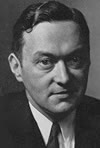 What
Lippman lays out in Public Opinion and in a subsequent book called
The Phantom Public are the basic rules of behavior of those people
who are interested
What
Lippman lays out in Public Opinion and in a subsequent book called
The Phantom Public are the basic rules of behavior of those people
who are interested
in influencing public opinion. While some
of the technologies have changed, the
basic strategies that Lippman lays out are
there from the beginning, and what is
clear is, Never talk to people about real
ideas. Never try to inform people about
what issues are at play. Go to the gut. Symbols
are more powerful than ideas. If
you give people ideas they�re going to argue
with each other. They�re going to
debate things. But if you hit them with symbols,
particularly symbols that have
been separated from ideas and which have a
kind of universal poignancy, you can
turn a heterogeneous mass of opinion into
a homogenous perception, a
homogenous will. What Lippman says in the
1920s is that the key to persuasion is
to intensify feeling and to degrade signification.
This is his terminology.
Politicians and steering committees and corporate
boards have been behaving
along those terms every since.
Talk more about Edward Bernays.
Bernays was this guy who introduced mass psychology
to the standard practice of
PR. Bernays takes Lippman�s theory of public
opinion and puts it into practice to
sell soap, bacon, cigarettes, all kinds of
things. He was the double nephew of
Freud. His mother was Freud�s sister. His
father was Freud�s wife�s brother. So this
is a guy who was born in Vienna, who came
to the U.S. early on in this century.
Literally the unconscious is like dinner conversation
at the Bernays�s household.
One of the most famous of his promotions is
when he went to work for the
American Tobacco Company. One of the problems
at the time was that women
were not smoking enough in public. Why? You
have to realize that this is a period
of time when the health problems surrounding
tobacco were considered relatively
minuscule and where even doctors are giving
testimonials in cigarette
advertisements and women are being encouraged
to reach for a Lucky Strike
instead of a sweet, that this is a good diet
aid. But still, there is this idea that a
cigarette, this kind of miniature phallic
symbol, is a symbol of masculine rights,
precisely because men can smoke in public
and women can�t. So he goes to a
group of feminists?his wife, Doris Fleishman,
was a feminist and very actively
involved in these issues and pushed him in
many of his campaigns. He goes to
this group of former suffragettes and convinces
them that they should have a
march down Fifth Avenue carrying cigarettes
in the air as torches of freedom. So
he takes the symbol of masculine power, puts
it in the hands of women, has them
march, and all of a sudden the cigarette is
not about tobacco, not about taste, not
about smoke, it�s about freedom.
Wasn�t Bernays the pioneer in getting expert
medical opinion to promote certain
advertising campaigns? Dentists agree, Doctors
recommend.
Bernays talks about is what he calls �opinion
leaders.� You don�t want to waste
your PR on everybody. There are certain people
within the society who function as
opinion leaders. At times those people may
be celebrities around certain issues or
sports stars. But one of the conventional
opinion leaders, of course, is the doctor,
the lawyer, the dentist, depending on what
you�re talking about. So Bernays went
to certain compliant doctors and got them
to go along, but then also took that
opinion leader and held him up for public
visibility with the idea that the opinions
of some will have influence over the opinions
of others.
But there are also occasions where even though
the massive public relations
industry, which is so well funded and organized,
simply falls flat on its face. I
think of the Three Mile Island incident and
its aftermath.
Part of why the history of PR is so interesting
is because you see that it�s a
history of a battle for what is reality and
how people will see and understand
reality. PR isn�t functioning in a vacuum.
PR is usually functioning to try to protect
itself against other ideas that are percolating
within a society. So under no
circumstances should what I�m saying about
Bernays in terms of the use of social
psychology indicate that these are automatic
processes that always work. They
don�t always work. They don�t always work
because to some extent, despite what
Lippman said, people don�t just function by
pictures in their heads. They also
experience things from their own lives. Often
their experiences are at odds with
the propaganda that�s being pumped out there.
One of the most dramatic examples of this was
during the Vietnam War. Because
one of the standard drills about what happened
in Vietnam and why the U.S. lost
the war is that there were all these cameras
out in the field that started sending
pictures home. The U.S. had been sending cameras
out into the field in the
Second World War. That was part of the assumption,
that bringing pictures home
was part of the way in which you created an
identification between people at
home and the boys at the front. So the war
photography done during the Second
World War, rather than turning people off,
provided a kind of visual bond between
people back home and the GIs overseas. But
what happens in Vietnam is that a
technique that might have made sense in the
Second World War because of what
we were fighting for and who we were fighting
against, all of a sudden becomes
an Achilles heel. The very openness of the
battlefield to journalists and
photographers, which had been part of the
way you fight a war in the 1940s,
becomes a way you don�t fight a war in the
1960s. If you look at the Gulf War
policy?every millimeter of visibility of that
war was processed through the
Pentagon?you see the way in which all of a
sudden the war apparatus is saying,
We need to rethink how we do this stuff and
we need to present them with
pictures where there�s no more blood and no
more dirt.
That was true before the Gulf War. Grenada
and Panama were also two very
carefully orchestrated media events.
I didn�t tell that story about the First World
War just for the hell of it. To some
extent, just like Teflon is a development
of war and all kinds of other new
materials and technologies, war has often
been the place where some of the most
sophisticated propagandistic techniques or
public information techniques have
been developed. There�s no question they walk
into Vietnam using weapons which
are no longer applicable. In the case of Vietnam,
the propaganda strategy and the
reality of the war were at odds, and the U.S.
has been laundering all information
about foreign policy ever since.
One of the interesting stories that you tell
in PR is the Kuwaiti incubator incident
in the fall of 1990. It involved Hill &
Knowlton, one of the largest PR firms in the
world, who incidentally were on the payroll
of the Kuwaiti royal family. How did
Hill & Knowlton engineer consent against
Iraq and mobilize American public
opinion for war?
Hill & Knowlton and Burson-Marsteller are
two huge corporations which are PR
businesses, both of which are attached to
huge advertising agencies. Hill &
Knowlton is connected to J. Walter Thompson
and Burson-Marsteller is connected
&n
