
Farming in South Africa - South Africa has ritch commercial farmers and poor subsistence-based farmers
If you want a South African Farmers Tours & Accommodation please call us on +27-0720390184 or fax us at +27-0880218838384 [RZA only] or e-mail us on e-mail.
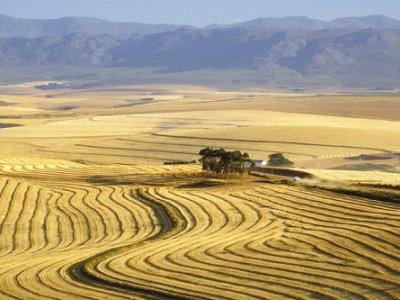 Covering 1.2-million square kilometres of land, South Africa is one-eighth the size of the United States and has seven climatic regions, from Mediterranean to subtropical to semi-desert.
This biodiversity, together with a coastline 3 000 kilometres long and served by seven commercial ports, favours the cultivation of a highly diverse range of marine and agricultural products, from deciduous, citrus and subtropical fruit to grain, wool, cut flowers, livestock and game.
Agricultural activities range from intensive crop production and mixed farming in winter rainfall and high summer rainfall areas to cattle ranching in the bushveld and sheep farming in the arid regions. Maize is most widely grown, followed by wheat, oats, sugar cane and sunflowers.
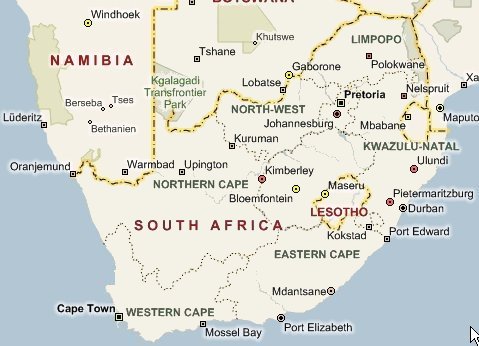 While 13% of South Africa's land can be used for crop production, only 22% of this is high-potential arable land. The most important limiting factor is water availability. Rainfall is distributed unevenly across the country, with some areas prone to drought. Almost 50% of South Africa's water is used for agriculture, with about 1.3-million hectares under irrigation.
Today, South Africa is not only self-sufficient in virtually all major agricultural products, but is also a net food exporter.
 Farming remains vitally important to the economy and development of the southern African region. Since 1994, the government has been working to develop small-scale farming to boost job creation.
South Africa's field crops and horticulture farming agriculture sectors:
South Africa is divided into a number of farming regions according to climate, natural vegetation, soil type and farming practices.
Agricultural activities range from intensive crop production and mixed farming in winter rainfall and high summer rainfall areas, to cattle ranching in the bushveld and sheep farming in more arid regions.
The total gross value of South Africa's agricultural production for 2003 was estimated at R68.7-billion, with farmers' income amounting to R70-billion.
South Africa is the world's top exporter of avocados, tangerines and ostrich products, the second-biggest exporter of grapefruit, third-biggest exporter of plums and pears, and fourth-biggest exporter of table grapes.
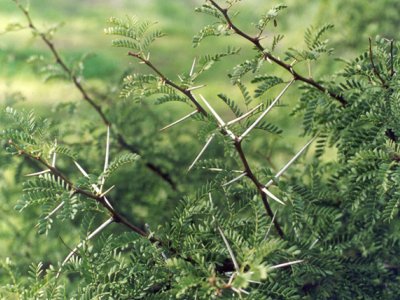 Farming contributes some 8% to the country's total exports. The largest export groups are wine, citrus, sugar, grapes, maize, fruit juice, wool, and deciduous fruit such as apples, pears, peaches and apricots.
Other important export products are avocados, dairy products, flowers, food preparations, hides and skins, meat, non-alcoholic beverages, pineapples, preserved fruit and nuts, sugar, and wines.
A number of high-growth niche markets are emerging, such as herbal beverages and luxury seafood.
South African agriculture and agribusiness have a number of competitive advantages, making the country both an important trading partner and a viable investment destination.
World-class infrastructure. South Africa has three deep-water ports, three international airports, a network of roads and railways, well-developed cold chain facilities, and a sophisticated financial sector.
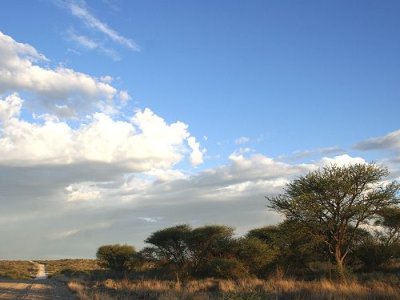 Counter-seasonality to Europe. South Africa's counter-seasonality to Europe, the country's primary export market for horticultural and floricultural products, is a major competitive advantage. South Africa is the closest major southern hemisphere producer of horticultural and floricultural products to Europe, and has significantly shorter shipping times than its rivals.
Biodiversity. South Africa's diversity of climates - tropical, subtropical and desert - allows for a vast and varied array of agricultural products. Marine resources. South Africa has almost 3 000 kilometres of coastline which is commercially used both for conventional harvesting and for mariculture and aquaculture.
Competitive input costs. While South Africa boasts infrastructure comparable to first world countries, its cost structure is decidedly third world. At around 1.7 US cents per kilowatt hour, it has one of the cheapest electricity costs in the world. Labour rates are also competitive.
South Africa's field crops and horticulture farming agriculture sectors
South Africa is divided into a number of farming regions according to climate, natural vegetation, soil type and farming practices. Agricultural activities range from intensive crop production and mixed farming in winter rainfall and high summer rainfall areas, to cattle ranching in the bushveld and sheep farming in more arid regions.
The total gross value of South Africa's agricultural production for 2003 was estimated at R68.7-billion, with farmers' income amounting to R70-billion.
Field Crops and Horticulture
Grain and oilseeds:
The grain industry is one of the largest in South Africa, producing between 25% and 33% of the total gross agricultural production and with a value of some R12-billion. The largest area of farmland is planted with maize, followed by wheat and, to a lesser extent, sugarcane and sunflowers.
Maize is the largest locally produced field crop, and the most important source of carbohydrates in the Southern African Development Community (SADC) region. South Africa is the main maize producer in the SADC, with an average annual production of about 8.8-million tons over the past 10 years.
More than 9 000 commercial maize producers are responsible for the major part of the South African crop, while the rest is produced by thousands of small-scale producers. Maize is produced mainly in North West province, the Free State, the Mpumalanga Highveld and the KwaZulu-Natal Midlands. Local consumption of maize amounts to about 8mt, and the surplus is exported.
Wheat is produced in the winter rainfall areas of the Western Cape and the eastern parts of the Free State. Barley is produced mainly on the southern coastal plains of the Western Cape. The Oudtshoorn district is responsible for about 90% of the lucerne seed produced in South Africa. Sorghum is cultivated in the drier parts of summer rainfall areas such as Mpumalanga, the Free State, Limpopo, North West and Gauteng.
Sunflower farm near Rustenburg in North West:
South Africa is the world's 10th largest producer of sunflower seed, which is produced in the Free State, North West, the Mpumalanga Highveld and Limpopo province. Groundnuts are grown mainly in the Free State, North West and the Northern Cape.
Sugar:
South Africa is the world's 13th largest sugar producer. Sugarcane is grown in 15 areas extending from northern Pondoland in the Eastern Cape through the coastal belt and Midlands of KwaZulu-Natal to the Mpumalanga Lowveld. An estimated 2.5mt of sugar is produced each season. Some 50% is marketed in southern Africa, with the rest exported to Africa, the Middle East, North America and Asia. The South African sugar industry contributes R1.7-billion to the country's foreign exchange earnings.
Established sugar farmers aim to redistribute at least 78 000ha of sugar-producing land to black farmers by 2015, with the government committing R6-million towards the first phase of the programme.
Fruit:
Deciduous fruit is grown mainly in the Western Cape and in the Langkloof Valley in the Eastern Cape. Smaller production areas are found along the Orange River and in the Free State, Mpumalanga and Gauteng. This industry's export earnings represent 12% of South Africa's total earnings from agricultural exports.
Citrus is produced in the irrigation areas of Limpopo, Mpumalanga, the Eastern Cape, Western Cape and KwaZulu-Natal. Pineapples are grown in the Eastern Cape and northern KwaZulu-Natal. Other subtropical crops - avocados, mangoes, bananas, litchis, guavas, pawpaws, granadillas, and macadamia and pecan nuts - are produced in Mpumalanga, Limpopo and in the subtropical coastal areas of KwaZulu-Natal and the Eastern Cape.
Wine:
South Africa is the 10th largest wine producer in the world. About 110 200ha of land are under cultivation with about 317 million vines. About 84% of wines are produced by cooperatives. Some 4 435 primary wine producers employ about 67 000 people. Wine exports increased from 20-million litres in 1992 to a phenomenal 239-million litres in 2003.
Vegetables:
About 40% of South Africa's potato crop is grown in the high-lying areas of the Free State and Mpumalanga. Limpopo, the Eastern, Western and Northern Cape, and the high-lying areas of KwaZulu-Natal are also important production areas. Of the total crop, 50% is delivered to fresh produce markets and a further 18% processed, with the South African potato processing industry having grown tremendously over the past few years.
Potatoes make up 40% of vegetable farmers' gross income, with tomatoes, onions, green mealies and sweetcorn contributing 38%.
Tomatoes are mainly produced in Limpopo, the Mpumalanga Lowveld and Middleveld, the Pongola area of KwaZulu-Natal, the southern parts of the Eastern Cape, and the Western Cape. Onions are grown in Mpumalanga, in the Western Cape and the southern Free State. Cabbage production is concentrated in Mpumalanga and the Camperdown and Greytown districts of KwaZulu-Natal.
Cotton:
Cotton is cultivated in Mpumalanga, Limpopo, Northern Cape, KwaZulu-Natal and North West. It constitutes 74% of natural fibre and 42% of all fibre processed in South Africa. Cotton is grown under irrigation as well as in dryland conditions. Seventy-five percent of local production is harvested by hand. Emerging black farmers are being helped to grow cotton on 9 000 ha of land in four provinces.
Tobacco:
Virginia tobacco is produced mainly in Mpumalanga and Limpopo, with smaller quantities of Oriental tobacco grown in the Western and Eastern Cape. There are more than 1 000 growers in the country, producing some 34-million kilograms every year on about 24 000ha of land.
Tea:
Honeybush tea grows mainly in the coastal and mountainous areas of the Western Cape and in certain areas of the Eastern Cape. Honeybush has become a commercial crop, with the production of more than 100 tons of processed tea per year. South Africa's industry has seen an improvement in the quality of tea and the establishment of export standards, the construction of a large processing and packaging facility in Mossel Bay, increased consumer awareness, the appearance of several brand names on supermarket shelves, and a growing overseas market.
Rooibos tea is an indigenous herb produced mainly in the Cedarberg area of the Western Cape. In 2003 the demand for rooibos was estimated to be 3 800 tons, grown by 320 small- and large-scale producers.
Ornamental plants and cut flowers:
Ornamental plants are produced throughout South Africa, but production for export is concentrated in the central parts of Limpopo, Mpumalanga and Gauteng province. The crop includes nursery plants, cut flowers and pot plants. The country's most important plant export products are gladioli, proteas, bulbs, chrysanthemum cuttings and roses. Amaryllis bulbs are a lucrative export product to the US.
The fynbos industry is being transformed from wild harvesting to cultivation, with an array of cultivars planted. Further fynbos species have potential for development as crops, provided the necessary research funding can be secured. Dried flowers form an important component of the fynbos industry. A large variety of proteas, conebushes and other products are well established in the marketplace.

| If you have any questions or comments please call us on +27-0720390184 or fax us at +27-0880218838384 [RZA only] or e-mail us on [email protected]. |
| You could also contact us with snail mail at: PO Box 12216 Die Boord 7613 Stellenbosch South Africa. |
| If you are a SKYPE user and would like to contact us feel free. Click Here! (make a SKYPE call to South African Tours) or Click Here! (Chat via SKYPE with South African Tours for FREE.) |
|
Disclaimer: TravelinSouthAfrica.co.za endeavors to provide accurate, up to date and truthful information on this site, neither TravelinSouthAfrica.co.za nor any of its employees, agents and associates make any representations or give any warranties, whether expressly or implied, as to the operation of the site, the information, content, materials and products included and available from this site. Whilst the utmost care has been taken in the compilation of this work, TravelinSouthAfrica.co.za, the authors, editors, publishers and system administrators take no responsibility for any loss or damage suffered by any person as a result of the reliance upon the information contained therein. |
| Copyright
- TravelinSouthAfrica.co.za All rights reserved. E-mail: [email protected] Afrihost.com - Click here to get the Best Web Hosting Ever! |
|
Copyright © 2000 -
2008 by [Webcraft.ws]. All
rights reserved. |
|
This website is maintained by Webcraft.ws South Africa |