Ponua is home to a deep and rich culture where the artist and soldier are both held in high regard. Personal and family honor is of the utmost importance to its people. They believe that their actions not only reflect on themselves and their family but also on their ancestors, as well. While the gods are worshipped here, it is the honoring of the spirits of their ancestors that is the foremost in their minds. However, it must be said that the Ponua is a very closed society and foreigners are, for the most part, not welcome.
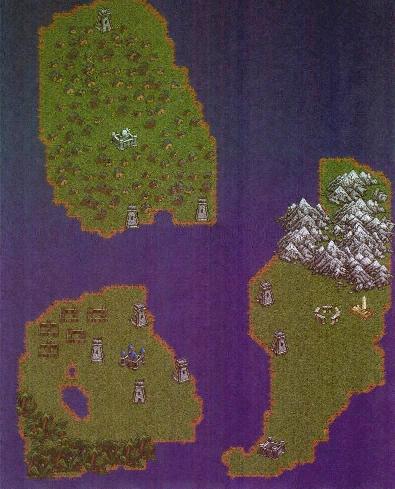
The northern island is home to more than two thirds of the Ponuan population, and is called Gemin. Most of the people there live in villages under the control of a local shogun. The shogun rules by birthright, though the emperor does have the power to strip him of that title if the shogun has acted in a dishonorable way. Any shogun stripped of title is executed and a new shogun is named. To dishonor is often a death sentence. Near the center of Gemin, there is the only city in the empire, Daitoshi. It is home to a marketplace that is known throughout all of Kryastal. It has been said that one can find almost anything there. Because of this, virtually all of Ponua's merchants reside there. It is the only place that accepts foreigners, though reluctantly.
Koi, the eastern island, is called the Isle of the Ancestors and is sparsely populated by artists and some nobility, but it is the three sacred sites that give this island its important place in Ponuan culture. The emperor is to make a pilgrimage to each site on specified days during the year, though he may visit them at any other time as well. The Obelisk of Knowledge has existed for as far back as anyone can remember. It is widely believed that it is as old as the realm itself. Divine knowledge is said to be imparted by to those that pray there. The caretakers of the obelisk are priest-mages who have built a temple nearby. The second sacred site located not far from the obelisk is the Oracle of Time. Here one hopes to receive visions while in pray here. Ponuans say it was at this place that an elderly magess received a prophecy regarding the return of kurushiitokinokamidanomi, "gods forgotten". Many believe that this was the first known reference to the Lords' return. Lastly, near the southern tip of the island is the Tomb of the Ancients. All rulers of the Isles of Ponua are buried within the massive mausoleum which sits upon and earthen pyramid. Around the base of the pyramid are the burials of those given the high honor of being interred near their divine rulers. Tradition holds that the emperor would allow his palace to be burned to the ground before letting any harm come to this ultimate sacred place. If war were to come to the Ponua, the Isle of the Ancestors would be where they would make their last stand.
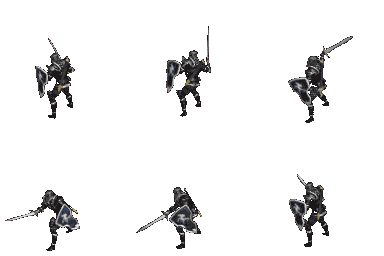
The islands that make up the Ponuan Empire which is ruled be an emperor who governs by birthright. His palace is on the western island, Shinden. The palace was built by the first emperor around ? FA and is one of the wonders of Kryastal. Lavishly decorated in gold and marble, only the royal family, members of court, and palace guard are admitted within its walls, but on selected days of each month the emperor would hold audiences with people from the general population. Surrounding the palace itself are residences for members of the royal court and the palace guard. The palace guard are elite soldiers from the empire's army that is the only other population on the island. Several heavily manned towers were built on the island surrounding the palace. The soldiers of the empire are known as samurai. They fight under a strict code of honor not unlike the orders of knighthood. A large military academy was built by an early general of the empire to thoroughly train its soldiers in the way of the samurai. Small military schools exist on the heavily populated Gemin, but to be accepted into The Academy is a great honor. Though Shinden is controlled by the samurai, rumors have persisted for centuries that a band of shadow warriors inhabit the forest that covers the southwestern part of the island. |