Redfish Tailing
Introduction
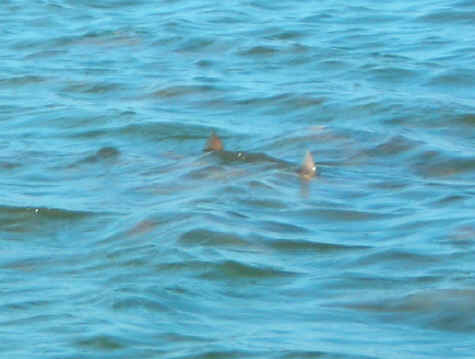
I grew up in Corpus Christi, TX and liked to fish. From time to time, someone would tell a story of seeing redfish schooling together in shallow water, sticking their tails out of the water while feeding, and catching a big one. It is called 'Redfish Tailing'. I had always considered these stories tall fishing tales, maybe something like a Texas version of Big Foot!
About 1.5 years ago, I started telling stories about Redfish Tailing and finally got some photos. Here's my Texas version of Big Foot!
Lighthouse Lakes Trails
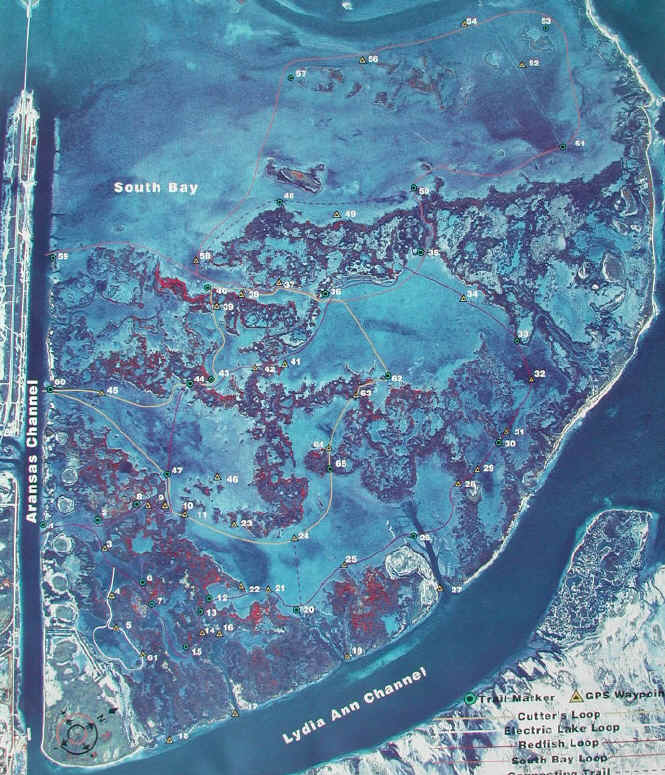
The Lighthouse Lakes Paddling Trail is part of the Texas Paddling Trails created by the Texas Parks and Wildlife Department. It is named after the historic 1857 Lydia Ann Lighthouse on North Harbor Island. North Harbor Island and the Lighthouse are at maker 17 in the lower part of the photo.
The trails meander through a maze of head-high black mangroves that line the channels ('sloughs') and open flats ('lakes'). The channels are normally sandy and about 3' deep due to the tidal flow between the flats. The flats are covered in sea grass and 1-2' deep. Deeper places in the above photo are shown in dark blue. The water is very clear and if you are standing with the sun overhead, you can see everything in the water for about 20' around you. There are hundreds of channels thru the mangrove maze and the marked trails provide only one suggested route.
I had known about the Lighthouse Lakes Trails for several years, but never tried it because I figured it was going to be too crowded. What I didn't understand is the size of the area and the best fishing is between marker 60 and the islands at 45. Once you paddle past markers 47 and 44, you see very few people and that is where you can start to see the Redfish Tailing.
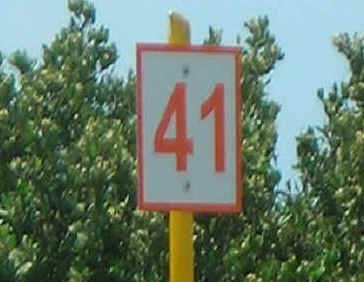
Many of the markers are used in pairs to show the entrance and exit to a channel between lakes. Marker 42 is the pair to 41. I've never seen another person in this area of the trails.
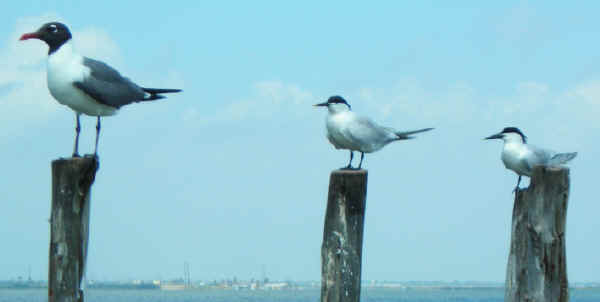
Even if you paddle to the far reaches of the trails, maybe only 15% of the time will you see the Redfish Tailing. However, the bird watching is always great! During the winter months, thousands of ducks are on the flats and they can look like an island when flocked together. There are also lots of spoon bills (bright pink birds), but I couldn't get close enough to take a photo.
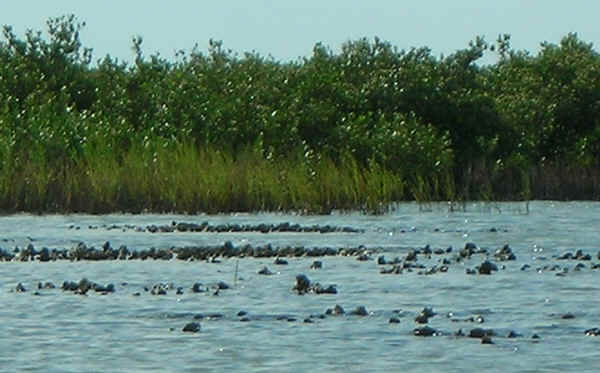
One of the biggest hazards on the trails are the razor sharp oyster shells. At low tide, as in the above photo, the oyster reefs can be easily seen, but at high tide they are just below the surface. My kayak has lots of very deep cuts. It is also very important to wear 'water socks' or some other protection on your feet.
The Hunt
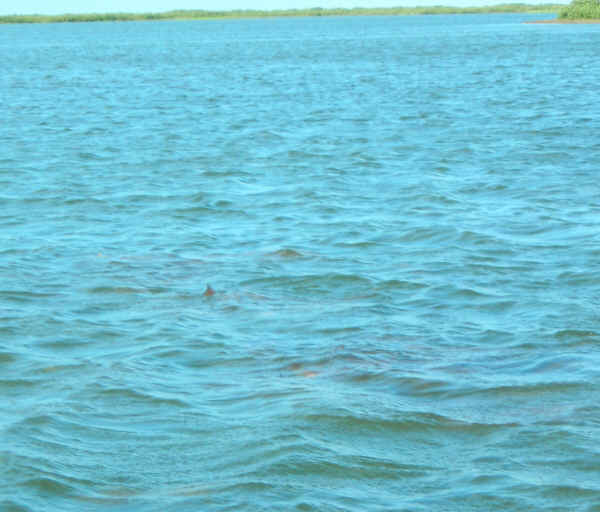
This was a school of about 10 redfish in 2' of water. They were moving slowly so I was able to take the photo, put away the camera, make a good cast into the middle of them, and hook a big (30+ inches) one. It was making some big splashes and stripping the line off my reel, so I decided to try and take a photo. I was trying to hold the rod in my mouth and grab the camera from the kayak when I noticed about half the line was off the reel. I put the camera back down to tighten the drag and the fish got off. Just another tall fishing tell with no photo!
I think trying to catch a redfish while tailing is more like hunting than fishing. I paddle around looking for them and rarely cast on the flats unless I see them. When the fish are tailing, they make a unique water squirt with their side fins, something like you can do with your hand. It is something to look for off in the distance. Birds are also something to look for because the redfish scare the smaller fish into the shallow water. I believe the redfish are actually after crabs and small shrimp hiding in the sea grass. Once I spot them, I normally get out of the kayak and wade, with the kayak in tow. The wind is usually strong in the Corpus Christi area, so you need to get close enough to cast into the middle of them without getting too close to scare them. Many times the school is moving along, so it can be like a chase before they get to a spot with something to eat and slow down. I believe they only stick their tails out of the water when they find something to eat, so there can be some long periods when you have to guess which way they are heading.
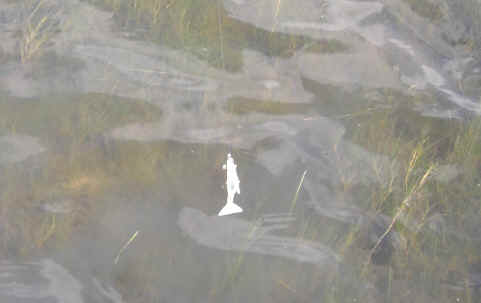
Another important part of catching one while tailing is the lure. The splash from a lure that is to big will scare them and one too small is hard to cast in the wind. I have caught one on a gold spoon, but generally they will not hit a spoon while tailing. They also don't seem to like floating minnow type lure. The lure that seems to work the best is a 1/4 oz DOA white shrimp. There is a lot of glare in the photo, but you can see how clear the water is (about 1.5' deep) and the sea grass the redfish feed in.
The next important thing is to make a good cast right into the middle of them. If you cast just outside their circle you will rarely get a hit. I've also missed several when trying to set the hook too soon because sometimes you can actually see the lure hit the water and 2 or 3 redfish fighting to get it. All I can say is that my heart is usually racing when the lure hits right in the middle of them!
Normally when you get one on the line the rest of the school scatters. If you are fishing with someone, both need to time your casts so both lures hit the water at the same time. After scaring the fish from getting too close, wrong lure, or after catching one, I have waited around for about 30 minutes to see if they will school back up and rarely see them again.
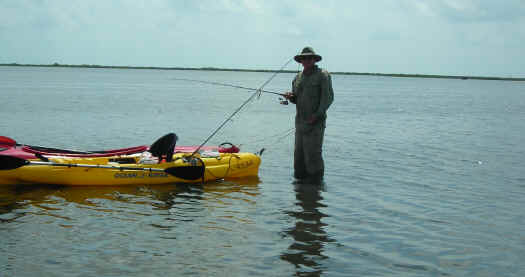
We saw two or three tailing in the area just above the calm patch of water on the right side of the photo. Cindy had the camera and I was trying to get in the photo with the fish before casting. I got too close and scared them. Good sun protection is important on the flats.
Part of what I like so much about this type of fishing (or hunting) is the mystery behind it all. Paddle to one area and you will see 3 or 4 different schools tailing. Paddle back at the same time the next two days and nothing. Sometimes you will see 2 or 3 working together and other times 20 or more in a giant school with lots of them tailing and squirting at the same time. The few things that I have learned is that they move to the deeper water in the channels at low tide and out on the flats at high. The best time to see them is at a high tide near dark. Maybe I should have been a Marine Biologist!
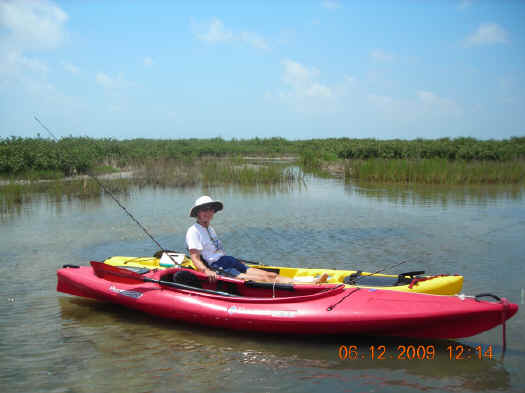
Cindy and I had just paddled thru an unmarked channel at low tide and stopped for something to drink on the flats. Inches make big differences on the flats and both kayaks are sitting on the sand. Just 4 or 5 feet in front of the boats is enough water for both to float. In the channel we just paddled thru, a redfish was swimming just up the channel from the weed line. I saw it and cast right in front of it's nose, but it wouldn't take the shrimp. I went back to Cindy's kayak to get the camera, it saw me, and swam out on the flats never to be seen again.
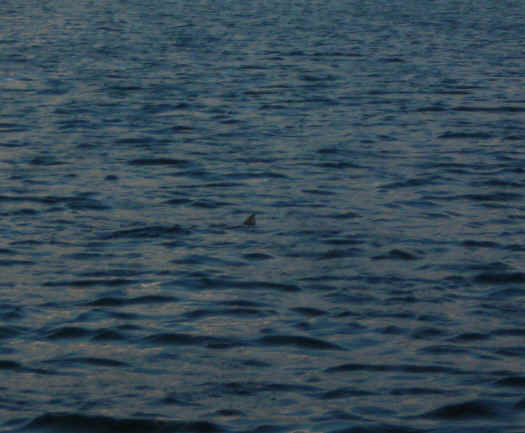
Just before dark and still about 1.5 miles out on the flats, I saw this small school tailing. I made several good casts right in the middle of them, but they wouldn't hit the DOA shrimp. I have no idea if they couldn't see it because of the low light or maybe they were just fooling around with me. It was completely dark when I started paddling again, but had no problem finding my way with the GPS on my kayak. Next time I plan to bring along a flashlight!
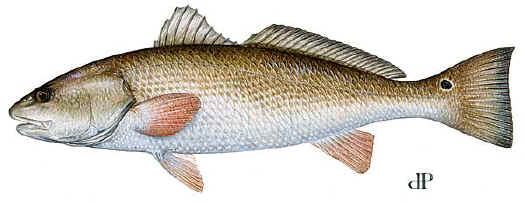
This is the embarrassing thing about writing this story - no photo of an actual fish! The first day of this last trip I caught 4 that were tailing. That is when all the tailing photos were taken. I tried to take a photo of one 19" fish, thought it worked, but only got part of the head. It was windy, trying to hold the fish still while dealing with the camera, and trying to hurry so as not to hurt the fish. Cindy has never seen the redfish tailing and she has been lots of times.
Did I touch up some water photos and this is all just another tall fishing tale about Redfish Tailing? People who have seen Big Foot have also had similar problems with photos!
I did actually scrub A Mermaid, with photos to prove it!