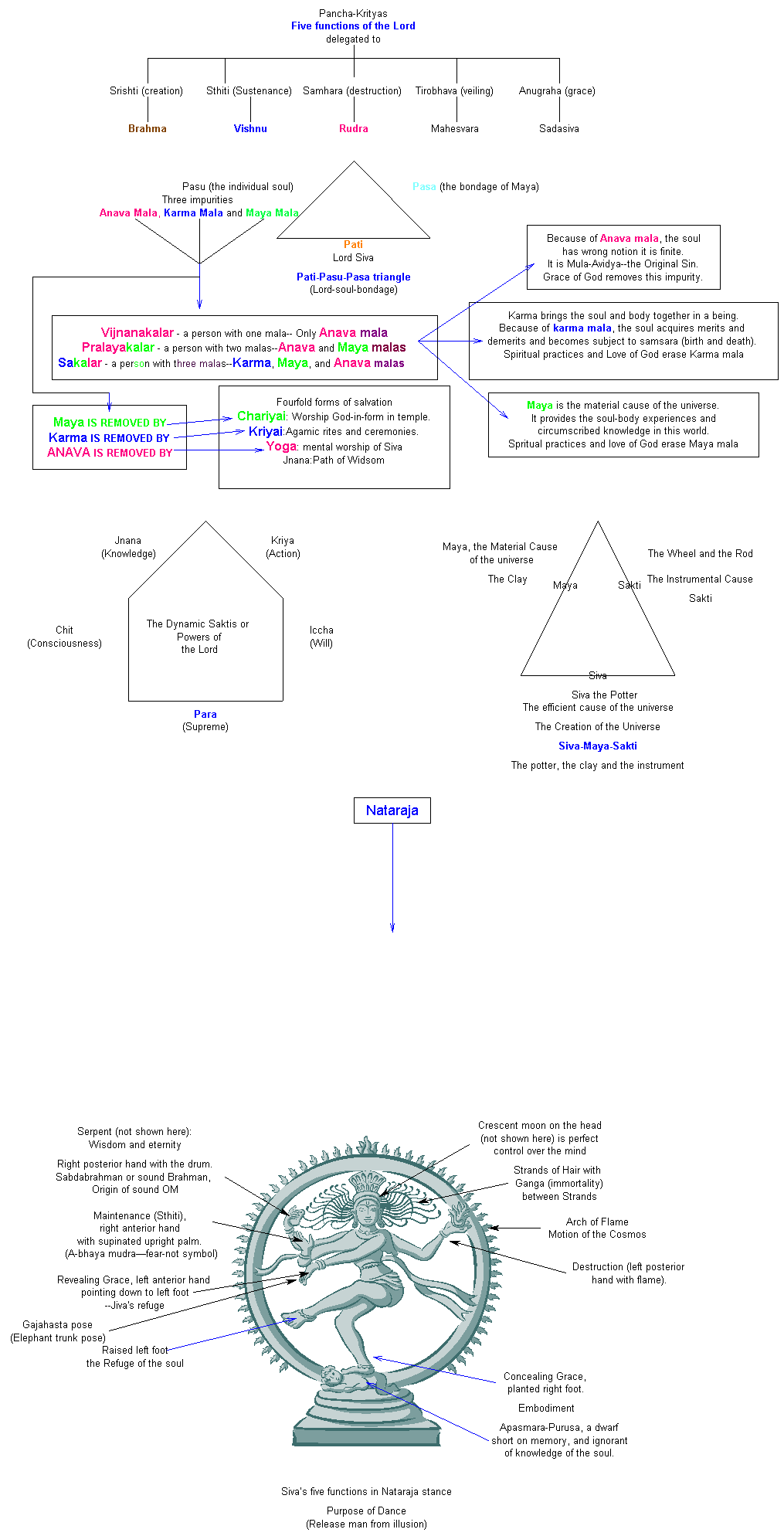
Notes: Prabhavali: look at the arch of flame. There should be only 21 flames; here there are too many.
Note the U on the forehead. In Chidambaram, Lord Nataraja sports three horizontal ash stripes on his forehead.
The five functions of the Lord (Pancha krityas) are depicted in the Dance of Siva.
1: Shrsti: The drum held by the right posterior hand represents creation and emanates Paranada, the Supreme sound. It is the origin of all sounds, thus representing Nadabrahman, Sabdabrahman or Sound Brahman. Dhakka (Drum) produces fourteen distinct sounds which correspond to fourteen branches of Vedic learning. Siva produces these fourteen sounds from the drum at the summation of his dance. The summation is called Cappu in Carnatic music, which is beating the upper part of the right side of the drum (Mrdanga) at conclusion. Pannini, the Sanskrit Grammarian, based his work on these fourteen sounds. Vishnu and Brahma participate in this ensemble; Vishnu plays the Maddala drum and Brahma keeps time.
Chidambaram is the center of the universe where Nataraja dances; that center is in the heart also. Siva is also known as Gangadhara. When Ganger River descended from heaven, Siva caught the fall of Ganga on his head and matted locks, so that the earth was not ravaged by its harsh fall.
Thirugnanasambandar (Thiru-Gnana-Sambandar-TS) was a poet-saint born in Tamil Nadu. He was son of God, Siva. His subtle body carried all the learning that he acquired during his previous births and that at the present birth he recollected all of them so much so that he sang songs of praise of Siva at age three. It is said that he received (infusions of ) Grace in Utero (Karuvile Thiru Udaiyar, God's grace as a fetus). He was the chosen one. He was not subject to five powers (Panchakritya) of the Lord, mentioned above, including veiling (Tirodhana or Tirobhava); predetermined Grace was bestowed on him. TS lived until sixteen years of age.
| NA | MA | SI | VA | YA | |
| Dynamic Panchaakshara of Nataraja | Fire in the hand |
Right foot on Muyalakan
|
drum | out-stretched hand | left lower hand, dispelling fear |
Dīks�, Diksa or Diksai is initiation of a disciple into the mysteries of Saiva religion; it consists of three stages: Samaya-diksai, Viceta-diksai, and nirvana-diksai (initiatory rites, second or middle step in initiation, which gives the disciple special privilege of making Puja to Siva, and Third and last step, which helps the disciple free himself from the bonds of existence and attain emancipation--Tamil Lexicon). As fire destroys cotton and reduces it into ashes, Diksai reduces all Malas into ashes and obtains liberation. Mantras destroy prarabdha karma and guarantees no rebirth, as fire roasts seeds and renders them unproductive. The earth Guru, on behalf of Siva, transfers all the five elements and the soul on to the rope, equal to the height of the disciple. Now the parts (kalas, elements) are marked in color on the rope. Next day, the Guru, separates the symbolic constituent parts of the rope and casts them in the order in which Nivrtti takes place. Nivrtti Marga is involution backwards (upwards) to Siva Consciousness of the Jiva from its last Tattva, Earth; the latter Tattva gets reabsorbed into the former one until all 35 Tattvas are reabsorbed into Siva Tattva. See TATTVAS-36 for details. Earth is reabsorbed into Water which is reabsorbed into Fire and so on through all 35 Tattvas, kalas or parts. This is known as Saanti-y-atiita. The fire of Yoga destroys all kalais or Tattvas until the state of Sivahood is reached by the soul; the matter gradually perishes in fire as spirit evolves. The elements and matter burn in effigy of rope. Saanti-y-atiita / Santiyatita = Santi + Atita = Quietism + edge, limit = Quietism, be-all and end-all. That is Nirvana. Once the disciple goes through these rituals, the disciple becomes a Guru. Consecration of Guru is known as Acarya-abhiseka.
Diksa is the essential element in the liberation of the soul, because Diksa, causing destruction of Anava Mala, by the grace of Siva brings about liberation.
To be continued
