

Schools in a ghetto are sometimes called "Blackboard Jungles."
Facilities in these schools are poorer than those in the suburbs. There are shortages of textbooks, computers and lab equipment.
There is a shortage of teachers willing to be employed in ghetto schools.
Classes tend to be larger and staff change frequently.
Drop out rates are above average in the ghetto.
Educational achievement is below average.
Violence is a problem in ghetto schools. In some metal detectors, security guards, perimeter fencing, random weapon checks and the schools own police force can be needed.
Discipline problems - gang fights, attacks on teachers, damage to property
12. Unemployment
More Blacks and Hispanics drop out of High School and are therefore more likely to be unemployed
4.5% of Whites are unemployed
12% of Blacks are unemployed
8% of Hispanics are unemployed
Black unemployment rates are more than double that of White Americans.
Hispanic unemployment rates are higher than the national average.
Hispanic unemployment is significantly greater for White Americans but slightly less than that for Blacks
Those who do have jobs tend to have low paid, unskilled jobs with few career opportunities and limited job security
13. The Effects of Unemployment
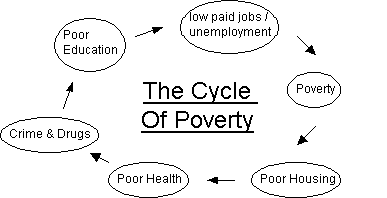
Unemployment leads to
poor education
poor health
poor housing
low self-respect
crime
poverty