
Ethiopia 18% of population are literate, in Sudan 43% of men, 12% of women
Very poor, generally self-build shelters with no clean water supply, no sanitation, no electricity
Many governments in developing countries cannot provide adequate health care. Consequently life expectancy is lower and infant mortality rates higher than developed countries.
Life Expectancy - Ethiopia 46 years UK 77 years
Infant Mortality - Ethiopia 127/1000 Nigeria 121/1000 UK 9/1000
Ethiopia 1 doctor per 88,150 people
Many developing countries rely heavily on loans from developed countries to help them meet their needs. If they fail to meet payments they fall deeper into debt.
Some grow cash crops to improve exports and repay debt. Some developing countries will only be given a loan if they set aside land togrow a cash crop (example Sudan)
Civil war is a major problem. It can lead to the destruction of crops causing food shortages. A huge number of refugees are created as they are forced to leave home. Example - civil war in Sudan 4 million leaving homes moved north creating greater problems with unemployment, starvation and overcrowding.
In developing countries there can be frequent changes of government usually dictators with little or no accountability as to expenditure or misuse of funds. Too much is often spent on the military.
Example - Ethiopia spends twice as much on military as it does on education and eight times as much as it does on health care despite the obvious needs of the population.
Conditions
Care
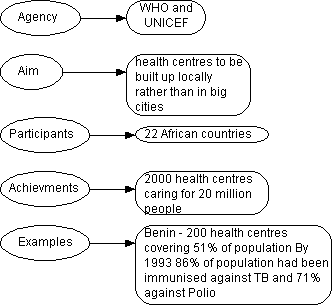
Aid given by richer countries is said to be helpful when it satisfies some of the following points
The people receiving aid are consulted
The aid helps people to become self-sufficient and so frees them from the need to ask for aid in the future.
The aid is targeted to meet specific needs and is designed to help people.
The aid is monitored and assessed to examine hpw effective it is
10. Inappropriate Aid
Aid given by richer countries is unhelpful to developing countries when kt does the following
The aid reaches the government, not those who need it
The aid is given for selfish reasons to please the donor country
The aid encourages those receiving it to rely on aid and discourages a sence of personal responsibility
The aid is not designed to encourage development in the country
11. Examples of Inappropriate Aid
A milkbottle factory in Sudan which has never bottled a pint because they don't drink from bottles
A monkey nut factory in Tazmania where monkey nuts don't grow
A factory in Yugoslavia able to can more mangos than produced in the world
Home 1 2 3

1 2 3 4 5