

 |
 |
 |
 |
 |
|
BAHAY NA PULA>>PULANG SILID Ang Pulitika... |
|
The Liberal Paradigm of the Mass Media For example, in Chile during the Presidency of Salvador Allende (1970-73), the vast majority of the print and broadcast media were violently opposed to the Democratic Socialist President-yet President Allende won the election, the left increased its vote in subsequent municipal and congressional elections based on overwhelming support from the workers, poor peasants, Indians and unemployed shanty town residents. |
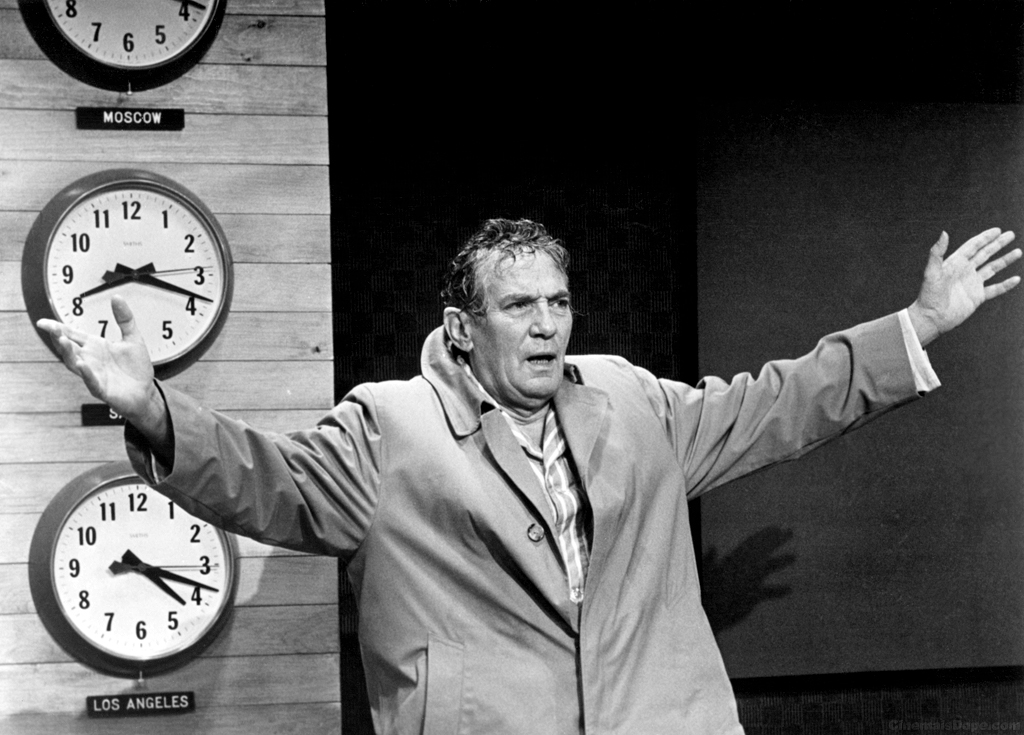 Peter Finch in the film "Network", a critique of the political economy of the media |
|
Marxist Critique More recently in Venezuela, the vast majority of MM has opposed President Chavez (1998-2008) in every congressional and municipal election, yet he has won massive electoral victories. In both cases, socio-economic programs (vast increases in health and education, programs, land distribution, upward mobility, progressive income programs, nationalization of basic resources), strong class based organized support and mass mobilizations creating class consciousness undermined the effectiveness of the mass media.
Throughout Latin America during the first decade of the new millennium, powerful popular movements grew in membership and organization despite the intense demonizing by all the major MM. In Brazil, the Landless Rural Workers expanded its membership and support for land occupations despite the criminalization of its activity by the MM. The same was true of the miners, workers, peasant and Indian movements in Bolivia - leading to the overthrow of MM-backed neo-liberal presidents. Similar mass uprisings overthrowing MM-backed Presidents took place in Argentina (2001) and Ecuador (2000 and 2005).
These cases illustrate the contingent and circumstantial conditions, which influence MM dominance of mass opinion. There are several common conditions in all these cases: |
|
3. Class organizations provide an alternative framework for understanding events, and for defining mass interests in class terms which resonate with their everyday experience and provide information and interpretation that counters the MM. The higher the degree of class organization, the greater class solidarity and struggle the weaker the MM impact on mass opinion. The converse is also true. Whereas in the US, trade unions are run by officials drawing $300,000 dollars or more a year, who emphasize collaboration with the bosses (and publicly reject class struggle politics) and fail to organize 93% of the private workforce, the MM have an easier time influencing mass opinion. MAARI RING SILIPIN: |

|
| ©2009, RUPERT FRANCIS MANGILIT. All Rights Reserved |