Facts about the Elements
List of Elements and how they were discovered
Actinium: was discovered in 1899 by André-Louis Debierne
Alluminum: was discovered in 1825 by Hans Christian Oersted
Americium: was discovered in 1944 by Glenn T. Seaborg, Ralph A. James, Leon O. Morgan, Albert Ghiorso
Antimony: has been known since anciend times
Argon: was discovered in 1894 by Sir William Ramsay, Lord Rayleigh
Arsenic: has been known since ancient times
Astatine: was discovered in 1940 by Dale R. Carson, K.R. MacKenzie, Emilio Segrè
Barium: was discovered in 1808 by Sir Humphry Davy
Berkelium: was discovered in 1949 by Glenn T. Seaborg, Stanley G. Thompson, Albert Ghiorso
Berylium: was discovered in 1798 by Louis-Nicholas Vauquelin
Busmuth: was discovered in 1753 by Claude Geoffroy the Younger
Bohrium: was discovered in 1976 by Scientists at Dubna, Russia
Boron: was discovered in 1808 by Joseph-Louis, Gay-Lussac, Louis-Jaques Thénard, Sir Humphry Davy
Bromine: was discovered in 1826 by Antoine-Jérôme Balard
Cadmium: was discovered in 1817 by Friedrich Strohmeyer
Calcium: was discovered in 1808 by Sir Humphry Davy
Californium: was discovered in 1950 by Stanley G. Thompson, Glenn T. Seaborg, Kenneth Street, Jr., Albert Ghiorso
Carbon: has been known since ancient times
Cerium: was discovered in 1803 by Jöns Jacob Berzelius, Wilhelm von Hisinger, Martin Heinrich Klaproth
Cesium: was discovered in1860 by Robert Wilhelm Bunsen, Gustav Robert Kirchoff
Chlorine: was discovered in 1774 Carl Wilhelm Scheele
Chromium: was discovered in 1797 by Louis-Nicholas Vauquelin
Cobalt: was discovered in 1739 by Georg Brandt
Copper: has been known since ancient times
Curium: was discovered in 1944 by Glenn T. Seaborg, Ralph A. James, Albert Ghiorso
Darmstadium: was discovered in 1994 by Peter Armbruster, Gottfried Münzenber
Dubnium: was discovered by Scientists at Dubna, Russia in 1967 and Lawrence Berkeley Laboratory 1970
Dysprosium: was discovered in 1886 by Paul-Émile Lecoq de Boisbaudran
Einsteinium: was discovered in 1952 by Albert Ghiorso
Erbium: was discovered in 1843 by Carl Gustaf Mosander
Europium: was discovered in 1896 Eugène-Antole Demarçay
Fermium: was discovered in 1952 by Albert Ghiorso
Fluorine: was discovered in 1886 by Ferdinand Frederic, Henri Moissan
Francium: was discovered in 1939 by Marguerite Catherine Perey
Gadolinium: was discovered in 1880 by Jean Charles Galissard de Marignac
Gallium: was discovered in 1875 by Paul-Émile Lecoq de Boisbaudran
Germainium: was discovered in 1886 by Clemens Winkler
Gold: has been known since ancient times
Hafnium: was discovered in 1923 by Dirk Coster, Charles de Hevesy
Hassium: was discovered in 1984 by Peter Armbruster, Gottfried Münzenber
Helium: was discovered in 1868 by Pierre-Jules-César Janssen
Holmium: was discovered in 1879 by Per Theodor Cleve
Hydrogen: was discovered in 1766 by Henry Cavendish
Indium: was discovered in 1863 by Ferdinand Reich, Hieronymus Theodor Richter
Iodine: was discovered in 1811 by Barnard Courtois
Iridium: was discovered in 1803 by Smithson Tennant
Iron: has been known since ancient times
Krypton: was discovered in 1898 by Sir William Ramsay, Morris M. Travers
Lanthanum: was discovered in 1839 by Carl Gustaf Mosander
Lawrencium: was discovered in 1961 by Albert Ghiorso, Torbjørn Sikkeland, Almon E. Larsh, Robert M. Latimer
Lead: has been known since ancient times
Lithium: was discovered in 1817 by Johann August Arfvedson
Lutetium: was discovered in 1907 by Georges Urbain
Magnesium: was discovered in 1808 by Sir Humphry Davy
Manganese: was discovered in 1774 by Johan Gottlieb Gahn
Meitnerium: was discovered in 1980 Peter Armbruster, Gottfried Münzenber
Mendelevium: was discovered in 1955 by Stanley G. Thompson ,Glenn T. Seaborg, Bernard G. Harvey, Gregory R. Choppin, Albert Ghiorso
Mercury: has been known since ancient times
Molybdenum: was discovered in 1778 by Carl Welhelm Scheele
Neodymium: was discovered in 1885 by Carl F. Auer von Welsbach
Neon: was discovered in 1898 by Sir William Ramsay, Morris M. Travers
Neptunium: was discovered in 1940 by Edwin M. McMillian, Philip H. Abelson
Nickel: was discovered in 1751 by Axel Fredrik Cronstedt
Niobium: was discovered in 1801 by Charles Hatchett
Nitrogen: was discovered in 1772 by Daniel Rutherford
Nobelium: was discovered in 1958 by Albert Ghiorso, Glenn T. Seaborg, Torbørn Sikkeland, John R. Walton
Osmium: was discovered in 1803
Oxygen: was recognised as an element in 1774 by Joseph Priestley
Palladium: was discovered in 1803 by William Hyde Wollaston
Phosphorus: was discovered in 1669 by Hennig Brand
Platimun: was discovered in 1735 by Antonio de Ulloa
Plutonium: was discovered in 1941 by Glenn T. Seaborg, Joseph W. Kennedy, Edward M. McMillan, Arthur C. Wohl
Polonium: was discovered in 1898
Potassium: was discovered in 1807 by Sir Humphry Davy
Praseodymium: was discovered in 1885 by Carl F. Auer von Welsbach
Promethium: was discovered in 1944 by Jacob A. Marinsky, Lawrence E. Glendenin, Charles D. Coryell
Protactinium: was discovered in 1913 by Kasimir Fajans, O.H. Göhring
Radium: was discovered in 1898 by Marie Sklodowska Curie, Pierre Curie
Radon: was discovered in 1900 bu Friedrich Ernst Dorn
Rhenium: was discovered in 1925 by Ida Tacke-Noddack, Walter Noddack, Otto Carl Berg
Rhodium: was discovered in 1803 by William Hyde Wollaston
Rubidium: was discovered in 1861 by Robert Bunsen, Gustav Kirchoff
Ruthenium: was discovered in 1844 by Karl Karlovich Klaus
Rutherfordium: was discovered Scientists at Dubna, Russia in 1964 and Albert Ghiorso in 1969
Samarium: was discovered in 1853 by Jean Charles Galissard de Marignac
Scandium: was discovered in 1879 by Lars Fredrik Nilson
Seaborgium: was discovered in 1974 by Albert Ghiorso
Selenium: was descovered in 1817 by Jöns Jacob Berzelius
Silicon: was discovered in 1924 by Jöns Jacob Berzelius
Silver: has been known since ancient times
Sodium: was discovered in 1807 by Sir Humphry Davy
Strontium: was discovered in 1790 by Adair Crawford
Sulfur: has been known since ancient times
Tantalum: was discovered in 1802 by Anders Gustaf Ekenberg
Technetium: was discovered in 1937 by Carlo Perrier, Emilio Segrè
Tellurium: was discovered in 1782 by Franz Joseph Müller von Reichenstein
Terbium: was discovered in 1843 by Carl Gustaf Mosander
Thallium: was discovered in 1861 by Sir William Crookes
Thorium: was discovered in 1828 by Jöns Jacob Berzelius
Thulium: was discovered in 1879 by Per Theodor Cleve
Tin: has been known since ancient times
Titanium: was discovered in 1791 by The Reverend William Gregor
Tungsten: was discovered in 1783 by Juan José, Fausto Elhuyar
Ununbium: was discovered in 1996 by Peter Armbruster, Gottfried Münzenber
Ununhexium: has never sucessfully been produced
Ununpentium: has never been sucessfully been produced
Ununquadium: was discovered in 1998 by Scientists at Dubna, Russia
Ununseptium: has never been sucessfull produced
Ununtrium: has never sucessfully been produced
Unununium: was produced in 1994 by Peter Armbruster, Gottfried Münzenber
Uranium: was discovered in 1789 by Martin Heinrich Klaproth
Vanadium: was discovered by Andrés Manuel del Rio in 1801 and by Nils Gabriel Sefstrôm in 1830
Xenon: was discovered in 1898 by Sir William Ramsay, Morris M. Travers
Ytterbium: was discovered in 1878 by Jean Charles Galissard de Marignac
Yttrium: was discovered in 1789 by Johan Gadolin
Zinc: has been known since ancient times
Zirconium: was discovered in 1789 by Martin
Heinrich Klaproth
Facts about Certain Elements:
Hydrogen: it is the primary component for the Planet Jupiter, it's melting point is 10 points above absolute zero.
Helium: This is first the inert gas in the periodic tabel of the elements.
Nitrogen: has several odd valencies. (NO, NO2, N2O4, N2O),
Carbon: it is the basic building block for all life on Earth
Technetium: This is a synthetic element and has not been found naturally because of it's radioactivity.
Models of the Periodic Table
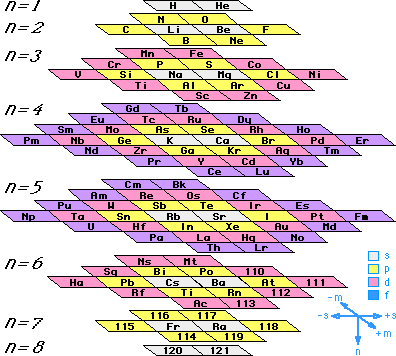
Timothy Stowe's Model:
This model of the periodic table made by Dr. Timmothy Stowe's periodic
table places elements in distinct levels. This specific model is mapped
with 3 dimensions, and have three axes to represent the principal quantam
number, {n} the orbital quantam number,{ l} and the orbital magnetic quantam
number,{ ml}
Theodor Benfey's Model:
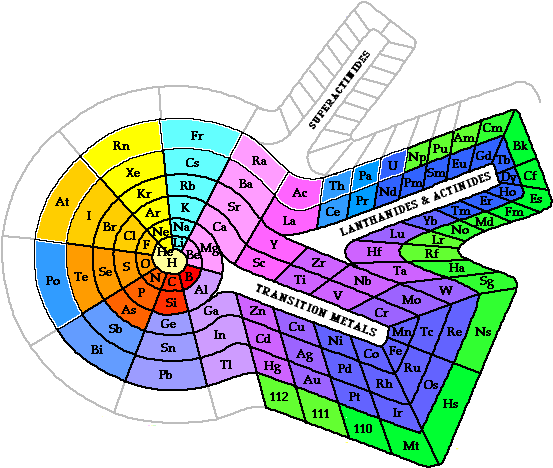
This periodic table is based around the atomic number increasing in an order. Hydrogen is in the center and all the other elements radiate from it.
Emil Zmaczynski's Model
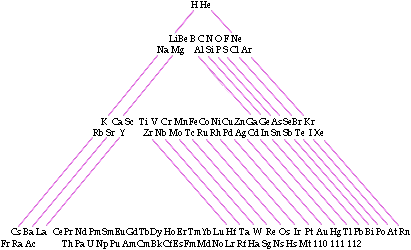
This model of the periodic table is similar in it's groupings to the traditional
model. .The lanthanides and actinides are able to be added in the main
body of the table according to their atomic number because of the triangular
shape
Albert Tarantola's Model:
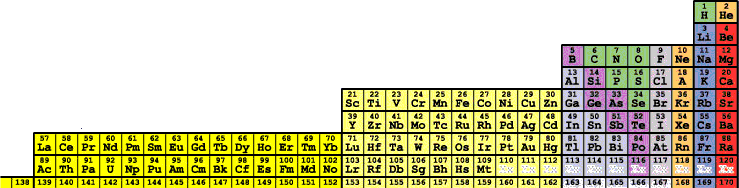
This is a not poperly known version of the periodic table. It's order
of the elements is difficult to follow. However the design looks familiar
to the modern model.
Dimitri Mendeleev's Model:
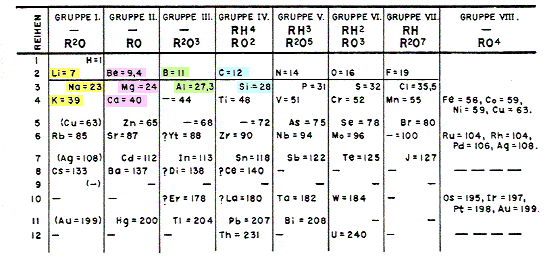
This is the original Periodic Table. Dimitri Mendeleev Aranged the elements
in the order of their atomic mass. The blanks in the table represend elements
Mendeleev assumed existed but were undiscovered at that time.
Modern Model:
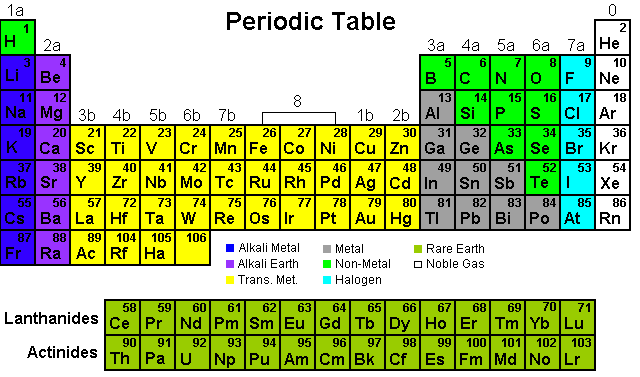
This version of the Periodic is seen in nearly all chemestry labs.It is made of vertical groups and horizontal periods. Most elements in a vertical group typically have the same number of electrons in outer shell. Elements in horizontal periods have the same number of valence electrons. This table shows the atomic number and other stats about all the elements.
Dmitri Mendeleev and his importance to the Periodic Table
Dmitri Mendeleev was borin in Siberia in 1834. His goal was to make a pattern
for indentifying the elements. He noticed that some elements had similar
chemical and physical characteristics.Mendeleev assumed this would be the
way to form the pattern. Mendeleev noticed a pattern appearing when he tried
to arange the elements by their increasing atomic mass. He also discovered
valency and he ordered them by the number of valence electrons. After aranging
all the elements, he noticed that there were three empty spaces, he hypothesised
that those three spaces would be filled by elements not yet discovered. Mendeleev
also predicted the properties of these elements using his table. The elements
were later found and they were ver similar to Mendeleev's predictions.
Conclusion
In Conclusion, the periodic table of elements has come a long way since the earlier days, and there may never be a completely accurate way of aranging the elements. The periodic table will continue to grow and more elements will be found. Maybe one day, we will however find the best way to arange them, but only time will tell.
Bibliography
"The Periodic Table of the Elements "
http://www.upei.ca/~physics/p221/pro00/periodicTble/
"Interesting Modern Versions of the Periodic
Table "
http://www.upei.ca/~physics/p221/pro00/periodicTble/page4.html
"History of the Periodic Table"
http://web.buddyproject.org/web017/web017/history.html
"The Development of the Periodic Table"
http://www.chemsoc.org/viselements/pages/history.html
"A Quick Look at the History of the Periodic
Table "
http://periodictable.com/pages/AAE_History.html
"History of the Periodic Table of Elements"
http://www.ausetute.com.au/pthistor.html
"A Short History of the Periodic Table"
http://www.groton.k12.ct.us/WWW/fsr/student/fall01/short.html
"Mendeleev's Table"
http://pearl1.lanl.gov/periodic/mendeleev.htm
"Periodic Table of The Elements (Janet Form)"
http://web.ccr.jussieu.fr/tarantola/Files/Professional/Mendeleev/
“Who discovered the elements?”
http://education.jlab.org/qa/discover_ele.html