 |
| Spain |
| Spain is amazing country with diverse regions and a history that goes back centuries. It is a place that I see as a challenge because my previous trip was a bit less than perfect.
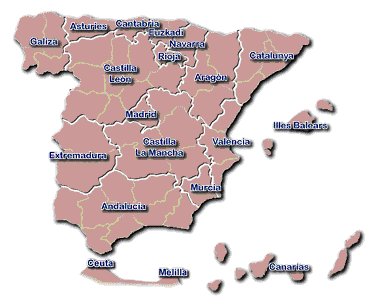
My Itinerary: Leon 1 day, Madrid 8 days, Cordoba 2 days, Seville 1 day, Gibraltar 1 day, Granada 2 days, Valencia 1 day, San Sebastian 2 days, Andorra 1 day, Barcelona 2 days, Girona 1 day. This totals 24 days with a bit of a buffer for travel. |
| Le�n
Le�n was founded in 68 A.D. by the Iberians who used the site to protect their territory from the wild mountaineers of Asturias and Cantabria. The area was then conquered by the Visigoths and then in 712 by the Moors. In 856 the Christians were back in control and King Ordo�o II made Le�n the capital of the Kingdom of Le�n. Then the town became a resting place for pilgrims on their way to Santiago de Compostela. This brought money into the town. Suburbs for traders and artisans sprung up and had some influence on the government during the middle ages. In the 16th century economic and demographic decline set in. This lasted until the 19th century. In June of 1936 Le�n joined the republicans during the Spanish Civil War. During the 1960�s people from the more rural zones of the province moved into Le�n thus expanding the city. Since 1980 Le�n has been the center of a movement for Leonese independence from Spain. Today Le�n is mostly known for its cathedral. Things to Do: Cathedral- This is perhaps the most beautiful cathedral in Spain. Its blue stained glass windows are so heavy that the walls strain to hold them. They have also given the city the nickname of �the blue city.� Check out the cathedral museum. There are a lot of gruesome things to see. The windows are from the 13th century; however much of the structure is a hodgepodge of different architectural elements. Make sure to notice the 15th century altarpiece. Bas�lica de San Isidoro- This is the final resting place of forty queens and kings. Dedicated in 1063 this was one of the first Romanesque buildings in the city. Make sure to check out the treasury, it is more international than you might think. Notice the rare Visigoth bible. |
 |
| Madrid
This site has been occupied since prehistoric times. The first historical data comes from the 9th century when a small palace was built. In 1085 the settlement was conquered by Alfonso VI of Castile. He changed the religion from Muslim to Christian. There were some political troubles and the city was burned in the early 14th century. It was then rebuilt by Henry III of Castile (1379-1406). Madrid was made the capital in 1561. The golden age of the city was in the 16th and 17th centuries. Madrid became a modern city during the 18th century. In 1808 Napoleon�s troops entered the city. The French treated the Spanish brutally and it has not been forgotten. After the War for Independence the monarchy was reinstated in 1814. During the Spanish Civil War (1936-1939) the streets of Madrid became war zones. Madrid was also the first city to be bombed by airplanes. During the dictatorship of Francisco Franco the city became very industrialized and many people moved there from the countryside. After Franco died the country moved to a constitutional monarchy for their government. Madrid is the leading city in the country. Things to Do: Some of this is arranged by neighborhood. Old Madrid- This is where you find the most densely packed sites and monuments. 1. Catedral de San Isidro- This cathedral was designed in the Jesuit baroque style in the 17th century. It holds St. Isidro�s remains. During the civil war much of it was destroyed. Only the nave and a few decorations are original. 2. Plaza de la Villa- This marks the heart of old Madrid, the buildings are stunning. Bourbon Madrid- In 1714 Felipe V ascended the throne and a period of urban renewal began. 1. Palacio Real- This was built to replace a palace that had been burned down in 1734. It is beyond luxurious, but remains unfinished. Check out the Rococo sal�n de Gasparini (the ceremonial dressing room), and the fresco in the throne room. 2. Plaza de Oriente- These statues were meant to go on the roof of the palace, but they were too heavy. This is a great place to stop for lunch. Huertas- This is a very artistic neighborhood. Hemmingway often came here in the 1920�s. Parque de la Monta�a- This park is home to an Egyptian temple that was built in the 4th century B.C. El Pardo- This hunting lodge was built in 1547 for Carlos I. Franco made it is home from 1940-1975. Today it is known for its paintings and tapestries. Museum de Prado- This is Spain�s best known museum. It has 7,000 pieces dating from the 12th to 17th centuries. Some things to look for: works of Diego Vel� and his use of realism and light. There are also several works by Goya. Many of El Greco�s religious paintings are here. Other European countries are also represented. Museo Thyssen- Bornemisza- This was the collection of Baron Heinrich Thyssen-Bornemisza and is the largest private collection in the world on display. It has a huge range of media, periods, and places. The best way to see it is chronologically. The highlight of the museum is the 20th century art collection. Museo de la real Acadamia- This is a small museum with a wonderful collection of the olds masters paintings. Encarnaci�n Monastery- This is by metro San Domingo and only opens on Wednesdays and Saturdays 10:30- 12:30. There are over 1,000 reliquaries containing bits of saints bodies kept here under the watchful eyes of monks. El Rastro Flea Market- Wake up early on a Sunday morning and be prepared to watch out for pickpockets. This flea market is five centuries old and has everything you never knew you couldn�t live without. Museo Arqueol�gico Nacional- This museum is a storehouse of artifacts dating from the prehistoric to the baroque. Look for the Iberian statue the Lady of Elche from the 4th century. The Islamic collection from Spain is amazing. Museo Municipal- This museum is set in a wonderful 18th century baroque house. It uses archeological remains, drawings, photos, coins, stamps, and decorative objects to help visitors understand the history of Madrid. The following cities are daytrips from Madrid. Segovia Segovia was originally populated by the Celtiberians and then the Romans. However, neither the Visigoths, nor Moors made a mark on it so it was probably abandoned. It may have been repopulated as part of the reconquista towards the end of the eleventh century. The town was at its most prosperous in the 13th and 14th centuries. This all ended in 1521 with the unsuccessful uprising of the Comuneros lead by Juan Bravo. Also at this time the economic center of Spain shifted south to Seville. It is because of this decline that Segovia is so well preserved today. This is a great city for walking as there is something wonderful around each corner. Things to Do: Cathedral- Work started on this cathedral in 1525 and the style is extreme late gothic. Check out the museum and the 17th century paintings that depict the passion of Christ. Alc�zar- This is a late medieval castle that was the site of Queen Isabel�s coronation in 1474. Check out the throne room which has a plaque declaring equal power for Ferdinand and Isabel. Climb the tower to get a great view. Roman Aqueduct- Legend has it that the devil built this in only one night to secure the soul of a young girl who no longer wanted to carry water. The aqueduct itself is supported by 128 pillars and was built in 50 B.C. It was in use until the 1940�s. Toledo Toledo can be seen as a daytrip from Madrid, but more than one day might be a good idea. Due to its strategic location humans have lived here since prehistoric times. It is because of this long inhabitation that Toledo has become the melting pot of Spain, it is truly where all the cultures and eras of the country come together. Toledo�s nickname is the city of three cultures, referring to the Christian, Islamic, and Jewish inhabitants that coexist there. The first written history is from the Romans in 193 B.C. However, Toledo was already a large city at this point. In 569 the Visigoths established their court here and it became the religious and political capital. Then in 711 the Moors conquered the city. By 1085 the city was once again controlled by Christians. Many of the Moors stayed and became part of the Kingdom of Castile. Ferdinand and Isabel established the Tribunal of the Inquisition here in 1485. Soon all Jews were expelled from Spain. In 1561 the court was moved to Madrid. This caused the political importance of the city to decline, but the arts were still strong. In 1987 the city became a UNESCO World Heritage site. Many of the sites are closed on Mondays so please avoid that day. Things to Do: Cathedral- This gothic structure is absolutely massive with five names and tons of stained glass. Alc�zar- This structure was used as a stronghold for the Romans, Visigoths, Moors, and Fascists. Today it is a military museum. Casa Museo de El Greco- This was El Greco�s home. Today it houses a nice collection of his paintings. Sinagoga de Tr�nsito- This synagogue is a bit boring on the outside but the interior is well worth a visit. In one hall is the Museo Sefard� which focuses on Jewish culture in Spain. Sinagoga de Santa Mar�a la Blanca- During the 12th century this building was used as a synagogue but in 1492 was reconsecrated as a church. Monasterio de San Juan de los Reyes- In 1476 this monastery was founded by Ferdinand and Isabel to celebrate their triumph over the Portuguese at Toro. Napoleon caused some damage, but it was restored. Museo de los Concilios y de la Cultura- This 13th century Mud�jar church has been deconsecrated and made into a museum about the Visigoths. This looks like a great way to learn about some of the roots of Spain. Museo de Santa Cruz- This former renaissance hospice now houses a small eclectic collection ranging from El Greco�s Assumption of the Virgin (his last known painting), Visigoth artifacts, to an elephant tusk found on a dig. Avila Avila�s history goes back to 700 B.C. when the area was settled by the Vetones. Around the third century B.C. the Romans built a wall around the city making it an important city strategically. During the 11th century the town was rebuilt. The golden age of Avila was in the 16th century and was due to a boom in wool manufacturing. This is really an amazingly preserved town and one of the most important places in Spain for medieval architecture. Things to Do: Medieval Walls- These are the oldest and best preserved in Spain, and perhaps Europe. They date from 1090. Alter de la Virgen del la Caridad- This is where the future Santa Teresa prostrated herself after her mother�s death. Convento de Santa Teresa- This is the house where Santa Teresa was born. Sala de Reliquis- This museum holds relics of Santa Teresa. One of the more interesting ones is her right ring finger and the cord she used to flagellate herself with. Monasterio de la Encarnaci�n- This is where Santa Teresa lived for thirty years. You can take a guided tour to see her cell; and where she had an encounter with the child Jesus. Alcala de Henares This suburb of Madrid was the birthplace of Miguel de Cervantes, the author of Don Quixote, and the home of the most prestigious university in Spain. The university was founded in the 15th century. Museo-Casa Cervantes- This was Cervantes home. It features furniture and objects from his life. These are dated to the 16th century. University- Take a stroll around, maybe you will learn by osmosis. |
|
| Cordoba
Cordoba is in an area called Andaluc�a. It was founded by the Romans in 152 B.C. During this time the city had more cultural buildings than Rome. In 711 the town was conquered by the Moors. It then became the largest city in Spain for a brief time. Cordoba reached its peak in the 10th century as it became the most sophisticated city in Europe. Then in the 1020�s everything changed. Cordoba went into a decline that lasted centuries. Today the glory is long gone but it is easy to wander and see what there once was. Things to Do: La Mezquita- Built in 784 this is the most important Islamic monument in the western world. Take in all the amazing gold mosaics. In 1523 a cathedral was built inside to the protest of the people. Alc�zar- This fortress was built in 1328 during the reconquista. It was a fortress and residence for Alfonso XI. The building also served as headquarters for the inquisition. Be sure to see the garden and the museum with the Roman mosaics. Palacio del Marqu�s de Viana- This 14th century palace has sprawling gardens along with stunning tapestries and sculptures. Cristo de los Faroles- This is the most important religious icon in Spain. Torre de la Calahorra- This Muslim military tower was built in 1369. Now it houses a museum that deals with Cordoba�s medieval history. Madinat Al-Zahra (Day Trip) - Built in the 10th century this palace was considered as one of the best of its time. It was found only in the mid 19th century and remains one of Spain�s most impressive archaeological finds. |
|
| Seville
This area was first settled in the 9th century B.C. In 206 B.C. the Romans defeated the Carthaginians here but destroyed the town in the process. The Romans began a new town which they named It�lica. This area is now about 10 km out of town. Emperor Hadrian was born here. In 49 B.C. the name was changed to Hispalis. The town was growing very quickly at this time. In the 5th century A.D. the Visigoths took over the town and a very tranquil time followed. Then in 712 the Moors conquered the town and changed the name to Isbilga. Christians regained control of the city in 1248. Then in 1356 there was a great earthquake that destroyed much of the town, but it was rebuilt. 1492 began the golden age of Seville as it became the gateway to the new world. Soon Spain was involved in many wars that drained the cities wealth. Today Seville is a city sure not to disappoint as it offers a little bit of everything. Things to Do: Cathedral- There are 44 individual chapels in what is currently the third largest cathedral in the world. Building began in 1401 and took over 100 years to complete. Climb the tower for some amazing views. Notice the altarpiece. You can also visit Columbus here. However there is some dispute as to where his bones really lie. Alc�zar- This was a Moorish palace. Check out the miniature patio of the dolls. Also, look for the Corte de los Mu�ecas, there were the palaces private quarters. Museum Provincial de Bellas Artes- This is Spain�s finest collection of paintings from the Seville school. There are a few here by El Greco. Barrio de Santa Cruz- This is the area that Jews were once forced to live in. |
|
| Gibraltar
Gibraltar guards the only exit to the Mediterranean Sea. It has been important for the last 3,000 years. In 1160 the city was founded by the sultan of Morocco when he built a castle and a citadel here. Two hundred years later it fell to Christian forces. Quickly the town expanded. Oliver Cromwell was the first Brit to show interest in the rock; however it was not captured until 1704. At this time Britain declared it a colony. Since then Spanish have tried many times to recapture it, but has not been successful. Evidence of the rock�s history is everywhere. During WWI it was used as a navel station. Then during the Spanish Civil War (1936-1939) refuges fled there. The city was further fortified during WWII and used as a navel base. It was bombed, but not heavily. In 1981 all residences were granted full British citizenship. Things to Do: Apes Den- Monkey�s live in a cave about half way up the mountain. They will climb on you and steal your stuff if you aren�t careful. Great Siege Tunnels- These were used to fend off a Franco- Spanish siege. They were expanded during WWII. St. Michaels Cave- These are some beautiful naturally formed caves. It looks like they would be fun to explore for a bit. Gibraltar Museum- This museum focuses on the history of Gibraltar. It has the skull of a Neanderthal man. |
|
| Granada
This area has been inhabited since the dawn of history. By the 5th century B.C. the Greeks had a colony here named Elybirge. Under Roman rule in the early centuries A.D. the name was changed to Il�beris. When the Visigoths came into power they transformed the city into a military stronghold. In 711 the Moors took the city with the help of Jewish citizens. By 1010 civil conflicts had wrecked the city. The modern name derives from the name G�rnata, the name of the medieval Jewish neighborhood. In 1013 Granada became an independent kingdom. From 1232-1492 Granada was the seat of the Nasrid dynasty. This was one of the longest lasting Islamic dynasties in Spain. Then in 1492 the Moors surrendered to the Spanish and then the kingdom was demolished and incorporated into Castile. Granada benefited from the influx of gold from the new world and began to expand. Things went along pretty much the same until 1810 when Napoleon showed up with his army. After they finally left Granada became the center of revolutionary activities. In the 1930�s it was very unstable politically. Then in the 70�s Granada was once again transformed into a university town. Today it is a city that celebrates all aspects of its past. Things to Do: The Alhambra- For this site either hope that you are in good shape or find some extra cash for the bus. This fortress sits imposingly above the town. Climb the Torre de la Vela for a view of Granada and the surrounding mountains. Make sure to see the Palacio Nazaries. This is the second most visited site in Europe. The Albaic�n- This was the only Moorish neighborhood to escape the Reconquista. Today it still has a very Islamic presence. It is also a world heritage site. Capella Real- This was Ferdinand and Isabel�s private chapel. Check out the crypt which holds the caskets of Catholic monarchs. In the sacristy you can see Isabel�s private art collection and the crown jewels. Casa de los Tiros- This 16th century palace was named for the musket barrels that protrude from the fa�ade. There is a small portrait gallery of Spanish notables. The highlight is a carved wooden ceiling. Other objects deal with live in Granada during the 19th and 20th centuries. Casa de los Pisa- This is where Santa San Juan died in 1550. There is a small and eclectic art gallery here. It includes some excellent Flemish pieces along with some relics of the saint himself. |
|
| Valencia
This was originally inhabited by Iberian peoples. The Roman city was founded in 137 B.C. and named Valentia. Then city was then captured by the Visigoths, Moors, and eventually the Aragonese. In 1238 it became part of the kingdom of Valencia, which was a section of the crown of Aragon. During the 15th and 16th centuries there was a golden age as Valencia became of the economic powerhouses of the Mediterranean. Then in the 18th century during the war of succession it began to decline. Soon the region had lost its traditional autonomy. During the civil war Franco attacked and blockaded the city. In 1957 there was a huge flood and some traces of this are still evident. A visit to Valencia is next to a visit to medieval Spain. Things to Do: Cathedral- This 13th century cathedral was built on the site of an Arab mosque. Museo de la Catedral- This small museum has an overabundance of religious artifacts to explore. Museo Provincial de Belles Artes- This museum has some amazing displays on Valencian art. Fallus Museum- During the Valencia Fallus Festival each of the satirical sculptures are sent up in flames. Only the best of the best survives each year. This festival has been going on since 1934. The Holy Grail- The cup on display here is said to be the Holy Grail. It can be traced back to the 3rd century. Museo de la Ciudad- This museum has several important collections. The best is the archaeological part. It contains objects from the Romans, Visigoths, Muslim, and Christian eras. |
|
| San Sebasti�n
San Sebasti�n was founded in 1180. Its location made it ideal for a military stronghold. In 1721 the French occupied it for three years. Then in 1808 Napoleon brought the French back and reduced the town to ashes. In 1845 Queen Isabel II visited the town and soon the city was rebuilt. Today it is a prosperous city and a great tourist destination. Things to Do: Castillo de Santa Cruz de la Mota- This cathedral sits on a summit above the town. Museo de San Telmo- This is an overgrown Dominican monastery. It contains Basque artifacts dating back to prehistory. Bilbao (Day Trip)- The main point of going here is to check out the Guggenheim Museum. This modern art museum is hailed as one of the best in the world. Another good place to stop would be the Museo de Bellas Artes. This museum has a great collection ranging from the 12th to the 20th century. Make sure to check out the Flemish paintings. |
|
| Andorra
Andorra is one of those tiny European countries that no one really knows where it is or bothers to stop there. This area has been fought over by the Romans, Visigoths, and Moors, although it was never heavily populated. The country was founded by Charlemagne in 788. He asked the locals to help him fight off the Moors. As a thank you he gave the people their own principality. In 1278 the Acte de Pareage was passed, this is the Magna Carta for Andorra. The French and Spanish governments protect the tiny country. Basically, you just need to be able to say that you have been here. Things to Do: Andorra Model Museum- This museum is located in Engordan, about 2 km from Andorra la Vella. This museum has miniatures of important buildings throughout the country. The following museums are in Ordino, about 7 km from Andorra la Vella. Museum of Miniatures- These are so small they can only be seen through a microscope. St. George Icon Museum- This saint is famous for slaying a dragon. This event has inspired a lot of Russian and Byzantine art. Andorra�s collection spans three centuries. |
|
| Barcelona
Barcelona was founded in 230 B.C. by the Carthaginians. They were then invaded by the Romans, Visigoths, and Muslims. In 801 Christians gained control. The city then grew rich from the fall of Cordoba and ruled a mini empire. Then in the 15th century the city was devastated by the plague and several bank crashes. The empire seemed to have run out of steam. In 1473 the city was destroyed in a siege and annexed to the Castilian state. The peasants did not get a piece of the profits from the new world and they began to revolt. In 1714 the city was destroyed by another siege. Spain�s industrial revolution began here. In the 1830�s the Romantic Movement rescued the almost dead Catalan culture. During the 1930�s Barcelona was the last stronghold of the republicans. Today Barcelona may be the most happening town in Spain. Things to Do: Castell de Montju�c- This historic fortress houses a military museum. It is also has a good overview of the cities history. Automaton Museum- This is one of the world�s best collections of antique robots. They are kept in pristine condition. Bullfight Museum- The bulls remembered here were famous in their own day. The heads are mounted on the walls sans ears that were taken as trophies. Museu del Cal�at- This museum displays century�s worth of shoes. Part of the collection was worn by various celebrities. |
|
| Girona
Girona was inhabited by the Iberians and then the Romans, after that followed the Visigoths, and the Moors. In 785 Charlemagne conquered the city. Then in 878 it became part of the country of Barcelona. During the 12th century the Jewish community flourished, but they were expelled in 1492. Napoleon conquered the city in 1808. It is a beautiful little city to spend the day in, and it is where the Ryanair airport is located. Things to Do: Cathedral- This 15th century cathedral has the second widest nave in the world. There is also a museum with a really good art collection. Make sure to check out the 10th century apocalypse manuscript. El Call- This was the medieval Jewish neighborhood that was wiped out in 1492 during the inquisition. Centre Bonastruc �a Porta- This is the site of the last synagogue in the city. Today is a museum of Jewish history. Tesora Capitular- This museum contains some of Girona�s most precious objects. There is a 15th century tapestry that depicts the creation story. |