| Official Name: Slovak Republic Capital: Bratislava Language: Slovak Currency: Slovak Koruna History Tools have been found dating back to 270,000 B.C. Not only have tools been found but also Homo sapien skeletons. The most well known is the oldest female statue made out of mammoth bone. The most well known early civilization was the Carpathians who existed around 2000-800 B.C. Much of their tools and other objects can still be found. Several other civilizations also left their mark. During the late Iron Age the Celts controlled most of the land. They disappeared when Germanic tribes invaded the area. The Roman era in Slovakia began in 6 A.D. At first they only occupied a small strip by the Danube and a part of southwest Slovakia. In 174 Marcus Aurelius penetrated further into the country. It was on the banks of the Hron where he wrote his meditations. After the fall of the Roman Empire the region was invaded by many different groups. This is called the migration of people by historians. The Germanic Goth tribes arrived just before the Slavs. For a while the Slavs were almost a barrier for Asian tribes to the rest of Europe. There were centuries of war in the area. In 805 Prince Vratislav was lord of Bratislava Castle. This signals the second historical Slavs in the area. By 817 there were about three dozen castles between the Principality of Nitra and the Kingdom of Great Moravia. The Slavs were Christianized in the 7th century. In 833 Prince Mojmir from Moravia conquered Nitra and made the two a rather vast united Slav state. Then in 855 the eastern Franks invaded. However, by 857 there was peace again. In 8002 Ratislav knew that it was important to strengthen his subjects Christianity. After Rome failed to provide a missionary the Byzantine Emperor did. This is when the Slavic alphabet was created. Fighting with the Franks intensified and King Rastislav was captured. After his death Svatopluk took the throne. He managed to keep independence and got protection from the Pope. After his death the area disintegrated. They just could not withstand the Bavarian attacks. The Hungarians had occupied the area after the Slavic Empire fell. However, they did integrate themselves into Slavic society to some extent. This allowed Slavic traditions to live on. The Hungarians conducted raids into the German territories. This lasted until 955 when King Otto I destroyed the Magyar military troops and forced the nomadic tribes to give up their aggressive lifestyle. Slovakia was integrated into the Hungarian Empire. However, it did have special status- Tertia Pars Rengi with Nitra as the capital. When Stephen I took the Hungarian throne in 1000 very little changed in Slovakia. After Stephens death armies began to fight over the territory. The Tatars lead a very bloody invasion in 1241-1243 and almost wiped out the populace. German colonists were then brought in to fill the gaps. Slovakia had royal privileges because of how wealthy the land was. This gave them some control in the government. In 1526 after the Battle of Mohacs the empire collapsed and Hungary ceased to exist. The Ottoman Empire occupied the land. However, Slovakia was able to resist and in 1526 became part of the Hapsburg monarchy. The Hapsburg rulers were even crowned in St. Martins Cathedral in Bratislava. The Turks remained a problem and Slovakia was often under attack. Much of the wealth was lost due to these wars. In 1786 the Turks were finally thrown out of Europe. With the fall of the Ottomans a Slovak national movement was formed. At this point Hungary was once more in control and the movement was off to a slow start. One result of this was the congress of oppressed peoples of Hungary in 1895. This alarmed the government. At this point Czechs became their biggest supporters. In 1896 the idea of a Czecho-Slovak mutuality began to grow. In 1906 the Slovaks managed to get seven seats in the assembly. This worried the Hungarians and forced assimilation into the Hungarian way of life began. This caused more resistance to Hungarian rule. After WWI there was a campaign for the Austro-Hungarian Empire to split into independent states. In October 1918 Slovakia announced its independence from the empire and the new republic of Czechoslovakia came into existence. Prague was made the capital. Not everything about the new country was perfect. Slovaks and Czechs had two very different societies. There Czechs wanted to limit the power of the church and the Slovaks strengthen it. Also, Slovakia had more of an agrarian economy; they had less education on average, and even less experience with a republican government. This all caused some discontent. It seemed to the Slovaks to be a society of inequality. In 1938 Great Britain, France, and Italy were trying to avoid another war with Germany. To do this the Munich Pact was made. It forced Czechoslovakia to cede the Sudetenland to Germany. The Slovak�s felt that they would not be protected. They withdrew from the federation and on March 14, 1039 the first independent Slovak Republic was formed. With that decision Slovakia came under both German influence and protection. They allowed German troops to occupy the country and entered WWII as Germany�s ally. Conditions were comparable to those in Germany during the war. About 10,000 Jews and other undesirables were sent to concentration camps. When the war ended in 1945 the republic of Czechoslovakia was resurrected. In 1948 the communist took control. During the 1960�s there was a movement to reform the communist system. This became known as �socialism with a human face.� The USSR didn�t like the reforms and in 1968 invaded Czechoslovakia. Almost all of the reforms were eliminated. Most of the protests in Slovakia were religiously based. In 1989 revolts swept through Eastern Europe. In December the communist government resigned. However, there were many tensions between the two republics. The Czech�s were much better off economically. There were also different views on how quickly the economy should reform. Due to these issues it was not possible to adapt a new federal constitution. In July 1992 Slovakia declared itself a sovereign state. Czechoslovakia was officially dissolved on December 31, 1992. What I did: Franciscan Church: It was nice, but visitors are not allowed to wander around so I could not look at things closely and soon grew bored. Kapidulska: This is the oldest street in the city. Part of it was restored, but the rest looked like you might expect it to. Jewish Museum: It was small and mostly dedicated to explaining little known ceremonies. It's also in the area that was originally the Jewish Ghetto. This area is now the extreme avant guard section. Bratislava Castle: It was more like a fortress and I wish it had been open! I did however get some stunning pictures. Statues in the old town: The best two are close together. One is of a man leaning around a corner and taking a picture, the other of a man climbing out of a storm drain! |
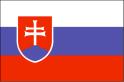 |
| Slovakia |