| Lisbon Five hundred years ago Lisbon was the center of the world�s largest and most expansive empire. But Lisbon is much older than that. In 60 B.C. Julius Caesar made Olisipo the most westerly capital of the Roman Empire. When the Romans began to crumble the Moors took over the town and called it Lishbona, quickly the town begins to prosper. Then in 1147 Alfonso Henriques and his military expelled the Moors. In 1260 Lisbon becomes the capital of Portugal. Portugal�s, and Lisbon�s golden age is from 1495-1521 during the reign of Manuel I. Then in 1580 Spain took control of the country. The people are unhappy with this and revolt. In 1668 The Treaty of Lisbon is signed and Spain once again recognizes Portugal as a sovereign state. This was not the end of Portugal�s troubles, in 1807 Napoleon conquered Lisbon. His troops left in 1811. During WWII Portugal was neutral and became a haven for spies from both sides. In 1986 Portugal joins the EU. Things to Do: National Patheon of Santa Engracia- This cathedral was built in 1681. The most impressive bit is the elevator that brings you to the top of the dome for an amazing view of the city from every angle. Museu Calouste Gulbenkian- This museum houses the collection of an oil tycoon by the same name. It is divided between ancient, oriental, and European art. You could also take in a ballet while visiting. Museu Nacional de Arte Antiga- This interesting collection of European paintings dates back to the 12th century. Look for the polyptych from St. Vincent�s Monastery, the Portuguese portraits, and The Temptation of St. Anthony by Hieronymus Bosch. This museum makes it easy to understand the evolution of Portuguese art. Museu Nacional Militar- This military museum is a fascinating stop. The site itself was used to store arms and gunpowder for the Portuguese fleet. It has one of the world�s best collections of historical artillery. Some pieces date back to the 14th century. Santarem This is perhaps the most charming city in the area known as Ribatejo�s. It was considered the capital of style during the middle ages. There is 3000 years of history here; this includes Roman, Visigoth, Moor, and Portuguese history. During the Roman times Santarem was an important administrative outpost. Then in the 16th century many great explorers were in some manner linked with this city. Today it is a great place to see samples of many types of architecture and Portuguese history. Igreja do Semin�rio dos Jesu�tas- I�m not really sure what this is but it was mentioned in the guidebook as a great place to visit. Igreja da Gra�a- This is a chapel that holds the remains of Pedro Alvares Cabrel, the explorer who discovered Brazil. Evora Evora is a UNESCO world heritage site and is known as the museum city. The Romans called the town Liberalitas and built the walls. After the Roman Empire collapsed the barbarian Visigoths took control for a bit. This didn�t last long as the Muslim Moors soon conquered the barbarians. Once the city was taken back from the Moors in 1166 Evora became one of Portugal�s leading medieval cities. Many royal weddings were held here. During the Avis dynasty (1385-1580) the city became a haven for the humanities. At one point there was a large Jesuit population but they were expelled in the 16th century. After this the city began to decline. Today Evora shows off its cultural past in a remarkable fashion. Things to Do: Roman Temple- This first century temple was thought to have been dedicated to Diana. There is also evidence that it was once used as a slaughterhouse. Igreja de S�o Jo�o Evangelista- The interior of the cathedral is covered in amazing tiles. Cathedral (Se) - This 12th century cathedral has a nice amount to look at. Notice the twelve apostles carved on the doorway. There is a museum upstairs with religious artifacts. Make note that there is a shard of wood here said to be from the cross Christ died on. Capela dos Ossos- This chapel is built from the bones of 5,000 people by three rather morbid monks. In writing over the door is a quote stating that that the bones are lying in wait for you. Lagos Roman Locabriga was the first town here. Later on the Moors renamed it Zawiga. After the reconquest in the 13th century not a whole lot went on here. Lagos was often used as a port for ships heading to Africa. The port brought the town prosperity. This ended when Henry the Navigator died and none of the surviving royal family members had any interest in the town. It was around then that pirates began to control the waters and raid the towns. After the earthquake on November 1, 1755 the town lost its political importance. Today Lagos is known for its beaches and nightlife. Things to Do: Museo Municipal- the Municipal Museum contains items excavated from the Algarve. There is an interesting believe it or not sections which features an eight legged calf. Fortaleza da Ponta da Bondeira- This 17th century fortress holds in interesting display of maritime exhibits. Mercado de Escravos- This was the slave market. Legend has it that it was here in 1441 that the African slave trade first started. Sagres (Day Trip) - This town was once considered to be the end of the earth. It was here that Prince Henry the Navigator formed his idea for a school. The school was probably nearby. Faro This is the Algarve�s largest city and capital. The town has both Roman and Arab ruins. Moors called it Ossonoba and developed it into a trading port until 1249 whey they were defeated by the Portuguese. The town then began to decline. Today this is mainly a transportation hub, but there are still a few good things to check out. Things to Do: Museu Arquel�gico- the Faro archaeology museum is in a church that was built in 1519. Most of the exhibits are religious. Capela dos Ossos- This is a chapel decorated in bones from the nearby cemetery. It was completed in 1816 and looks as though it is tiled in bones. Porto Porto is famous for making the drink by the same name. Early on the people of this area became known as the Portugalenses; later on this inspired the countries name. In 1147 Nordic crusaders invaded. Soon the city began to develop rapidly. Many ships used to explore the world were built and launched from here. During the second half of the 18th century the city began to modernize. Things to Do: Taylor�s Winery- This is hailed as the most interesting winery in the area. It seems less rigid and modern than the others. Make sure to have a glass of port out on the terrace overlooking the sea. Igreja de S�o Francisco- This cathedral was built between 1383 and 1410. The interior is stunning. Make sure to notice the Romanesque columns. There are thousands of people buried beneath the floor. Museo Nacional Soares dos Reis- This former royal residence now houses a collection of 19th century paintings. Most of the museum focuses on Portuguese artists, but there is also a significant European artist section. Take a look at the section on decorative art as well. Casado Infante- Legend has it that Prince Henry was born in this house. The museum also has historical information on Porto. Braga This town is nicknamed Portuguese Rome due to the religious influence that it has had over the centuries. The city was begun by the Celts around 700 B.C. and was called Bracara. In 250 B.C. it was conquered by the Romans. During the 8th century the Moors took over, however it didn�t take long for the Catholics to regain control. At one point Braga was even used as a dowry for a princess. Things to Do: Museu do Biscainhos- This is a museum in Biscainhos palace, a noble home for about 300 years. Check out all of the Portuguese furniture. Cathedral- This is the oldest cathedral in Portugal. The treasury shows off the best paintings and relics the town has to offer. Make sure to see the cofres cranianos, or brain boxes! Igreja do Bom Jes�s- This is billed as the most famous landmark in Braga, but I couldn�t find much info on it at all. It seems like it is a cathedral up a long staircase. There are grottoes and chapels to check out along the way up. Viana Do Castelo This is named as one of the top coastal cities to visit in Portugal. The area has been inhabited since 2000 B.C. when the Celts were here. Once the Romans had invaded the town declined. During the age of exploration some explorers set off to the new world from here. However, the town�s wealth comes from trading with Brazil. Today the town still shows off its former wealth. Things to Do: Pra�a da Republica- This is best most attractive square in the city. Notice the 16th century fountain. Monte de Santa Luzia- These are some Celtic ruins. It is quite a hike but worth the view. Zimbario- This is another place with a view, but here you can take an elevator. Castelo de S�o Tiago da Barra- This is a castle that was built in 1589 by Felipe I of Spain. Coimbra This is Portugal�s only university town. It is also considered to be the most romantic city in the country. Perhaps this is because it is full of horny college students. The university was founded in 1290. This was a really difficult place to research. Things to Do: Arco de Almedina- This is the last bit of the Moorish town wall. S� Veha- This is a 12th century Romanesque cathedral. Take a look at the Flemish Retable over the alter. S� Nova- This is the new cathedral. University of Coimbra- This is the oldest university in Portugal. Notice the students in black capes. Sala dos Capelos- This museum houses portraits of Portugal�s kings. |
 |
| Portugal |
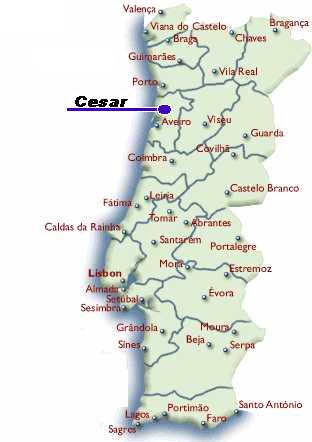
| Portugal is a country that has helped to shape the world. Well, find it really. Long confused and lumped together with Spain, Portugal stands out as its own country. My Itinerary: Faro 1 day, Lagos 2 days, Evora 2 days, Lisbon 2 days, Santarem 1 day, Coimbra 2 days, Porto 2 days, Braga 2 days, Viana Do Castelo 1 day. This is 15 days in total. I�m not adding in a buffer because the towns are small and not far apart. I am only spending this much time here because after the breakneck speed of the U.K. and Ireland I will need a break. |
 |
|
|
|
|
|
|
|