 |
| Germany |
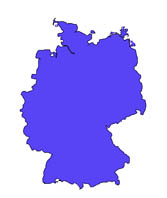
| Germany is a diverse country that has played a huge role in shaping Europe today. The recent history is almost as interesting as the medieval history.
I will spend 1 day in Bremen, 2 days in M�nster, 2 days in Kassel, 2 days in Dusseldorf, 2 days in K�ln, 1 day in Aachen, 1 day in Bonn, 2 days in Koblenz, 1 day in Trier, 2 days in Frankfurt, 2 days in Heidelberg, 1 day in Berchtesgaden, 1 day in Munich, 1 day in Augsburg, 1 day in Rengensburg, 2 days in Nuremberg, 1 day in Rothenburg ob der Tauber, 2 days in Weimer, 1 day in Chemnitz, 2 days in Dresden, 1 day in Leipzig, 1 day in Wittenberg, 11 days in Berlin, 2 days in Braunschweig, 2 days in Hanover, 2 days in Celle, 1 day in Stralsund, 1 day in Schwerin, and 1 day in Schleswig. This makes for 55 days including a three day buffer. |
| Bremen
In the 8th century Charlemagne�s troops entered the area to Christianize the local tribes. It is difficult to say just how old the original settlement was. A deed claims that the town as founded in 788 when it became a bishopric. These bishops were the driving force behind the Christianization of Scandinavia. In the 12th century Henry the Lion became the ruler. He took power away from the clergy and Bremen became a merchant town with dominance in the North Sea. This ended when the Hanseatic League expanded. Then in the 14th century Bremen ships acted as pirates robbing merchant vessels of their wares. In 1358 this ended with acceptance to the Hanseatic League. The citizens of Bremen were never happy with being part of the league and protested it on several occasions. In 1427 they were expelled. Due to this the town lost its importance on the seas. It was in Bremen on March 6, 1901 that an assassination attempt was made on Keiser Wilhelm II. After WWII the city was part of the American occupation zone. Things to Do: St. Petri- Dom- During the 1970�s this 1200 year survivor of WWII was excavated. This revealed many treasures that were later used to restore the church to its full medieval glory. You can climb the tower for a great view. Be sure to check out the Blei Keller in the basement, there are hundreds of mummified corpses. Beck�s Brewery- Check out where this beer is made. Be sure to make reservations for the two hour tour. Kunsthalle- This excellent museum holds sculptures and paintings from the 15th century to the present. Check out the German Expressionists. �bersee Museum- This museum boasts a trip around the world in just a few minutes. Once you finish that check out the section on Bremen history. |
 |
| M�nster
In 793 Charlemagne sent missionaries to convert the Saxon�s in the area. They built a church and a cloister. During the Middle Ages M�nster was a leading member of the Hanseatic League. In 1534 the Anabaptists (were a radical sec of the reformation that believed that infant baptism was not valid) held the M�nster Revolution and created a democratic proto-socialistic state. This didn�t even last a year, in 1535 the town was recaptured and the Anabaptists were put to death. In 1648 the Peace of Westphalia ended the Thirty Years War and proclaimed the city to be Roman Catholic. Then in 1780 the university opened. It was in 1802 that M�nster was conquered by Prussia and became part of the short lived Westphalia. During WWII the city was mostly destroyed by allied air raids, it was rebuilt in pre-war style. Things to Do: Dom- This cathedral was built in the 13th century and restored after WWII. Be sure to check out the astronomical clock. Friedenssaal- This Hall of Peace commemorates the end of the Thirty Years War. The Peace of Westphalia was signed here in 1648. Landsmuseum F�r Kunst und Kulture- This museum has both modern and antique art. Lepramueum- This seems like a rather unique museum to learn about an old disease. M�hlenhof Freilichtmuseum- This open air museum allows you to experience life on an 18th century farm. Stadt Museum- This museum traces the history of M�nster. |
|
| Kassel
The towns name is derived from the ancient Castellum Cattorum, a German tribe that has lived in the area since Roman times. However, there is not a huge amount of information on how they lived. Kassel was first mentioned as a town in 913. By 1189 it had gained city status. Then in 1567 Kassel became a center of Calvinist Protestantism in Germany. Strong fortifications were built around the town to protect the city. In 1685 1,700 Huguenots found refuge here. Then during the late 18th century Kassel became famous for selling mercenaries (Hessians) to the British crown to help suppress the American Revolution. In the early 19th century the Brothers Grim lived here. This is why the town attracts so many visitors. Then in 1807 Kassel was annexed to the Kingdom of Westphalia by Napoleon. This didn�t last long because in 1866 the city was annexed to Prussia. Soon it became an industrial center. During WWII British bombs destroyed 90% of the city. Strangely, the weapons factory was never hit. On April 3, 1945 the U.S. army captured the city. A few, but not many of the buildings were restored. Things to Do: Museum f�r Sepulkralkulture- This museum is about death rituals. Br�der Grimm Museum- This museum strives to bring to life the men behind the fairy tales. Kuba- This museum features bizarre art. Hessisches Landsmuseum- This museum has an eclectic collection. Half the fun is trying to guess what will come next. Schloss Wilhelmsh�he- Napoleon III was imprisoned in this massive castle after the Battle of Sedan. You can look at the excellent museum and the palaces extravagant rooms. Schloss L�wenburg- This castle was built to look like medieval ruins. However it was actually built in the 19th century and is truly in ruins. Herkules- This sits above the town and acts as its emblem. |
|
| D�sseldorf
The first mention of D�sseldorf was in 1135. In 1280 it became the seat of the Counts of Berg. Then in 1288 was granted a city charter. Slowly the town grew and in 1380 became the capital of the Duchy of Berg. For several centuries power went between many different rulers. Then in the 18th century D�sseldorf industrialized and the city began to grow like crazy. Eventually the court was moved to Munich and the city�s popularity declined. After the Napoleonic wars poverty grabbed hold of the city. It wasn�t until the 19th century when industrialization revived the city and it once again began to grow. During WWII D�sseldorf was reduced to practically rubble. Parts of the hold town have been rebuilt. Things to Do: Schloss Benrath- Built in the 18th century this palace is one of the last examples of Baroque architecture in Western Europe. Kaiserswerth- These are the ruins of Emperor Friedrich�s palace built in 1184. It was destroyed in 1702 in the War for Spanish Succession. Film Museum- This museum chronicles movie madness. You can even learn how some of the special effects work. Kunstsammlung Nordrhein- Westfalen- This museum has a great collection of Matisse�s, Picasso�s, and surrealists. Museum of Kunst Palast- This museum mixes the old and the new. Stadtmuseum- This museum recounts D�sseldorf�s history from the prehistoric to the aftermath of WWII. |
|
| K�ln
K�ln became a Roman city in 50 AD. The town elected a bishop as early as 313, and then in 785 became the seat of the archbishop, making it an important religious city. During the Middle Ages K�ln was part of the Holy Roman Empire. Due to its strategic location on the Rhine the city grew with increased trade. In 1475 it became an imperial free city; despite this the bishops still had the right to capital punishment. This didn�t seem to be enough for the bishops; they wanted more and did everything to complicate K�ln�s bureaucracy in their quest for power. In 1801 the city lost its free city status and became part of the French Republic. However this didn�t last long because in 1815 it was made part of Prussia. Before WWI industrialization had helped K�ln to grow. Then during the Weimar Republic many improvements were made to the city. WWII brought 262 air raids to the city. Slowly K�ln was rebuilt. Things to Do: Dom- This cathedral is reason enough to visit K�ln. The inside is a stunning mix of statues and paintings. Notice that St. Ursula and her attendants are represented. The remains of the three kings are said to be here as well. Be sure to climb the south tower. R�misches Praetorium und Kanal- This was the Roman militaries quarters. St. Ursula- This is a church dedicated to St. Ursula who died trying to maintain her virginity. Check out the 700 skulls in the Goldene Kammer. Museum Ludwig- This museum has works by almost every big artist in the 20th century. It also has the largest Picasso collection in the world. Wallraf- Richartz Museum- These galleries are lined with masterpieces spanning the middle ages through post-Impressionism. NS-Dokumentations-Zentrum- This was K�ln�s Gestapo Headquarters. The museum portrays it as it was during the Nazi regime. Geldgeschtliches Museum- This museum discusses the inflation in Germany between the wars. There is also a section on the history of money. |
|
| Aachen
Romans took advantage of the nearby hot springs here, but the Celts were the first to the area. Once the Romans had left not much is known about the area. Then in 769 Charlemagne spent Christmas here, which signifies that there was a significant enough of a settlement to support a large royal party. Eventually a castle was built there and Charlemagne was buried in a chapel here as well. Then in 936 Otto I was crowned here, for the next 600 years the Holy Roman Emperors were crowned here as well. During the Middle Ages Aachen was one of the largest cities in the empire. After the Thirty Years War its importance began to decline. By 1800 Aachen had become a railroad manufacturing center. During WWII the city was badly damaged. It was also the first German city to fall to allied troops. Things to Do: Dom- This was the palace chapel for Charlemagne. His remains can now be found behind the alter. It was completed in 805. Schatzkammer- This is a huge and very creepy collection of relics. |
|
| Bonn
The Romans arrived here a little before 10 B.C. Soon their small camp had become a fort of 7,000. After the Romans left a town remained. Between the 11th and 13th centuries the cathedral was built. Then in 1597 Bonn became the capital of the Principality of K�ln. The town began to gain influence. During the 18th century many baroque buildings were constructed and the present face of the city began to take shape. Then in 1794 French troops siege and occupied the city making it part of the Napoleonic Empire. This, like the others, didn�t last long because in 1815 Bonn became a Prussian city. Due to the warfare and time Bonn was no longer an important city. After WWII it was located in the British zone of occupation and was made the capital of West Germany. Today some of the current government is still located in Bonn. Things to Do: Beethovenhaus- This is where Beethoven was born. It holds all sorts of personal effects including his first violin. M�nster- This 12th century cloister holds the remains of martyrs. Palais Schaumberg- Germany�s first chancellor lived here. Haus der Geschichte- This museum discusses the history of a nation dealing with its past acts and future potential. |
|
| Koblenz
This area has been inhabited for 2000 years. Around 9 B.C. the Romans built a fort here. Over the centuries it was captured by the Franks, German princes, French, and the Prussians. I didn�t have much luck finding a history on this. However the real reason for coming here is to explore the Rhine Valley and not to see the town. Things to Do: Festung Ehrenbreistein- This 11th century fortress towers over the town. Mittelrheinmuseum- This museum is dedicated to paintings depicting the Rhine Valley. |
|
| Trier
In 16 B.C. Augustus named Trier as the regional capital. From 259 to 274 this was the capital of the Gallic Empire. Then in 451 Attila the Hun invaded. In the 5th century the Roman army withdrew. The Franks sacked the city many times and eventually it became part of their territory. Soon the town began to shrink drastically. Then in 843 the Treaty of Verdun incorporated Trier into the area of land know as Lorraine. This was followed in 870 when the town became part of the east Frankish empire, or the future Germany. The Apostle Matthew�s head was buried in a local church and the town became a place of pilgrimage. Perhaps this is why the Vikings sacked the city and ended up destroying most remnants of Roman rule. During the Middle Ages Trier was ruled by a bishop and by the middle of the 14th century the town was thriving again. However French occupation during the 17th and 18th centuries destroyed the city. Then in 1797 it became a French city and once again began to prosper. It was in 1814 that Trier was taken over by Prussian troops and restored to Germany. Once again the city declined. In 1840 the city became a trade partner with Luxembourg and prosperity slowly returned. During WWI and WWII the city suffered greatly as it was located on Germany�s western front. Today it is a great place to visit with thousands of year�s worth of history. It is also Germany�s oldest town. Things to Do: Porta Nigra- Built in the second century B.C. by the Romans this is Trier�s most impressive monument from that time. You can climb to the top for a great view. Dom- This 11th century cathedral shelters the tombs of archbishops. The Holy Robe of Christ is said to be at the eastern end of the cathedral. Kaiser Thermer- Be sure to look at these Roman baths from both above. |
|
| Frankfurt am Main
Artifacts have been found in the Frankfurt area that date back as far as the Stone Age. However, the first permanent settlement was during the Roman Era, around the first century. The Romans retreated around 260. Then in 793 the name Frankfurt appeared for the first time, although there is evidence that it was already a large city at this point. Charlemagne built a royal court here, and later his son, Louis the Pious, selected it as his seat. He built a larger palace and stronger city walls. In 1147 the second crusade was called in one of the local churches. Soon Frankfurt became the traditional place for German kings to be elected. The city began to expand. In the 16th century trade and the arts flourished. During the Thirty Years War the town was able to remain neutral. However this did not prevent all immediate problems, and soon the plague ravaged the city. With the Peace of Westphalia in 1648 Frankfurt became an imperial free city; this allowed it to once again prosper. During the French Revolution the town was occupied. Then in 1816 it was declared a free city of the German Federation. In 1933 all Jewish city officials were fired. On March 22, 1944 British bombs destroyed much of the old town. After the war the city was rebuilt and restored. Today the Frankfurt stock exchange has made the city the second most important commercial center in continental Europe. Things to Do: Dom- This is the only major historical building to escape damage in WWII. Be sure to check out the museum. St�del- This museum has vital paintings from nearly every period of western tradition. Museum der Weltkulturen- This museum holds a collection of items from around the world. Historisches Museum- This museum discusses the history of Frankfurt. J�disches Museum- This museum deals with Jewish life in Frankfurt. Liebieghaus- This museum holds a nice collection of classical, renaissance, and baroque sculptures. |
|
| Heidelberg
In the 5th century B.C. the Celts built a fortress here. Then in 80 A.D. the Romans built a permanent camp, they stayed until 260. In 769 the village of Bergheim was first mentioned. It wasn�t until 1196 that the town was called Heidelberg. During the reformation it was a safe haven for Martin Luther. Then in 1693 French troops nearly destroyed the city. It was rebuilt in the 18th century. During WWII it escaped any major bombing. I wasn�t able to find a whole lot on this small town. Things to Do: Heidelberger Schloss- Construction began on this castle in the 14th century but it was added onto and altered for several centuries. You will need to take a cable car to reach it. Philosophenweg- This philosopher�s path leads to several interesting ruins. Kurpf�lzisches Museum- Here you can see bits of one of the oldest men ever to be found as well as other archaeological finds. Alte Universitat- Heidelberg University was founded in 1368. It is worth a look around. Dokumentations und Kulturzentrum der deutschen Sinti and Roma- This museum documents the persecution of the Sinti and Roman by the Nazi�s. Much of the history is explored through personal stories. |
|
| Berchtesgaden
Berchtesgaden was first mentioned in 1102 because of nearby salt deposits. It changed hands a few times during the Napoleonic wars. In 1810 it became popular with the royal family. During WWII Hitler�s vacation home was here. I wasn�t able to find much on this, but I think it could be a daytrip from Munich. Things to Do: Kehlsteinhaus- This was called the Eagle�s Nest. It was Hitler�s mountain retreat. The view is the best part. Dukumentation Obersaltzberg- This is where Hitler and his inner circle had their homes. There is a museum about Nazi dictatorship here. |
|
| Munich
Munich began as a city founded next to a settlement of monks in the 12th century. During the middle ages the town was fortified. In 1255 the city became the ducal residence of Upper Bavaria. Louis IV became Holy Roman Emperor in 1320 and used Munich as his residence. Then in 1468 the Frauenkirche was constructed. In 1506 Bavaria was reunited and Munich became the capital. During the 16th century Munich was the German center of both the renaissance and the Counter Reformation. In 1705 during the War of Spanish Succession the city came under Hapsburg rule. By 1789 it was one of the largest cities in Europe. Then in 1806 Munich became the capital of the New Kingdom of Bavaria. Before the outbreak of WWI the city grew quickly, however during the war life was very difficult. The French bombed the city many times. After the war the Nazi party began to grow here. During WWII there were 71 air raids and much of the city was destroyed. After the war Munich was rebuilt on its pre war street grid. Things to Do: When it comes down to it I think I have been to almost every museum in this city. However it might be a nice stopover or even a place to take a daytrip from. |
|
| Augsburg
Augsburg was founded in 15 B.C. by the Romans. Over the next several centuries it was destroyed by the Huns, Charlemagne, and the Welf of Bavaria. Despite all of this it rose each time to greater prosperity. Then in 1276 Augsburg became an imperial free city. Soon it was a stop on a major trade route. Augsburg was also known was a city for religious tolerance. In 1629 the Edict of Restitution curtailed the rights of Protestants in the city. Once the new world had been discovered Augsburg�s prosperity began to decline. In 1806 it became part of the Kingdom of Bavaria. Soon its industrial importance began to increase. During WWII it was heavily damaged. The U.S. army captured the city. There wasn�t a whole lot on this, but it is a small town. Things to Do: Fuggereimseum- In 1521 this area became the first welfare housing project. Today it still functions that way. Take a tour of the museum. St. Anna Kirche- Luther pioneered the protestant reformation from this church. Perlach Turm- Climb this tower for a great view. Fred Rai Western City- This is a replica of a town in the American west. It is really sort of odd. The real question is, will the Indians be blonde with blue eyes? |
|
| Regensburg
Area settlements date back to the Stone Age. Then around 90 A.D. the Romans built a fort here. Quickly it grew into and important outpost. From 530 until the 13th century Regensburg was the capital of Bavaria. During the 12th century it became a major port town. Then in 1245 it was made into an imperial free city. During the protestant reformation the majority of the population was Lutheran. The few Catholics in town had limited rights. From 1663-1806 Regensburg was the seat of the Reichstag for the Holy Roman Empire. During WWII it suffered much damage. Things to Do: Dom St. Peter- Begun in 1276 this cathedral was not completed until 1486. Check out the stained glass windows and the hand of Bishop Chrysostamus. Dokument Newpfarrplatz- These recent excavations reveal Regensburg�s medieval Jewish community. A Nazi era bunker is also on display. Porta Praetoria- This Roman Ruin helps to give an idea of what the cities original fortifications may have looked like. F�rts Thurn und Taxis Schloss- Twenty five rooms of this 11th century palace are open to the public. Historisches Museum- This documents the history of the city concentrating on Roman times. |
|
| Nuremberg
Between 1050 and 1571 leaders of the Holy Roman Empire often stopped at Nuremberg so there must have been a sizable settlement at that point. The city became an important trade center. Nuremberg was the first city to own the iron maiden torture device. During the 16th century it was a center of the German Renaissance. After the Thirty Years War the city began to decline. By the 19th century the town had gone bankrupt. In 1806 the Holy Roman Empire was dissolved and Nuremberg became part of Bavaria. Slowly the town began to prosper again. The Nazi�s held large NSDAP conventions here. It became the center of anti-Semitic propaganda. Soon it became a production site for airplanes, u-boats, and tanks. Due to this large parts of the city were destroyed during WWII. After the war Nuremberg was restored, however much of the spender was lost. Kaiserburg- This castle was built in the 11th century and is the best place for an overview of the city. Every Holy Roman Emperor had to spend his first day here. You must take a tour to visit. Lorenzkirche- This 13th century gothic church was destroyed during the war but has been restored. Lochgef�ngnisse- There are spooky chambers in the basement of the Rathaus. Third Reich Ruins- There are several places where the Nazi party gathered and conducted business around the city. Notice the Kongresshalle, Hitler addressed crowds from here. There is a museum documenting the rise of the Third Reich in the building. Justizgeb�ude- This is where the trials were held. On weekends you can get a tour. Germanisches National Museum- This museum chronicles German art and culture from prehistory to the present. There is an emphasis on the medieval period. J�disches Museum Fraken- This museum chronicles the lives of Jews in the region. Stadtmuseum Fembohaus- This is a city history museum. |
|
| Rothenburg ob der Tauber
Rothenburg ob der Tauber is known for its well preserved medieval center. During WWII there was extensive damage to the city walls. However this was repaired after the war. I had a lot of problems finding information on this city. Things to Do: Historical Vaults- This is a depiction of Rothenburg during the Thirty Years War. The building was once a bakery. Medieval Crime Museum- This museum shows the create ways that people were punished during the medieval ages. Jakobskirche- The alter has a relic said to be Christ�s blood. Reichsstadt Museum- This museum has displays on local history and art. A highlight is the oldest kitchen in Germany. |
|
| Weimar
For being a very important city I was not able to find a good history on it. Things to Do: Goethehaus- This is where Goethe lived for fifty years. His art collection is interesting to look at. Park an der Ilm- Goethe designed this park. Check out the sphinx grotto. Historischen Friedhof- Goethe and several other notables are buried here. Schloss Museum- This palace now houses an art museum. It has a diverse and interesting collection. Be sure to check out the impressive palace rooms. Stadt Museum- This well done museum chronicles the town�s history. Day Trip from Weimar Buchenwald- A quarter million people who were considered to be undesirables by the Nazi party were incarcerated here. 50,000 died due to harsh conditions and treatment. By the end of the war it was the largest camp. After the war it was an internment camp. |
|
| Chemnitz
Early on there was a Slavic settlement here. In 1143 a Benedictine monastery was built where the town now stands, a significant settlement grew up from this. Then in 1307 Chemnitz was incorporated into Meissen. During the medieval ages it was a center for textile production. This continued and was a base for large factories to be built during the industrial revolution. Then in WWII the city was mostly destroyed. After the war the East German government decided to make Chemnitz a model socialist city. Today it is the place to be if you want to see what the GDR was like. Things to Do: Strasse der Nationen- Check out the GDR artwork here. Schlossberg Museum- This museum has a good collection of medieval art. There is also a history section. |
|
| Dresden
In 1270 Dresden became the capital of Saxony. Then in 1485 it became the seat of the dukes of Saxony and later the electors as well. King August the Strong wanted to make it the most important royal residence. He built up the city making it a center for technology and art. Then from 1816-1918 Dresden was the capital of the Kingdom of Saxony. During the Napoleonic wars Napoleon made it his base of operations. During the 19th century Dresden became a major center of industry, mostly making medical equipment. The city was devastated during WWII by firebombing. Three hundred Jews were kept in Dresden during the war as slave labor. Most died from harsh treatment. After the war Dresden once again became a center for industry. Some of the city was rebuilt. It wasn�t until after reunification that significant restoration has been done. I used to live in Dresden so I am going to spend a few days catching up with the city. |
|
| Leipzig
Leipzig was first documented in 1015. Soon it became a center of trade and commerce. Then in 1409 the University of Leipzig opened. Due to this the city became a center for law and publishing. This is perhaps one reason why Leipzig became known for its liberal movements. During WWII the city was heavily damaged. American troops captured the city in 1945, but later ceded it to the Red Army. In 1989 Monday demonstrations started a mass protest against the GDR here. Things to Do: V�lkerschlachtdenkmal- This pyramid was built in 1913 to memorialize the 100,000 soldiers who died in the 1813 Battle of Nations. This battle determined several of Europe�s current national boundaries. Climb the steps for a view of Leipzig. Thomaskirche- Bach was a canton here for 27 years. He is also buried here. Nikolaikirche- In 1989 this church witnessed the GDR�s peaceful revolution. Auerbachs Keller- Have a drink at this 16th century tavern that Goethe�s Faust had a drink in. Museum in der �Runden Ecke�- This museum is about Stasi, the secret police of the GDR. Museum der Bilderden- There are many important artists represented here. Take note of the excellent collection of German 19th century paintings. Zeitgeschtliches Forum Leipzig- This museum concentrates on Germany�s post WWII history. |
|
| Wittenberg
By 1180 a small settlement of Flemish colonists has been formed here. In 1293 Wittenberg was granted a town charter and quickly grew into an important trade center. At the end of the 15th century Friedrich III, elector of Saxony took up residence here. The city soon reached its heyday. In October of 1517 Martin Luther nailed his 95 thesis on the door of the Castle Church. Due to the attacks in the 18th and 19th centuries the town was fortified. After WWII the city was occupied by the Russians and became part of the GDR. Things to Do: Lutherhalle- This museum chronicles the history of the reformation. Be sure to notice where Peter the Great signed his name on the door. Stadtkirche St. Marien- Martin Luther gave his famous �Invocavit� speech here. Schlosskirche- This is the church where Martin Luther nailed his 95 Thesis to the door. He is now buried in the church. |
|
| Berlin
The oldest part of Berlin was a Slavic settlement called Kopnik. In the early 13th century it became German. 1244 was when Berlin as a city was first mentioned. Then in 1451 it became the royal residence for the Brandenburg electors. In 1539 it became protestant. The Thirty Years War had devastating effects on the city, most of it was destroyed and the population was decimated. In 1640 Fredrick William became the ruler and he promoted immigration and religious tolerance. This caused the city to once again grow. Then in 1701 Berlin became the capital of Prussia. In the 19th century the industrial revolution changed the city and Berlin became the economic capital of the New German Empire. After WWI the Weimar Republic was declared here. During the 1920�s Berlin was the place to be. However this didn�t last long as in 1933 it became the capital of the Third Reich. Large parts of Berlin were destroyed during WWII. After the war it was split into four sectors between the various allies. In 1961 the Berlin wall was built. Then in 1989 it was torn town by the citizens. Now Berlin is the capital of a unified Germany and a wonderful place to visit. Things to Do: Kaiser-Wilhelm-Ged�chtniskirche- This church was destroyed in WWII. It has been left in its jagged state as an anti-war memorial. The interior has cracked but still colorful mosaics covering the walls and ceilings. Inside is a small exhibit on what the church used to look like as well as photos of the city after WWII. Beate Uhse Erotik Museum- This is the largest sex museum in the world and holds over 5,000 artifacts. They are from all over the world and date from the 17th to 20th centuries. Notice the exhibit on the life of Beate Uhse, a pilot who opened Europe�s first and largest sex shop chain. Schloss Charlottenberg- This baroque palace was commissioned in the 17th century by Friedrich I for his wife. Check out the decedent marble chambers as well as the more somber living quarters. There are a few other building on the property as well. The mausoleum can also be visited. Be sure to check out the garden. Olympia-Stadion- This stadium is one of the most prominent legacies of the Nazi architectural aesthetic. It was built for the 1936 games. The complex can be recognized from Leni Riefenstahl�s film Olympia. �gyptisches Museum- There is a huge amount of ancient Egyptian art here. Most of it is lit in a way that gives it an Indiana Jones look. The most important piece is a bust of Nefertiti from 1340 B.C. Unter den Linden- This is one of the best known boulevards in Europe. Brandenburger Tor- Berlin�s only remaining gate was built in the 18th century by Friedrich Wilhelm II as an image of peace. Later it became a symbol of the divided city. Now it is an emblem for a reunited Germany. Neue Wache- This guardhouse was designed in the neoclassical style. Inside the remains of an unknown soldier and the remains of an unknown concentration camp victim are buried in earth from several camps and battlefields. There is also a statue of a mother with her dead son. Museum of German History- This museum has a permanent exhibit about German history. There are also temporary exhibits that concentrate on various related topics. Potsdamer Platz- This square was caught in the death strip between east and west Berlin during the Cold War. After reunification it once again became a commercial center. Deutscher Dom- This Dom is no longer used as a church but instead houses Wege, Irrwege, Umwege (Milestones, Setbacks, and Sidetracks). This exhibit traces German political history from despotism to democracy. Berliner Dom- Shockingly this is a protestant church. Look for the protestant icons inside. Marienkirche- This church escaped the war relatively undamaged. In fact, it still holds relics from other churches that used it as a shelter. It would be a good idea to take a guided tour of this. Neue Synagogue- This huge building was used fore worship until 1940 when the Nazi�s occupied it. It was not destroyed until later when the city was bombed. Today it has been restored and houses exhibits about its history and Berlin�s Jewish community. The Reichstag- This building has long been part of German history. Take an elevator to the top for a great view. Pergamon Museum- This is one of the world�s greatest history museums. You went here before but were too hung over to enjoy it. Alte National Galerie- This is a great place for 19th century art lovers. You can see everything from German realism to French impressionism. Gem�ldegalerie- This is one of Germany�s most famous museums. It houses a huge collection of 13th through 18th century masterpieces by Italian, German, Dutch, and Flemish artists. Neue Nationalgalerie- This museum houses 20th century work, including several by Worhol and Munch. Deutsches Historices Museum- This museum traces German history from the Neanderthals to the Nazi�s. There is also a large exhibit on GDR art. Dokumentationszentrum der Berliner Mauer- This museum houses an entire block of the Berlin wall. The museum also has all sorts of memorabilia relating to the wall. Wannsee Villa- It was here that on January 20, 1942 the plans for the Final Solution were drawn up. The exhibit is gripping. Sowjetisches Ehrenmal- This mammoth Soviet War Memorial was built with marble taken from Hitler�s chancellery. The site was dedicated in 1948 to the millions for Red Army soldiers who fell during the war. Gruselkabinett- This former air raid shelter has been tuned into a strange haunted house. Medizinhistorisches Museum- This medical history museum will cause you to loose your appetite. Day Trips from Berlin: KZ Sachsenhause- This concentration camp operated between 1936 and 1945. Over 100,000 Jews and others were killed here. There are exhibits in various areas of the camp. Potsdam Schloss Sanssouci- This is the town�s main attraction. It is Germany�s version of Versailles and was built in 1747. To see inside you must take a tour. Bildergalerie- This gallery has a nice collection of Rubens and Van Dykes. Neuer Garten- This park contains several royal residences. This was also where the Potsdam Treaty was signed in 1945. This decided Europe�s fate after the war. There is a small museum you can visit. |
|
| Braunschweig
Braunschweig was founded around 1017. During the 12th century Brunswick cathedral was built. The city was a member of the Hanseatic League from the 13th to 17th centuries. In 1918 it ceased being a duchy and became part of the Weimar Republic. This town also has the distinction of granting Hitler German citizenship that enabled him to run for government office. During WWII Braunschweig was a garrison town. Most of the alt stadt was destroyed during the war, but it was restored. Things to Do: Dom St. Blasi- This Dom looms over the city center, construction begun in 1173. Check out the wooden cross above the nave. Be sure to visit the crypt as well. Herzog-Anton-Ulrich Museum- This was one of the first museums on the continent. It has a nice collection of Dutch masters as well as changing exhibits from around the world. Burg Donkwarderode- This museum holds medieval tapestries and religious art. The best part is the frescos in the Knights hall. J�disches Museum- This is a nice museum about local Jewish history. Landesmuseum Braunschweig- One interesting display in this museum has WWII toys. The rest of it is rather eclectic. |
|
| Hanover
Hanover was founded in medieval time�s ad a small fishing village. During the 13th and 14th centuries it grew. Then in 1636 the Duke of Calenberg moved his residence here. His decedents later became the rulers of Great Britain. In 1757 during the Seven Years War French troops occupied the city. Then in 1814 Hanover became the Kingdom of Hanover and grew considerably. In 1866 the city was annexed to Prussia. During WWII two thirds of the town was bombed. Today it has been rebuilt and is quite pretty. Things to Do: Herrenhausen Gardens- These excellent gardens were built by Hanoverian kings. Europe�s highest fountain is also here. Be sure to check out the indoor rainforest. Neues Rathaus- Inside are models of the city from various years. Take the elevator up for a great view of the city. St. �gidienkirche- This church is now a monument left in the same condition it was after WWII. Sprengel Museum- This museum has an excellent collection of 20th century art. Kestner-Museum- This is a collection of artifacts picked up by August Kestner on his travels through Egypt and the Mediterranean. Historisches Museum Hanover- This museum focuses on everyday life for the past several centuries. Be sure to check out the section on the British and Hanoverian monarchs. |
|
| Celle
Celle was first mentioned in 986 as Kellu, and had the right to mint its own coins. Then in 1330 it got town privileges. In 1378 Celle became the residence of the Dukes of Saxony-Wittenberg. Later, in 1433 the town center was turned into and island. Most of the buildings date back to the 16th century. I didn�t have a whole lot of luck finding information on this city. Things to Do: Stadtkirche- Climb the tower for a great view of the town and countryside. Bomann Museum- This museum has a history of the town and some modern art. Herzogschloss- There is a macabre exhibit pertaining to executions here. It is also possible to tour the other rooms. Daytrip from Celle: Bergen-Belsen- Founded as a labor camp in 1940 it was mostly used for Russian POW�s. In January 1945 the POW camp was dissolved and the SS took over. They brought in thousands of Jews. This is where Anne Frank died. |
|
| Stralsund
Stralsund was founded in 1234 by Slavs from R�gen. Slowly traders arrived and the town grew. In 1249 L�beck burned the city because it was an economic rival. The town was rebuilt with massive fortifications. In the 17th century Stralsund was besieged in the Thirty Years War, however Swedish armies saved the town. Then in 1648 the Peace of Westphalia gave the town to Sweden. It wasn�t until 1815 that it became part of Prussia. Then in 1949 it became part of the GDR. Today it is a beautiful small town to visit. Didn�t have much luck on a good history for this one. Things to Do: Deutsches Museum F�r Meerees Kunde und Fischerei- This is an international center for marine research. It is also Germany�s largest oceanographic museum. Be sure to visit the fish at the Meeres Museum. Kulturhistorisches Museum- This collection covers all aspects of Stralsund�s history. Be sure to check out the 9th century gold made by the Vikings. St. Nikolai Kirche- This church has watched over the town since the 13th century. The second spire was destroyed in WWII. Johanniskloster- This Franciscan Monastery was built in 1254. Along with 14th century mosaics it also holds the town records. |
|
| Schwerin
Schwerin is surrounded by lakes. Obotrittie (Slavic Tribe) settled here as early as the 11th century. In 1160 the town was captured by Henry the Lion. Soon it was expanded and became a regional center. Then in 1358 it became part of the duchy of Mecklenburg. Construction of the castle began in 1500. Today it is a beautiful medieval city. I had a lot of trouble finding good information. Things to Do: Schloss- This fairytale castle is located on an island. Be sure to take a tour. Staatliches Museum- This museum has a remarkable collection of 15th � 19th century Dutch and German art. Dom- This 13th century chapel was once used as a stable for Napoleon�s horses. There is also a tower to climb. |
|
| Schleswig
I wasn�t able to find a history on this city at all. I am mostly going to use it as a stop on the way to Denmark. Things to Do: Schloss Gottorf- This 18th century castle is home to the Landesmuseum. The museum holds an eclectic collection. Be sure to visit the sculpture garden. Stadt Museum Schleswig- This museum concentrates on the history of the area. St. Petri Dom- Climb up the tower for an amazing view. Also be sure to check out the Bordesholmer alter. Wilkinger Museum Haithabu- This museum holds locally found Viking artifacts. |