| United Kingdom |
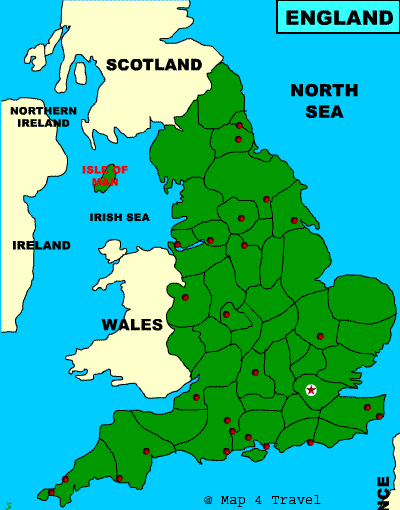 |
| The United Kingdom is often thought of as just one country, and not three separate ones. Those countries are Scotland, Wales, and England. I am going to discover that there is more than tea and manners to this island. I will use my time here to find all things British, and all things that stand out. My itinerary is as follows: London 3 days, Canterbury 2 days, Dover 1 day, Brighton 1 day, Portsmouth 1 day, Winchester 1 day, New Forest 1 day, Isle of Wright 2 days, Salisbury 2 days, Exeter 1 day, Penzance 2 days, Oxford 1 day, Cambridge 1 day, Stratford-Upon-Avon 1 day, Gloucester 2 days, Cardiff 1 day, Hay-on-Wye 1 day, Caernarfon 1 day, Ludlow 1 day, Birmingham 1 day, Nottingham 1 day, Liverpool 1 day, Manchester 1 day, Leeds 1 day, York 2 days, Hexam 1 day, Lakes District 3 days, Edinburgh 2 days, St. Andrews 1 day, Stirling 1 day, Isle of Mull 2 days, Aberdeen 2 days, Stonehaven 1 day, Orkney Islands 2 days, and Glasgow 2 days. I have added extra time for travel and am going to give myself 2 days leeway. That makes 55 days in the U.K. for three countries. |
 |
| Canterbury Canterbury began as a Belgic settlement. The Belgic�s were the people who occupied Britain when the Romans arrived. They were probably a loose confederation of states. When the Romans overran them they named the town Durovernum. Soon, roads that stretched all the way to Scotland were built from them. This made Durovernum a rather wealthy town. After the collapse of the Romans the Saxons renamed it Cantwarabyrig. You can almost see where the current name derives from. In 597 King Ethelbert welcomed Augustine, who was sent by the Pope to spread Christianity. Christ Church was founded by Augustine; it was the first cathedral in England. At the turn of the first millennium the town was sacked repeatedly by the Danes. Canute restored the failing cathedral, but it burned down just a year later. The new religion had become a tool of control. A power struggle developed between the crown and the archbishops. A one point King Henry II is thought to have said �who will rid me of this tiresome priest?� His knights headed to the chapel to catch Archbishop Thomas a Becket at prayer. He was murdered on the spot in 1170. This area was quickly made into a shrine, and even King Henry II came here to do penance. The site was popular for pilgrims for hundreds of years. Geoffrey Chaucer�s Canterbury Tales were written about a group of pilgrims on the way to Canterbury. Later the tomb and shrine was destroyed by order of Henry VIII. In 1830 a railway was built that linked the city to the sea. This created revenue which brought the city to prosperity for many generations. During WWII Hitler began a policy that was referred to as the Baedeker Raids. Baedeker�s were travel guides that listed the most important places in the country. Hitler attempted to destroy many of those places. Luckily, the cathedral and much of the town center survived. This includes about 2/3 of the medieval walls. What to See: Canterbury Cathedral: This is the Mother Church of the Church of England, and the seat of Primate of all England. It�s often not thought of as the most stunning piece of architecture; however its historical significance is immense. A cathedral has existed there since 602, but it was leveled in 1070. After that it was rebuilt and changed for centuries. Notice the 16th century Christ Gate entrance. Make sure to look at the ceilings. Henry IV is buried here, along with the Black Prince. They are both located in the Trinity Chapel. The shrine to Becket is in the northwest transept. Look for the Alter of Sword�s Point, the sculpture placed above the spot where he was murdered. The area had been enshrined until Henry VIII had it destroyed in 1538. Make note of the Romanesque arches. This is some of the last remaining Norman architecture today. Notice the fan vaulted colonnades in the great cloister. In the Chapter House there are stained glass windows from scenes from St. Thomas�s life and death. The city was bombed heavily during WWII. To preserve the amazing stained glass windows they were taken out and replaced with substitutes. Those were broken, but the originals remained intact. The most important are the Great West Window, the Bible Windows, and Miracle Windows. St. Augustine�s Abbey: These are ruins. It is where St. Augustine founded a church in 598. He was buried here along with a few other notable early Brits, however no trace remains today. There is an audio tour that is worth doing. St. Martin�s Church: This is one of England�s oldest churches. It was built on a Roman basilica or perhaps villa. King Ethelbert was baptized here. Roman Museum: This displays the remains and mosaics of a Roman building. The museum doesn�t seem like the most interesting place to visit. However, the section on recovered artifacts is well done; there are even reconstructed domestic scenes. This does help to understand what life was like two thousand years ago in Durovernum. High Street View: Look up to where Christ Church Gate is for the best view in the city. Canterbury Heritage Museum: This museum spans the history of Canterbury with interactive displays. Canterbury Castle: This is a Norman castle keep. There isn�t a whole lot to look at, however the ruins are nice. Eastbridge Hospital: Founded in the 12th century it was to provide housing for pilgrims. There is an exhibit on Chaucer�s life. Take note of the 13th century painting of Christ. Weavers House: This is across for the hospital. It was built in 1500 and was inhabited by Huguenot textile workers who had been given religious asylum. West Gate: This is the only medieval gate to survive. There is a museum of warfare. You can gain access to the battlements through it. Royal Museum and Art Gallery: This is mostly decorative art and doesn�t seem like it would be too interesting. However, they do have a large collection of work by T.S. Cooper. He is England�s finest cattle painter. As I did not know that there was a genre for that, or even a demand, I just have to see it! Brighton This city was originally mentioned in the Doomsday book as Brithelmeston. The Doomsday book was more of an early consensus despite the negative connotations that may be thought by the name today. In 1514 on their way to London the French burned down the small fishing village. The name Brighton began appearing in 1660. Overall it was a poor town with fishing as the largest industry. This all changed in the 18th century when sea bathing was thought to be very healthy. In the 1770�s the trend reached royal proportions when the Prince Regent, future King George IV begun to patronize the town with his mistress. This began the idea of a �dirty weekend.� Still access to the town was difficult so a railway was built from London in 1841. This made it accessible to the masses. During the early parts of WWII parents thought that it would be safe to send their children to Brighton, they felt that living near the sea would be better than living in central England. This idea didn�t last very long; Brighton was raided 56 times during the war. Today the seaside resort town tries to accentuate its Georgian charm. However, there are still parts of it that seem to come across as distinctly bohemian. What I will see: The Royal Pavilion- Previously a farmhouse stood in this spot. However, in 1787 the fun loving Prince of Wales commissioned something more regal. For a few decades it looked like a Palladian villa, with a few oriental touches. The Prince Regent, George, commissioned John Nash, who also designed London�s Regent�s Street, to build an array of minarets, domes, pagodas, balconies, and other things. There is a cast iron frame that is a style all its own, oriental gothic. Queen Victoria didn�t really care for it and took out many of the valuable decorations, and then she sold it to the town. After serving many unimpressive purposes the building has been restored. Even some of the objects that Queen Victoria had taken away have been returned. Some of the highlights include: Banqueting room, it is ornate and there is a one ton chandelier held by the jaws of a dragon. For a change of pace take a look in Queen Victoria�s rooms. The South Gallery is decorated in sky blue and bamboo trestles. The carpet looks to be strewn with flowers. The Lones: This is the core of the old fishing village where the town emerged. There are many shops, restaurants, and pubs. Sea Life Center- This is a really good aquarium. There is a tunnel that passes through the main tank. Brighton Museum and Art Gallery- There is not a whole lot going on here. It is mostly art deco and not something that I would normally want to see, however, the sofa that Dali made based on Mae West�s lips is here. Booth Museum of Natural History- This is the very Victorian collection of E.T. Booth. He had everything, stuffed animals, beetles, butterflies, and animal skeletons. Church of St. Bartholomew- 1st mentioned in 1185 but probably older. This seems like a nice quick stop. Preston Manor- Occupied by the Stanford family for 150 years. It was originally built in 1250 and rebuilt in 1783. Now it is completely renovated. There are 20 rooms to explore. It gives a good example of how the upper class lived in Edwardian England. There is also a pet cemetery on the grounds. Dover People have been living there since the Stone Age; however there is little evidence of this due to flooding. The Romans invaded in 55 B.C. under Julius Caesar but were unable to defeat the Celts until 43 A.D. Under the Romans the town was called Dvbris, and it became the most important navel town. After the Roman Empire had fallen Dover became a major settlement for Germanic tribes. The town was then known as Dofras. The Saxon�s built many monasteries and much of the remains can still be found today. In 1066 William the Conqueror of the Normans burnt down the castle and used the town�s strategic location. Afterwards the Normans rebuilt much of Saxon Dover, transforming it into the fortress it is today. Dover took care of many traveling pilgrims during the crusades at the Church of the Knights Templar. In 1216 the town was attacked by France, and in 1295 they burnt it down. After this Dover falls off the radar for a while despite its excellent strategic positioning, it was used only as a port. The city became important once again during WWI and II. It was the front line of England. Today Dover is rich in history that can be easily found. What to See: White Cliffs- These have long been inspirational to lovers, writers, and sailors going to war. Dover Castle- Built in 1168 this is the oldest Norman castle in all of Britain. When Louis VIII of France conquered London in 1205 he besieged the castle at Dover twice but was unable to defeat it. It also played a role in the Napoleonic wars 1792-1815. The castle was also altered for newer technologies. St. Mary in Castro- This was originally built in the 7th century. There is graffiti left by the crusaders near the pulpit. Due to disrepair it collapsed in 1801. It was restored in part later that century. Norman Keep: This was built by Henry II as a palace. The museum has an exhibit on spies. You can climb the spiral stairs to the battlements for a few over the sea to France. There are also once secret wartime tunnels to check out. They were dug during the Napoleonic war and then extended during WWII. These were used as headquarters to plan the Dunkirk evacuation. This earned it the nickname of Hellfire�s corner. It is easy to see these things on a tour. Roman Painted House- This is an ancient guesthouse. There are some Roman wall paintings, the remains of an underground heating system, and some mosaics. This is really only worth a look if you have some time to kill. St. Margaret�s Museum- There are relics here from Dover�s maritime history and the channel. Dover Museum- This consists of displays on Dover�s past. The highlight is a restored Bronze Age boat which is the oldest sea going vessel in the world. There is also a stuffed polar bear; however, I believe that those are not indigenous to the British Iles. Grand Shaft- This is an interesting treble stair case that troops could use to get down to the beach fast during the Napoleonic wars. Roman Fort- Romans launched their invasion of Britain in 43 A.D. from here. The walls and ditches still exist. There is also and audio guide to give a tour and a replica of what the fort would have looked like when new. Isle of Wright Around 1900 B.C. the Beaker people arrived and settled on the small island. They named it Wiht. The Romans arrived in 43 A.D. and changed the name to Vectis. Things were pretty peaceful for a while. That is until around 530 when the Saxons pillaged the island and killed many of the inhabitants. This lasted until 638 when the fighting stopped. The Saxons even brought Christianity to the island. In 897 the Danes arrived and once again the island was sacked. Peace finally came with William the conqueror began appointing royal lords to govern the island. During the 100 Years War with France it became a target. The Norman castle at Carisbrooke was the only defense and in 1377 the French pillaged the island. Henry VIII built extra fortifications to help the easily defeated island. During Queen Elizabeth�s reign the Spanish were the real threat and she added on to the previous fortifications. In 1642, during the civil war, Parliament controlled the island. King Charles I was held at Carisbrooke Castle before he was executed in London. The 19th century saw the island transformed by railroads. This also helped the economy. Queen Victoria loved the island and used Osborne as her retreat. This is where she died. Today the island is known for stunning and varied coastal landscapes. Heritage Coast- There are two paths that follow some of the best scenery on the island. It would be good to pick one and take it. Ryde- This is one of the towns on the island. There ferry is here, however there is not a whole lot to do here. Shanklin- This is a very beautiful old village. It�s what you would think all of England is. There are thatched roofs and rose clad buildings. Shanklin Chine- This is a pathway from the town down a mossy ravine. John Keats wrote about its beauty. Appuldurcombe House- This is the islands grandest pre-Victorian house. It was built in the late 18th century and is preserved in a state of elegant decay. Yarmouth- This city was raised by the French in 1377. Today it is a good place to visit the castle from. Yarmouth Castle- This was built by Henry VIII and is very beautiful. Alum Bay- These cliffs can be enjoyed from above, via a chairlift. The Needles- These are tall chalk stacks that are on the coastline. They are best seen from a boat. Osborne House- This was built in the 1840�s by Prince Albert. It looks like an Italian Villa. After his death the distraught Victoria spent much of her time here, where she eventually died. She had asked for it to be left just as she had it. This allows for an intimate view into her family life. Newport- This is the capital and sits in the middle of the island. This might be a good stopping place for the night. Carisbrooke Castle- This is a hilltop fortress built by the Normans. Charles I was detained here. Princess Beatrice was the last royal resident. Notice the 16th century well house. Several times a day donkey�s still work to raise a barrel about 160 feet into the air. Winchester This was once one of the Britain�s mightiest settlements. Under the Romans it was called Venta Belgarum and was the 5th largest town in Britain. Alfred the Great really put it on the map when he made it capital of Wessex in the 9th century. During this time it ranked alongside London. In fact, William the Conqueror had two coronations, one in London and one in Winchester. The city was also included in the Doomsday book. After the Battle of Naseby in 1645 the city began to decline. Since then not much has happened. This makes it a great place to take a look at what London must have been like 400 years ago. Winchester Cathedral- The building was begun in 1079 and completed 300 years later. Due to this the elements range from early Norman to much later perpendicular styles. The exterior isn�t the best part. Inside the naves are 556 feet. Look for the carved Norman font of black tournai marble, the 14th century misericords, and the various monuments to famous Brits. Jane Austin is buried here. Above the alter is the mortuary chest of the pre-conquest king Cnute. City Museum- This is a very typical local history museum. However, it does seem to be well done and a necessity to understanding the history of the area. Great Hall- These are the remains of a 13th century castle that was destroyed by Cromwell. King Author�s round table is said to be here, however carbon dating has proved this to be false. Sir Walter Raleigh heard his death sentence here. Wolvesey Castle- This is the 12th century remains of an amazing medieval building. Kings Gate- There are two old medieval gates left. One of them you can climb up to get an amazing view of the city. St. Cross Hospital- This was founded in 1136 as a hostel for poor brethren. This is a nice church to check out. Needy travelers can still apply for the �dole� at the Potters Lodge; this is a tiny portion of bread and beer. Winchester Walk- This allows you to explore the life of King Alfred. You can pick up info from the tourist information center. Birmingham Birmingham began as a Saxon village that grew into a town by the early 12th century. In 1166 it was given a charter that allowed for it to hold a market. The small town quickly became known for its wool industry and leather making. In the 16th century Birmingham began to grow quickly. Early on the town had a reputation for their metal working industry. During the civil war Birmingham was plundered by both Parliamentary and Royalist armies. Despite this the metal industry continued to thrive. The railway came to Birmingham in 1837. This helped push industry further. Pioneers of the industrial revolution formed the Lunar Society; this was a melting of scientific ideas that spawned the first purpose built factory, invented glass lighting, and mass production, among other things. Some of these people were: James Watt, Matthew Boulton, William Murdock, Josiah Wedgewood, Joseph Priestly, and Erasmus Darwin. During WWII the city was heavily bombed and much of the medieval town was lost. Today it is dubbed as the city of 1001 trades due to the variety of good it produces. This is also the second largest city in Britain. Things to do: Victoria Square- This is a great place to start and find some beauty in the city. There is a statue of Queen Victoria and an interesting looking fountain. The square was built in 1879. Bimingham Museum and Art Gallery- This is one of the world�s most comprehensive collections of pre-Raphaelite art. This was a school that consisted of seven young artists who wanted to portray honest observation. Some paintings to notice are: Anniversary of the Death of Beatrice by Rossetti (1849), and Last of England by Brown. The industrial gallery is also very good. It holds samples of locally produced glass, silver, and other hand made objects. The science section is a little out of place and looks very old fashioned. It is more of a natural history collection than a science collection. Centenary Square- This is the newest square in the city and does not try to hide that fact. There are several examples of public art to look at. The most noticeable is the WWII memorial. National Sea-Life Center- This is part of a chain that has aquariums in several cities across Europe. It is an interesting way to look at fish in a rather land locked city. Birmingham and Fazeley Canal- These canals have been restored and offer a nice walk along it. St. Philip�s Cathedral- This cathedral is in the English Baroque style and was built in 1715. The beautiful stained glass was done by Edward Burne- Jones. The structure itself is very attractive and worth a look. St. Martin�s Church- This is the oldest parish church in Birmingham. It was built in a market area in the 12th century and has the air of a small market town church. Museum of the Jewelry Quarter- This is a recreation inside the old factory. You can see craftsman at work as they demonstrate the old tools. Baber Institute of Fine Arts- This is a small but worthwhile collection of European art from the 13th century to the present. There is not much to look at but most of the most well known artists are represented with some of their more impressive works. Blakesley Hall- This is a timber Yeoman�s house built in 1590 that has been restored to reflect an inventory taken in 1684. This is like walking around at an Elizabethan farm. Nottingham In the 6th century this was a small Saxon settlement called Snotta ing ham. It was an important trading city for both the Normans and the Saxons. In 1068 William the Conquer built a castle here. During the middle ages there was a weekly market here that boosted the cities importance. The main industry at this point was wool manufacturing. In the 13th century friars founded a few hospitals and friaries. By the 1530�s Henry VIII was destroying the friaries and Nottingham did not escape. He also closed the leper hostels. In the 18th century industry was booming. During the civil war the city was controlled by Parliamentarian troops. After the war ended the town grew rapidly. In 1839 the first train started to run through the town. Nottingham Forest, made famous by was founded in 1865, this is not far from Sherwood where the Robin Hood legend is from. The large town was finally made a city in 1897. In 1952 a statue of Robin Hood was built near the castle to boost tourism. Things to do: Old Market Square- This is the heart of the city and a great place to start a walking tour. Nottingham Castle- There is a statue of Robin Hood out front. It is interesting to check out the Mortimers Hole. There is also a museum inside with the history of the city in it. Make sure to look for the collection of medieval alabaster carvings. There are also caves that run under the castle; however you may need a tour guide for this. Lace Market- This is the medieval area of the city. Church of St. Mary- Built in the 15th century this church is worth a quick look. It is the oldest parish church in Nottingham; it was also mentioned in the Doomsday Book. Galleries of Justice- This building was used as a courtroom form 1780 up until 1980. Before this there was a prison on the same site since 1375. There are two Victorian courthouses and an Edwardian police station, along with some cells and other relics. The whole tour takes about two hours is on the morbidly interactive side. Newstead Abbey- In Nottinghamshire, 12 miles north of Nottingham, you can take a bus here. This was originally an Augustinian priory founded by Henry II in 1170. Then in 1539 Henry VIII dissolved it. After that it was given to the Byron family. They were the ancestors of the future poet by the same name. Today it has been restored and it is possible to see rooms representing many different time periods. The Caves of Nottingham- This underground manmade realm has been in use for the last 700 years. The poor used to live in it, it was used as a tannery in the middle ages, and even as an anti-raid shelter during WWII. This is located on Drury Walk in Broad Marsh Shopping Center. New Forest William the Conquer created the New Forest in 1079 as a hunting area. There are still many medieval laws in effect here. For example it is still possible for farmers to graze their animals in the forests. Over the centuries the forest has also been used for timber, due to this prior to 1681 when the logging stop the forest was devastated. It wasn�t until the 19th century that the ecological importance of the forest was realized. During WWII the forest was bombed heavily. The forest covers an area of 144 square miles. Touring this will be a bit different because there are several small towns to check out and many nice trails for walking Lyndhurst is the capital of the New Forest Parish Church- This is worth a quick look. Notice the William Morris glass, a fresco by Lor Leighton, and the grave of Mrs. Reginald Hargreaves, or Alice Liddell the inspiration for Alice in Wonderland. New Forest Museum and Visitor Center- This is a must stop for going hiking. You can pick up maps of trails here. The museum focuses on the areas history and its wildlife. Lymington is the easiest way to get to the Isle of Wright. The old town is beautiful with cobbled streets and Georgian buildings. Church of St. Thomas the Apostle- This interesting looking cupola topped building was finished in 1670. Salisbury Two thousand five hundred years ago Salisbury was an Iron Age fort. During the 6th century the Saxons invaded the area. In 522 the Saxons and Celts fought a decisive battle at Salisbury Hill. The Celts were defeated and the fort was abandoned. The area may have been vacant for some time, however, by the 11th century a small settlement had once again formed. In 1003 the Vikings invaded. The survivors fled and built a new settlement on Salisbury Hill. In 1069 William the Conquer built a wooden castle to overlook the settlement. The town grew after 1075 when a bishop moved his seat there. At this point the town was called Sarisberie and only a few hundred people lived there. The modern town began around 1217, when the population of the town began to grow. In 1219 a market and a fair were begun. Quickly the town grew rich from the roads that crossed through it. In 1220 work on the cathedral began. It was at time that the Franciscan and Dominican friars arrived. However, in 1538 Henry VIII closed the friaries. During the 17th century the wool industry began to decline. The economic problems were furthered by plague outbreaks in 1604 and 1627. In December of 1644 the civil war came to Salisbury. Throughout the war the town remained under Royalist control. By 1700 the population of the town had dwindled significantly. This didn�t last long. During the 19th century the town grew. In 1847 the railway came. Today the town�s biggest industry is tourism. Things to see: Salisbury Cathedral � This was completed in only 40 years and is unusually consistent in style. However, the spire was added about 100 years after the building was finished. This is the highest spire in England reaching 404 feet. Inside there are several points of interest. Check out the working clock from 1386. The chapel house displays one of the original copies of the Magna Carta. The foundations are only five or six feet deep and because of this much stress is put on the building. In 1668 Sir Christopher Wren surveyed the spire and found that it was 2.5 feet out of true. Wire rods were inserted to fix it. 200 years later when it was again surveyed, the spire was found to not have moved at all. Mompesson House- This is the most memorable house within the cathedral close. It was built in 1701 and is an example of a Queen Anne house. Now it is furnished in 18th century style. This is the house used in the movie Sense and Sensibility. Salisbury and South Wiltshire Museum- This is a place to really get a handle on local history. The Pit-Rivers collection is notable, as he is considered to be the father of modern archeology. St. Thomas- This church was named after Thomas Becket. Take note of the carved timber roof and the doomsday painting from 1475. Old Sarum- This is the site of the original cathedral and castle. The ruins are definitely worth the effort to see them. Stonehenge- I think that most people know what this is. I�m not sure if I will be seeing it or not. For some reason it just don�t appeal to me. Oxford Oxford was founded in the 9th century by Alfred the Great. The town was first mentioned in 911. By the 10th century the town had grown large enough to have its own mint. During a raid in 1009 the Danes burned down the city. Still it recovered and in 1072 the Normans built a castle there. The university was founded in 1167. From the beginning there were tensions between the students and the town�s people. Also during this time the largest industries were manufactured cloth and leather. Like many other towns the friars arrived in the 13th century. Eventually most industry ceased and the town became dependent on the students. In 1538 Henry VIII closed the abbey. In 1542 Oxford became a city and was appointed a bishop. After Henry VIII�s death his daughter, Queen Mary, tried to restore the catholic religion. During this time many Protestants were put to death. Three of them were tried in St. Mary�s church. In the end Thomas Crammer, Archbishop of Canterbury, Nicholas Ridley, Bishop of London, and Hugh Latimer were condemned to death in the church. During the civil war in 1642 the city was occupied by the King�s forces but no real damage was sustained. By the 18th century the town existed for the university. The railway arrived in 1844. In 1913 the economy of the town was changed when an automobile factory was opened. During WWII the town escaped damage Things to see: St. Mary the Virgin- This is where a few Protestants were condemned to death by Queen Mary. The best part of the church is when you climb the tower. The view is amazing. University College- This is Oxfords oldest college. In 1811 they expelled Percy Shelley for distributing a paper on atheism. There is a memorial to him on campus. Another notable graduate is Bill Clinton. Merton College- This School was the first to be built and retains some of its medieval buildings. Museum of Oxford- This museum tells the story of the city and is a must do to learn about the history. Ashmolean Museum- John Tradescant, gardener to Charles I, was an energetic traveler. He collected things from all over the world. This is the oldest museum in the country. Some highlights include the Egyptian wing, and the objects collected by Tradescant himself. There are also a few curiosities, Guy Fawkes lantern, Cromwell�s death mask, and others. Among the artwork look for Pierodi Cosimo�s Forest Fire, Paolo Uccello�s Hunt in the Forest, and Pizzaro, Monet, Manet, Cezanne, and Bannard. The Oxford Story- This is a three level ride through the history of Oxford University. Here you can see historical luminaries at work on their achievements. This is located at 6 Broad Street, just east of the train station. The Shark House- A fiberglass shark appears to have dived headlong into this house. Worth a look for a picture. Cardiff Cardiff started off as a Roman fort around 55AD. By the 3rd century it was strengthened to defend against the Irish. At the end of the 4th century the Roman abandoned the fort. Then the Normans came and they built a castle within the walls of the fort. Cardiff was a little different than some other towns of the time as it had a booming port. In the 13th century the friars arrived. Then in 1404 Owain Glendower burned down the town. Pirates often worked near the port. In 1607 there was a severe flood that destroyed parts of the town. During the civil war in 1642 Cardiff was captured by the parliamentary troops. The following century saw much growth in the town. In 1841 the railway came. During WWII the city was bombed and 355 people were killed. In 1955 Cardiff was made the capital of Wales. Things to do: Cardiff Castle- This has a history dating back to the Romans; however, most of the structure is Norman. It is worth taking the guided tour to see the rooms restored by William Burgos. Cathays Park- This is a beautiful park that shows just how Cardiff has exerted itself as the capital of Wales. Notice the dragon on top of City Hall. National Museum of Wales- This museum allows you to explore the history of Wales. The reviews were very good. Don�t miss the 3000 year old caerawrle bowl. Also take a look at the Cardiff cartoons. Cardiff Bay- This is an interesting walk with a lot of things to look at on the way. Notice the National Assembly building. Llandaff Cathedral- This cathedral was founded in the 6th century by St. Teilo. It was later rebuilt in the Norman style in 1120. Stratford � Upon � Avon Stratford-Upon-Avon was founded in the 7th century by the Celts. In 1196 King Richard I granted the right for there to be a market here. The Guild of the Holy Cross was formed in a chapel that still stands in 1269. William Shakespeare was born on April 23, 1564, later he was buried at Holy Trinity Church. From most of its history this was a quiet market town with not a lot of activity. Then in 1859 the railway came. This helped to boost its largest industry, tourism. Things to Do: Birthplace Museum- This museum makes the most of what little hard evidence there is of Shakespeare�s life. It is interesting to note that he passed more on to his daughter than his wife in his will. Hall�s Croft- This is where Shakespeare�s oldest daughter lived after marriage. The whole thing seems only slightly interesting. Holy Trinity Church- This is a must see Quintessentially English church. This is also where Shakespeare was buried. Portsmouth The Romans built a fortress on the edge of this inlet called Callshare fort. During the Norman era this developed into a port town. It was also a very strategic location used by the Tutors. Henry VIII established the world�s first dry dock here and made it a royal dockyard. Portsmouth is now a largely industrial city. During WWII it was heavily bombed and lost much of its historic center. Things to Do: Camber- This is the old port where Walter Raleigh landed the first potatoes and tobacco from the new world. Cathedral of St. Thomas- This was built in the 12th century, however the main part is mostly obscured by later additions. Charles Dickens Birthplace- This does open for tours on occasion, but you might want to check ahead. D-Day Museum- Portsmouth was the main place of D-Day assembly during WWII. One of the highlights of the museum is the Overlord Embroidery, which tells the story of the Normandy landing. South Sea Castle- This was built from the remains of the much older Beaulieu Abbey. This may be where Henry VIII watched the Mary Rose sink in 1545. Portchester Castle- This was built by the Romans in the 3rd century, and is possibly the best surviving example of its kind in Europe. The walls are 20 feet high. It was so sturdy that the Norman used it and made no changes to it. Henry II built a castle within the walls. Gloucester Originally this area was used by the Romans as a jumping off point to spy on Wales. Around 75 AD the Romans had moved on and used the town as a retirement community for former soldiers. At this point the town was called Glevum. Eventually the town was abandoned completely. In 577 the Saxons captured the town from the Celts; however it may have still been abandoned at that point. Then in the late 7th century people began to occupy the town again. The Saxons even founded a monastery here and the town began to thrive. In 909 the remains of St. Oswald were brought here. Pilgrims brought money into the town. Then in 1085 William the Conqueror visited. During his stay he wrote orders for the Doomsday Book to be written. In the 12th century a stone castle was built. Gloucester was important strategically because of the frequent warfare between the Welsh and the English. In 1275 the Jewish community was forced out of the city. This happened in several cities across Britain. The town gained further pilgrims when King Edward II was buried at the abbey. In the 15th century Wales had been conquered and the city was no longer vital, therefore it began to decline. Queen Mary burned some Protestants here in 1555; John Hooper, Bishop of Gloucester was one of them. Despite its decline the city still played the roll of an important port city. It was one of the largest ports in Britain. During the civil war the town supported Parliament. There was much fighting around and for the town, but it never fell. In the 18th century the wool industry died out. However the pin industry began to flourish. During the 19th century this was the most important industry and employed 20 percent of the inhabitants. In 1840 the railway came. By this time Gloucester was known as a manufacturing city. During WWII it was bombed heavily. Things to Do: Saint Michael�s Tower- This is the remains of an old church that overlooks the old Roman roads. St. Mary de Crypt- This is the most interesting church in the city. It was built in the 16th century. Notice the stained glass and the painting of the Adoration of the Magi. City Museum- This is the place to go to learn about local history. The museum includes part of the old Roman wall. Folk Museum- This is the social history of Gloucester. Gloucester Cathedral- An abbey was founded here by the Saxons, but four centuries later the Benedictine monks built their own Church in 1069. It took the murdered body of Edward II in 1327 when no other church would. Many pilgrims came to his shrine and the church became wealthy. It became the countries greatest example of perpendicular style. The 225 foot tower is the best part. Even Henry VIII recognized its importance and elevated it to cathedral status. Check out the misericords in the choir, they are the largest from medieval Britain. The tomb of Robert II, son of William I, is interesting. He looks as if he is about to fight. There is also an upstairs exhibit of the history of the cathedral. You can try out the whispering gallery from here. Exeter Originally this was the Romans most westerly outpost. It was named Isca. The town was then refounded by King Alfred the Great around 876 when the Danes captured the town. A new street plan was made and it was quickly a success. In 1003 disaster struck. One of the town officials was a traitor and let the Normans in the back door. The destroyed town was able to recover quickly. Then in 1068 the Normans stuck again. This time the town was prepared and was able to hold them off for 18 days. Eventually they agreed to submit to William I as long as he promised to never harm the city. William the Conqueror built Rougemont castle to keep his eye on the town�s people. During the war between Stephen and Matilida her supporters held the castle but surrendered when they ran out of water. The town had a port and exported wool. In 1538 Henry VIII closed the friaries. In 1642 the civil war began, Exeter was under siege by both sides. After the war the town prospered again. Luckily for travelers today the industrial revolution mostly passed the city by. It was not bombed during WWII. Things to Do: St. Peter�s Cathedral- Notice the two Norman towers and the weathered figures of Alfred, William I, Cnute, and Athestan done around 1360. There is a painting of the murder of Thomas Becket. It also has the longest unbroken gothic ceiling in the world. St. Petrock�s- This is one of Exeter�s six surviving medieval churches. St. Nicholas Priory- This has a restored interior to look like Tudor times. St. Mary Steps- This is a great way to explore the dock areas. Underground Passages- These first brought water to the cathedrals in the 13th century. It is possible to take a guided tour to explore them. Royal Albert Memorial Museum- This is a very Victorian museum with a varied collection typical of the time. This is also a good place to see some West Country art. Cambridge Bronze and Iron Age settlements were located here. The Romans built a fort in the 1st century, but it was abandoned in the 5th century. The city was again founded in 875 when the Danes conquered eastern England. The name was originally Granta bryg. In 1068 William I visited and had a castle built there. The river helped to make Cambridge a wealthy town very quickly. In 1209 the university was founded. Much like Oxford the town�s people were not happy with the freedoms the students had. There were anti student riots in 1262. Eventually the university became the center of the town�s economy. In 1538 Henry VIII closed the friaries. In 1630 there was a severe outbreak of the plague. By the 17th the town had become even more depended upon the university and its students. In 1845 the railway linked Cambridge with London. Currently the university is not the only industry. Many electronics and scientific instruments are made here. What to Do: Kings College- This was founded by Henry VI. However, between the war of Roses and bouts of insanity very little had been completed by his death in 1471. The chapel is the oldest building. It is one of the more progressive colleges and admitted women in 1972. St. Mary�s the Great- This 15th century tower offers a birds eye view of the town. Gonville and Caius College- This was founded by John Keys. Trinity College- This is the largest of the schools in Cambridge. Byron, Tennyson, William Thackeray, Isaac Newton, Edward VII, George VI, and Prince Charles are among its alumni. Henry VIII founded the school and there is a statue of him there, his scepter was replaced by a chair leg by a student. Round Church- This was built in the 12th century to model the Holy Sepulcher in Jerusalem. You can try your hand at brass rubbing here. Pepys Building- Samuel Pepy�s donated his library to Magdalene College. His famous diary is also here. Sidney Sussex College- Oliver Cromwell took classes here. His skull is buried in a secret location in the chapel. Fitzwilliam Museum- This is the beneficiary of many private collections. It is more of an exhibit of the changing interests of the British upper class than anything else. Leeds Leeds began as a Saxon village. In 1207 a town was officially begun there. During the middle ages most of the villagers were farmers. Then after the Middle Ages the cloth industry began to grow and the town with it. Soon it was one of the largest towns in Yorkshire. During the civil war the town�s people supported the king. However, the parliamentary army held the city for most of the war. In 1816 Leeds had another reason to grow as it was connected by canal to Liverpool. During WWII 77 people were killed by German bombs. Things to Do: Castle Howard- This is billed as one of Britain�s finest historic homes. Interestingly, it still houses the family that built it three centuries ago. There are also amazing grounds to take a walk around. Leeds Town Hall- This is mostly notable for its stunning architectural design. I don�t think that it is possible to take a tour of the inside. Leeds City Art Gallery- This is a very good collection of 20th century British art. You can see pieces from Henry Moore, Barbara Hepworth, and many others. The collection itself is rather eclectic and could really be enjoyed by everyone, no matter what their taste in art is. Kirkgate Market- This is the largest market in all of England. Each week it boasts a different theme. Granery Wharf- This is part of the canal that has been restored and is lined with shops. Thackrey Medical Museum- Parts of this museum are very entertaining. It shows how humanity has been changed in the last three hundred years due to medical advancements. Manchester The Romans built a wooden fort here around 80 A.D. that they called Mamuciam. Around 200 A.D. the fort was rebuilt in stone and a civilian settlement quickly grew up around it. Then in 407 the Romans left and the area was vacated. During the 7th century Saxons created a tiny new settlement here. In 1086 in the Doomsday Book the name is listed as Mamecester. By now the Normans had arrived and the small village began to grow into a town. Come 1222 it had become a large town evident by the charter granted to them allowing an annual fair. In 1603 there was an outbreak of the plague that killed about one third of the population. Then during the civil war they town sided with parliament and managed to never be defeated. Manchester was hardly a village in 1750, but less than 100 years later it had grown to be one of the world�s major cotton milling center. This was due to the industrial revolution. The factories were able to produce competitively priced calicos by using machinery. The first steam powered cotton mill opened in 1783. One of the bloodiest parts of Manchester history happened on August 16, 1819 when around 10,000 people gathered at St. Peters to hear radical speakers. The local authorities were sent to arrest the speakers, but the crowd harassed them, they whipped out their swords and started slashing. Eleven people were killed and six wounded in what was later called the Massacre of Peterloo. In 1842 Friedrich Engles wrote Conditions of the Working Class in England about suffering in the factories. He later collaborated with Karl Marx on the Communist Manifesto. The world�s first passenger train began running here in 1830. At this point Manchester was known world wide for its industries. During World War II the town center was devastated. By the 1960�s the city had declined. The IRA bombs in 1996 wiped out much of the commercial info structure in the city. Things to Do: St. Peters Square- This is the center of the town. The town hall is here and is worth a quick look around. Castlefield- This is considered to be an urban heritage park. A Roman fort was built here. Most impressive is the industrial heritage that is displayed here just as open air art would be. Museum of Science and Industry- This is built on the site of the oldest passenger railway in the world. Overall it is 7.5 acres and 5 buildings to explore. The whole thing concentrates on the impact that Manchester has had on science and industry. Lincoln Square- For some reason there is a statue of Abraham Lincoln here. People�s History Museum- This exhibit records the lives of England�s working class over the past 200 years. It is advertised as a very hands on experience and may be more for children. Cathedral- This cathedral is a mishmash of different styles. There is a reading room where Marx and Engles used to study. Some of the best medieval artwork in the north can be seen here. Manchester Museum- This museum features collections from all over the world. It does pioneering work on mummy dissection and has some of the most recent work on the subject displayed. Imperial War Museum North- I think that this will be much like the one in London. That one is pretty good, some of the exhibits are not neutral enough, but others are very informative. Old Trafford- This is where the Manchester United play. They are possibly the most popular soccer (football) team in the world. It is possible to take a tour of the stadium. Manchester Art Gallery- This has both fine and decorative art collections. It is best known for it�s collection of 19th century British oil and watercolor paintings. There are also a few Waterhouses here. Manchester Jewish Museum- The cities Jewish history is depicted here. It shows everyday life back to the 1740�s for Jews. It is located in a restored Spanish and Portuguese synagogue. Liverpool Liverpool received a charter from King John in 1207. There may have been a small town prior to this, but it was not mentioned in the Doomsday Book. In 1235 a castle was built here. During the medieval times it was a very small town mostly populated with farmers. The 16th century saw the small village grow into a bustling town. During the civil war in 1642 both sides fought over the town, sacking and killing its inhabitants several times. This ended when the royalist lost northern England. By 1715 the boom from the slave trade was in full swing and it prompted the building of a dock. For a while Liverpool was the apex of the slave triangle. Liverpool had become the third largest port in Britain. After the slave trade it became a place for immigrants to depart from, most of them were going to North America. During WWII 13,000 people were killed by German bombs. The docks declined in the 20th century due to cheap airfares and dwindling trade. Things to Do: Western Approaches Museum- This labyrinth of rooms was used by the government during WWII. You can see what they were up to during a tour. Williamson Tunnels and Heritage Center- This is a tour in the tunnels below Edge Hill. They depict the life and times of the eccentric Joseph Williamson. St. Georges Hall- This is one of Britons finest Greek revival buildings and definitely worth a look. Walker Art Gallery- This houses one of the countries finest provincial art collections. It is mostly British art. Liverpool Museum- This is a very interesting natural history museum. It is based around the 19th century collection and travels of the Earl of Derby. Metropolitan Museum of Christ the King- This was built in the 1860�s and was meant to out do St. Peters in Rome. You decide. Liverpool Cathedral- This is the last of the great neurotic structures. It was finished in 1978 and is the world�s fifth largest cathedral. It also has the worlds highest and heaviest bells. You can climb the tower on a clear day for a great view. Albert Dock- This is Liverpool�s historic waterfront. There are also a few museums here and the chance to take a boat ride. Merseyside Maritime Museum- This museum has four floors and may take some time. There is a section on Liverpool�s evolution as a port. There is also a section on the cities role as a springboard for over 9 million immigrants. Notice the sections about life on the ships and on slavery. Museum of Liverpool Life- This museum is about the history of Liverpool. It models the hardships that molded the resilient souse character. Beatles Sites: Matthew Street- This is where they were discovered at the Cavern Club Beatles Story- This is a museum about them and their rise to fame. Magical Mystery Tour- If you aren�t Beatled out take a tour on the bus! York Around 71 A.D. the Romans used the area as a camp, eventually it turned into a fortress named Eboracom. After they left the small town that had built up was abandoned. In the 8th and 9th centuries York revived. In 627 King Edwin was crowned in a church here, York had at this point become northern England�s fulcrum of Christianity. Then the town fell to the Danes in 867, they renamed it Jorvik. Under the Vikings the town grew very quickly. After the Vikings the Saxons called the town Eofer�s Wie. Then came the Norman conquest, William the Conquer built a wooden castle here. In 1190 the Jews were massacred and the castle burned. During the middle ages it became an important port and manufacturing center. Then in 1349 the plague killed one half of the population. Still, many of the most important buildings came into being at this time. Included in these are the Guild Hall and York Minster. In the late 17th century the port began to decline as it was on the wrong side of the country to cash in on trade with the West Indies or North America. During the civil war in 1642 they supported they king. The parliamentarian troops laid siege on the city, and York was forced to surrender July 16, 1644. During the 18th century York declined in importance. Once factor that contributed to this was that York never industrialized and remained a market town. Then in 1839 the railroad arrived. Some industry did expand in the 20th century; this was mainly tourism and confectionary. During WWII 87 people lost their lives to German bombs. Things to Do: York Minster- This is Britain�s largest gothic building. Half of the stained glass in all of Britain is located here. The first significant foundation was laid in 1080. It was then added onto over the next several hundred years. Notice the Five Sisters window, Rose Window, and the East Window. There are also many interesting tombs to look at. There is a museum about the place in the undercroft and you can also climb up the central tower. Richard III Museum- He was king for just 26 months but left a legacy and a mystery that has lasted centuries. He was deformed and demonized by Shakespeare in his plays. He is also said to have committed several gruesome murders, including his two young nephews. This gives the visitor a real chance to look at his life. After that you can decide if he was guilty or not. The Shambles- This is the perfect medieval thoroughfare. You will think that you are in Diagon Alley from Harry Potter. The Yorkshire Museum- This explains what the Roman presence in the town was like. The middleham jewel is the best piece in the collection. It is considered to be the finest piece of gothic jewelry in England. There are ruins of St. Mary�s Abbey around the museum; they are definitely worth a look. St. Helens Square- This marks the entrance to the Roman city. Look around for the Georgian Mansion House built in 1725, and the Guild Hall, bombed heavily in 1942 but restored. Walk down Stone Gate Street and look for the plaque which indicates where Guy Fawkes parents lived. York Castle and Museum- There is not much of it left now. The museum in interesting though; it gives you a chance to walk down cobbled streets and to experience life from the last 400 years of British History. Cliffords Tower- In 1068 William the Conquer built a castle on this spot. The tower is the most prominent piece remaining. Hexham This reason for stopping here is to get to Hadrian�s Wall; however there are a few notable sites in town if you get bored. Hexham Abbey- Look for the tombstone of the Roman Flavinus who is shown riding down his enemy on horseback. Notice the 15th century Dance of Death painting near the rear of the alters. Border History Museum- This museum features displays about the border raiding Reives. The Reives were clans who ruled the local area from the 13th to 16th centuries. They raided towns on either side of the border. Hadrians Wall- This 76 mile long wall was created by Emperor Hadrian to mark the border of the Roman lands in 122 A.D. The easiest way to get here is to take a bus to Chollerford and walk a few miles along the wall and then get a bus back. Edinburgh Edinburgh began as a fort on castle rock. By the 7th century it had been captured by the English. In the 10th century the Scots recaptured the area. Malcolm III, in the 11th century built a castle and a small town formed nearby. Holyrood Abbey was founded in 1128. In 1329 Robert the Bruce granted the town a new charter giving the inhabitants more rights. Soon the city exploded and became the capital of Scotland. During the middle ages it became famous as a port city. Then in 1513 the Battle of Flodden was lost and a time of political instability began. A few decades later in the 1540�s King Henry VIII ordered the city to be sacked. In 1555 John Knox returned from exile and the reformation in Scotland was in full swing. Then in 1603 the two crowns were merged, Edinburgh was overshadowed by London. Charles I was crowned in 1633 in Edinburgh. He was not well like and his new ideas on religion were his demise. They literally threw the book at him, and he lost control of Scotland. During the 18th century the old town was very over crowed. A man named James Craig won the right to design the new town. Edinburgh was lucky to escape the industrial revolution. On July 1, 1999 Scotland parliament opened after 292 years of not meeting. What to Do: High Kirk of St. Giles- John Knox launched the Scottish protestant reformation from here. Look for the west window and thistle chapel. National Museum of Scotland- This is considered to be Scotland�s best museum. It displays national treasures from the last several centuries. It starts with pre-human existence. Notice �Lizzy,� the oldest reptile fossil in the world. It then moves on to the early people. The next section is on the �Kingdom of the Scots,� which focuses on development into an independent nation to the union with England in 1707. Look for the monymust reliquary, which is said to have carried the remains of St. Columba. After that move along to the �Scotland Transformed� exhibits. This covers the union of parliaments. Bonnie King Charlie is also featured here. Then it moves onto industry and empire. This basically covers progress. Lastly take a look at the 20th century gallery. Royal Museum of Scotland- Everything from stuffed animals to colonial loot can be found here. There are also mummies and relics from ancient Greece. National Gallery of Scotland- This houses a collection of European art. It�s nice because it is more manageable than some other galleries. The works change often so there is always something new. The following styles are represented: Early Netherlands, German, Italian Renaissance, 17th century, and Scottish work. Scottish National Portrait Gallery- The building is modeled after the Doges Palace in Venice. It featured images of famous Scots, much like the one in London. Scottish National Gallery of Modern Art- This museum is dedicated to 20th century paintings and sculpture. Some highlights are: Matisse, Picasso, Lichtenstein, and Dali. Take note of the Scottish Painters. Craigmillar Castle- This is one of the best preserved medieval fortresses in Scotland. Mary Queen of Scots plotted her husband�s death from here. It is located 3 miles southeast of Edinburgh. Dumfries William the Lion made Dumfries a royal burgh in 1186, so there was mostly likely a small settlement there already. During the 14th and 15th centuries it was near the border and right in the middle of the Scottish and English battles. Due to this the town was sacked and burned many times. 1500-1800 it was mostly a quiet market town with not a lot going on. However, the population grew steadily and it is now at about 35,000, this makes it the largest town in southwest Scotland. Dumfries Museum- This museum depicts the history of the town. Caerlaverock Castle- This is a picture perfect castle ruin. The covenanters wrecked it in 1636. After that it was never inhabited again. This is just what everyone thinks a medieval fortress should be. Old Bridge House Museum- This is Dumfries oldest house and is now a museum of daily life in the town for the last several hundred years. Glasgow The first settlers arrived in Glasgow around the sixth century. It was most likely founded when St. Mungo built a church at a place then called Glas Gu. In 1175 William the Lionhart gave the town a charter. During the middle ages it was a small town. By 1492 the settlement had become a large port town. With the new port the town grew quickly. This growth could not be stopped even when the plague hit in 1646. Then in 1668 quays and warehouses were built on the Clyde and the port was expanded. The city benefited greatly from trade with North America. Another trade associated with port towns began to boom as well, that was ship building. In the 19th century Glasgow was possibly the dirtiest city in Britain, which was really saying something as most of the industrial cities were pretty disgusting. During the depression of the 1930�s the city was very hard hit. WWII helped it to revive, as the ports were used for shipping, and the factories for making war materials. The city was bombed by the Germans. Things to Do: Huntarian Art Gallery- This is located at the university. There is a large amount of J.M. Whistler and some Scottish artists. Fossil Grove- This is in a Victorian park. There are fossil trees and some rocks that are the remains of a forest from 330 million years ago. City Chambers- This shows the cities Victorian aspirations. The fa�ade depicts four nations linked under a throned Queen Victoria. You can take a guided tour of the labyrinthine interior; however, you may need to book ahead. Merchant City- This is an area of 18th century warehouses and homes. Now it is a chick area to explore. The People�s Palace- This contains the history of Glasgow. The history is depicted through the people of Glasgow, making it a very interesting museum to explore. Glasgow Cathedral- The structure was begun in 1136 but not completed until the late 15th century. It is dedicated to St. Mungo, the cities patron saint. St. Mungo Museum of Religious Life and Art- This museum focuses on objects, beliefs, and art from Christianity, Buddhism, Judaism, Islam, Hinduism, and Sikhism. The various religions are juxtaposed against one another. There is also a section on religion in Glasgow. The Tenement House- This is a typical tenement block that some floors are still lived in. The first floor was the home of Agnes Toward, who moved in in 1911 and never threw out anything. Across from her apartment is a museum about the development of the tenement block as the bed rock of urban Scottish housing. Kelvingrove Museum and Art Gallery- This museum looks like a fantasy red brick castle from far away. Some notable pieces are: Botticelli�s Annunciation, Giorgione�s The Adulteress Before Christ, and Rembrandt�s The Man in Armor. There is also a good collection of 18th century works. You can visit the French impressionists, Monet, Van Gogh, and others like them. There is also a nice sized Scottish artist section. Glasgow Science Center- This covers everything from optical illusions to how pulleys can help you lift your own weight. This might be interesting if there is nothing else to do, however, it did seem a bit kid oriented. Stirling Strategically this was a good spot for a town because it was the lowest crossing on the river Forth. By the 11th century a castle had been built on they cray. Quickly, it grew into an important market town. The in 115 Cambuskenneth Abbey was founded by King David I. During thing 13th century the castle often changed hands between the English and Scotts. This is where William Wallace and the Scots defeated the English army in 1247. The town�s golden age was during the 15th to 17th centuries. The local castle was a favorite of the Stewarts, and in 1543 Mary Queen of Scots was crowned here. After the crown was moved to England the city began to decline. The industrial revolution mostly passed over the town. Then in 1848 the railway came and the city began to grow rapidly. Today Stirling looks like a smaller version of Edinburgh. Stirling Castle- A fortification was first erected during the Iron Age; however, the castle was built in the 15th and 16th centuries. There are endless battlements, hidden staircases, and nooks and crannies to explore. It is by far one of Scotland�s grandest castles. It also towers over some of the most important battle fields in Scottish history. This includes the site of William Wallace�s victory over the English in 1297. Town Walls- These were built in the 16th century to ward off attacks by Henry VIII. Church of the Holy Rude- This is an interesting little medieval church with an oak hammer beam ceiling. Old Town Jail- This had been refurbished and is brought to life by actors. You can then go up to the roof for a spectacular view of the city. Smith Art Gallery and Museum- This small museum gives a quick and fun history of the town. National Wallace Monument- This is a five story tower built to commemorate Sir William Wallace. It is set on the site of his greatest victory. There are exhibits inside of the tower. You can also climb up it to take in the view. |
|
|
|
|
|
|
|
|
|
|
|
|
|
|
|
|
|
|
|
|
|
|
|
|
| St. Andrews This is Scotland�s oldest university town. It was founded in the 4th century by St. Rule when he was shipwrecked while on his way to the end of the island with St. Andrews bones. He then built a church where the boat was wrecked. By the tenth century St. Andrews was the head of the Scottish church. Pilgrims came to the town to visit the cathedral and this in turn boosted the economy. In 1318 the cathedral was finished, however, in a few years a fire and then a storm damaged it. The castle was built around 1200 for the Bishop to live in. The castle switched hands many times and eventually the Scotts destroyed it so that the English couldn�t have it. The University was founded in 1414. During the reformation several Protestants were put to death here. In 1546 George Wishart was burned outside of the castle. His friends killed the bishop in retribution and then hung his body out the window. Protestants held the castle for a year, then the French captured it and took prisoners, including John Knox. The reformation ended pilgrimages to the town. In 1754 the modern rules of golf were drawn up. Later on the king tired to ban it because it was so popular. The men in the town did not want to practice for war, instead they only wanted to play golf. During the 17th and 18th centuries the town began to decline and it remained a small market town. Today it is known for its history, the game of golf, and the university. What to Do: Cathedral Ruin- The cathedral was founded in 1160 and consecrated in 1318 in the presence of Robert the Bruce. The on June 5, 1559 supporters of John Knox plundered the cathedral and left it to ruin. You can climb the tower for an amazing view. St. Andrews Castle- This is also in ruins. You can climb through a secret passage left by the protestant reformers. St. Andrews Trust Museum and Garden- This is a museum about the town�s history and worth a look at. St. Andrews University- Much of the universities original buildings have been preserved. Prince William attended school here. Scotland�s Secret Bunker- If nuclear weapons had been used on Britain this is where the government would have ended up. This is a subterranean maze of high tech military equipment that was only declassified in 1993. It has been preserved in this state. This is located 5 miles south of St. Andrews at the Underground Nuclear Command Center. Aberdeen Aberdeen was founded in the 8th century as a fishing village. In the middle ages there were two settlements, Old Aberdeen, and New Aberdeen. Interestingly there were many French speaking immigrants from Flanders here at that time. In the 12th century Alexander I noted Aberdon as one of his primary towns. During the wars with the English the towns people helped Robert the Bruce take the castle. In 1336 the town was burned by the English, then in 1350 black plague struck killing half the population. This was not the end of Aberdeen�s bad luck; in 1401 an unknown disease called the pest struck the town killing even more people. Despite all of these problems the town still managed to grow. During the 17th century Aberdeen became an important port town. Quickly it became a major player in the whaling industry. In 1981 the two half�s of the city officially were united. During the 20th century the town was transformed by oil. During WWII 178 people were killed by German bombs. Aberdeen is now Scotland�s third largest city, it also lies on a latitude north of Moscow, so bring your coat. Things to Do: Union Street Bridge- This Bridge fell on the 1st attempt to build it. The second time around proved to be an engineering miracle of its day. Castlegate- This is where the castle once stood. Notice the cobbled stone streets. Tolbooth- This is the cities oldest structure. It was once a prison and now is a museum about crime and punishment. St. Andrews Episcopal Church- This is where Samuel Seabury, the first American bishop, was ordained in 1784. Marichal Museum- This is a strange one. There are weird exhibits gathered by Victorian anthropologist and those who just enjoyed collecting. Concentrate more so on the phenomenon of the collectors rather than on the collection itself. Provost Skene�s House- Built in 1545 this is what a well to do 16th century home looked like. There is a costume gallery, archeological exhibits, and period room settings. East Church- Strangely, witches were imprisoned here. You can still see the rings where they were hung. The cemetery is also worth a look. Aberdeen Art Gallery- There is a large amount of modern art here. However, the upper floors are more classical. There is a superb collection of Victorian narrative art. Non British artists have some representation. Footdee- This is a quaint 19th century fisherman�s village. This is an easy walk from the town. Old Aberdeen- This part still tries to maintain a separate existence from the rest of the town. The medieval streets have been wonderfully restored. Gordon Highlanders Museum- Relive the story of the Gordon Highlanders through this museum. It looks like it would be a good way to learn a lot about one clan. Stonehaven This is really close enough, and small enough that it can be done as a day trip from Aberdeen. The town is worth a look around; it was based on a port built in the 1500�s. I couldn�t find a good history about the town. Guess I will have to wait until I get there to write about that. What to Do: Dunnottar Castle- This is one of Scotland�s finest ruined castles. It was a 9th century fortress. This is where Hamlet was filmed. It is a two mile walk from the town. There is a ton of bloody history to check out here. Also, it is situated right over the sea. Lakes District This is a rather large area know for its natural beauty and lakes. I will visit a few towns in the area. Ambelside is located on the northern end of Lake Windermere. It is a good base to start touring from. The Romans had a fort here called Galeva. Things to Do: Stock Ghyll Waterfalls- These are a just a short walk away and are stunning. St. Mary�s Church- Look for the mural of the rush bearing ceremony. Ambelside Museum- This talks about the contributions of Beatrix Potter, Ruskin, and other Lakes District writers. Keswick is a small town that begun in the 13th century. It was a profitable mining town during the 16th century and there are a few remnants of that remaining. Another interesting fact is that granite used in pencils was discovered here first. Things to Do: Cumberland Pencil Museum- This tells the story of the pencil. Invigorating. Keswick Museum and Art Gallery- This is a strange Victorian collection of everything from ancient dental tools, fossils, to papers written by local writers. Castlerigg Stone Circle- This is a circle of 38 large volcanic stones. It is a bit of a hike but that is the reason for going to this area. From there you can follow the path to Threlked, about three miles away. Carlisle is the only city in the Lakes District. It is a very strategic location and the Romans built a fort here in 72 A.D. The land has been fought over by the Danes and Scots, eventually the Normans won everything. William Wallace was repelled here in 1297. Bonnie Price Charlie took hold of the city in 1745. Things to Do: Birdowald- This is the furthest west part of Hadrian�s Wall. There are remains of a Roman fort here. Green Market Square- This was the heart of the medieval city. A fired destroyed it in 1392. Carlisle Cathedral- This was founded in 1112. It has withstood many sieges. Notice the east windows. Tullie House Museum and Art Gallery- This is a history museum of the cities past. There is an emphasis on life in the Roman Empire. There is also a bit on the Jacobite siege of 1745. Carlisle Castle- The castle was originally built by William Rufus on the site of a Celtic fort. There has been 900 years of continual military use here. In 1568 Elizabeth I held Mary Queen of Scots here. Isle of Mull I wasn�t able to find a good history on this. The main point of coming here is to see Iona. Craignure is where the ferry from Obon will drop me off. There is a tourist office here, but make sure to book a room in advance if possible Torosay Castle- This is a Scottish baronial creation. The house is full of things relating to the owners, the Gunthries. Duart Castle- This is owned by the MacLean clan of the 13th century. It was burned down by the Campbell�s in 1745. Then in 1911 the clan chief, Fitzroy MacLean, bought it back from the state and restored it. Iona has been a place of Christian worship for more than 1400 years. It has been a place of pilgrimage for almost as long. St. Columba fled here from Ireland in 563 and established a monastery. This monastery is responsible for the conversion of most of the pagans in Scotland and Northern England. What to Do: Augustinian Nunnery Ruins- These were built with pink granite around 1200, but was not used during the reformation and fell into disrepair. Iona Heritage Center- This displays the social heritage of the island over the last 200 years. Abbey- This dates from around 1200, to the Benedictines. It was then rebuilt in the 15th and 16th centuries and then restored during the last century. There is a small chapel where St. Columba�s grave is said to lie. St. Oran�s Chapel- This is Iona�s oldest building. It has an 11th century door. Orkney Islands To get here take a train to Wick. From there take a bus to John O�Groats. Then take a ferry to Burwick. This is a fiercely independent archipelago. Small communities began to settle here around 4000 B.C., Skora Brae is the best preserved. After the Iron Age Pictish culture spread. The Bough of Birsay is the best preserved early Christian settlement. In the 9th century the Norse settlers arrived. Then came the Scottish earls, they exploited the islanders. Kirkwell is the largest town on the island and a great place to stay while exploring the rest of it. Things to Do: St. Magnus Cathedral- This was begun in 1137 and is worth a look around. Bishop�s Palace Ruins- This was the residence of the bishop of Orkney since the 12th century. However, most of the building dates from the mid 16th century. Earls Palace- This was built around 1600 by forces labor. There is more intact here than most of the other sites on the island and it is a lot of fun to explore. Some of the finest examples of renaissance architecture in Scotland can be found here. Orkney Museum- This has some pretty unusual exhibits. There is a witch�s spell box, a whale bone plaque from a Viking grave, and many other oddities. Highland Park Distillery- This is billed as the most northerly legal distillery in Scotland. It is possible to take a tour. Mine Howe- This is located off A960 near the airport. It is an Iron Age mound. You follow steps down to a half landing and then don hardhats and a flashlight to move further down. Kirkcudbright This is a pretty little town that I was unable to find much information on. The point of seeing this is for the ruins. It would also make a nice relaxing day. Things to Do: Dundrennan Abbey- Mary Queen of Scots spent her last night on Scottish soil here. Built in the 12th century it is now a dramatic ruin. MacLellan�s Castle- This 16th century structure is part castle and part fort. It is worth going to for the views. Tolbooth Art Center- This exhibits works by local artists. Penzance Penzance began as a small fishing village. It first appeared in writing in 1284 where it was called Penn Sans. By 1404 it had become a small but busy port town. At the end of the 16th century the Spanish attacked decimating the little town. It took them years to recover from it. During the civil war in 1642 the town�s people supported the King, but the parliamentarian troops sacked the city several times. After this the port continued to grow. During WWII 16 people were killed due to German bombs. Things to Do: Penlee House and Gallery Museum- This museum holds the largest collection of works by the Newlyn School, which are mainly impressionistic harbor scenes. There are also displays on local history. St. Michael�s Mount- This is an abbey on an island a few hundred yards off shore. Though there was a monastery here before, the present structure dates back to the 11th century. There are other, more recent buildings as well. During low tide a cobble stone path can be crossed, during high tide there is a boat. Land�s End- This is the start, or end point of Britain, depending on how you want to look at it. It is just a few miles from the town and there are several nice walks in the area. Hay-On-Wye This small town is located on the boarder of Wales and England in an area referred to as the Marches. In the medieval days it was a busy market town. The majority of the buildings date back to the 16th century. Due to the location and size, no a whole lot historically went on here. The main reason for going is to check out the used bookstores, they have the largest amount in the world. Things to Do: Horseback Riding- Take a ride into the Wye Valley and Black Mountains to get a real taste of the English countryside. Caernarfon The Romans first built a fort here. Several more were to follow. Edward I really put the town on the map with his castle and city walls. Centuries later the slave trade brought a lot of money into the town. In 1969 Charles was crowned Prince of Wales here. What to Do: Caernarfon Castle- In 1283 Edward I began work on this. It was the strongest link in the iron ring of castles built to keep the Welsh under control. What is interesting is that Welsh lore was integrated into the design of the building. The Roman name for the city was Caer Cystennin, and was the same name they had used for Istanbul. This connection is apparent in the design. The Prince of Wales exhibit in the castle is worth a look. Ludlow This is one of the most picturesque towns in the country. It is located very close to the Welsh border and was very strategically placed. Things to Do: Castle- This castle was the seat of the Lord President of the Council of Marches, as the Welsh border is known. It survived the actions of the Parliamentary troops to become the structure it is today. The castle is in ruins, but still beautiful. Castle Lodge- Make note of the stained glass windows with the coat of arms from the Germans that Henry VIII summoned to help sack the monasteries. Upstairs there is a display on Ludlow�s history. St. Laurence�s Church- This is a very pretty building and worth a look around. |
|
|
|
|
|
|
|
|
|
|