 |
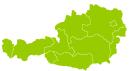
| Austria |
| I have already spent some time in Austria and I have fallen in love with it. The diverse history and imperial architecture draws you in. I will spend 4 days in Vienna, 1 day in Eisenstadt, 3 days in Linz, 1 day in Friesach, 3 days in Salzburg, 1 day in Bad Ischl, 1 day in Hallstatt, 3 days in Innsbruck, 2 days in Feldkirch, 3 days in Klagenfurt, and 5 days in Graz. With a buffer this makes for 29 days in Austria. |
| Vienna In 15 B.C. Vienna became a Roman frontier city. During the Middle Ages it was home of the Babenberg Dynasty and in 1440 became the capital of the Holy Roman Empire. In 1804 Vienna became the capital of the Austro-Hungarian Empire. After WWI Vienna became capital of the First Austrian Republic. During the Cold War Vienna became a hot bed for espionage between the Western and Eastern Blocs. Today Vienna is a beautiful imperial city. Things to Do: Museum fur Angewandte Kunst- Each exhibit room highlights a different style, such as renaissance, baroque, or oriental. The layout of each room was done by a different artist. Schloss Belvedere- This palace was completed in 1723. Today nineteenth and twentieth century art is displayed here. Zentralfriedhof- This cemetery has memorial tombs of several famous composers. St. Michael�s Church- Be sure to check out the crypt here. Some of the dead have been naturally mummified, other are just skeletons. The Holy Grail- I know that it is corny, but you gotta do it. There are more relics here than you will know what to do with. Military History Museum- Go here to learn all about the shooting of Archduke Ferdinand in 1914. Schatkammer- This is the imperial treasury. Over 1,000 years worth of treasures can be found here. Be sure to check out the crowns and the holy lance. Vienna History Museum- There is an amazing collection of artifacts here. Sisi Museum- This is dedicated to the life of the empress. Austrian Gallery- Art from all over Europe is on display here. Eisenstadt Eisenstadt was first recorded in 1118 as having a castle; however the area had long been occupied. In 1445 the town became a possession of the Habsburgs. Then in 1529 the Ottoman Empire conquered the area. Eventually it became part of Hungary. In the 17th century composer Franz Josef Hayden lived and worked here. This brought about a great artistic period for the city. After the end of WWI with the Treaty of Saint-Germain the area became part of Austria. During WWII Eisenstadt was heavily bombed. In 1945 the city was captured by the Red Army and remained under Soviet control until 1955 when it became part of Austria. Things to Do: Schloss Esterhazy- This castle dates from the 14th century. The local government is in part of the building; however the rest can be explored on a guided tour. Landes Museum- This museum deals with the history of the area. Linz This city was founded by the Romans, who called it Lentia. Later on it became a provincial city for the Holy Roman Empire. It was also an important trade route for connecting several routes. Johannes Kepler spent several years in the city studying mathematics. During WWII it became a major manufacture center, producing chemicals and steel for the Nazi war machine. Hitler regarded Linz as his home town and wanted to make it the main cultural center of the Third Reich. Today Linz is still and industrial city. Things to Do: Linz-Genesis- This museum details the town�s history. Schloss Linz- There is a museum about the castle located here. Ars Electronica- Visit a 3-D renaissance city here as well as get some free time on the internet. Day Trips Mauthausen- Over 100,000 people were killed in this concentration camp. It was also the last one to be liberated. Augustinian Abbey- This is perhaps the best in the country. Check out the lavish apartments. Friesach This is one of the oldest cities in Austria. I was unable to find much information on it. Things to Do: Dominican Monastery- Notice the wooden cross and sandstone Virgin Mary. Rotturm- There is not much left of this 13th century tower, but it is worth a look around. Petersburg- This houses the towns museum. Salzburg This is a really terrible history on the city; however you have been there before so it doesn�t need to be very detailed. In 1077 the Festung was built by Duke Gebhard. During the late 15th century all Jews were expelled from the town. Until 1803 the Archbishop of Salzburg ruled the city and the surrounding territory. It did not become part of Austria until 1815. During WWII the city was lucky to escape any major damage. After the war there were several displaced persons camps around the city. Then in the 1960�s the movie The Sound of Music was filmed here. For this the town will never be forgiven. Things to Do: Hellbrunn- This castle has a lot of tricks to it. Expect to get wet. House of Nature- This museum will help you learn all about animals. There is also a collection of oddities. Day Trip Hallein Bad Durrnberg Mine- This is the oldest salt mine in the world. You can even take a boat ride on a salt lake. Keltenmuseum- This museum has artifacts from the Celts that lived here. There is also a section on mining salt. Bad Ischl This town lies in the upper part of Austria known as Salzkammergut. During the Austro-Hungarian Empire it was the summer residence of the kings. I didn�t find much information on this town. Guess will have lots to learn when I get there. Things to Do: Stadtmueum- This museum is on local history and culture. Kaiservilla- This was Franz Josef�s summer residence. He also declared war on Serbia here. Salt Mines- A tour of these lasts for about an hour. Hallstatt The first road to Hallstatt was built in 1890. Despite the secluded atmosphere this was one of the first places that human settled in Europe. Nothing notable happened during the Roman period or middle ages. Today tourism is the town�s largest business. Things to Do: Pfarrkirche- Be sure to check out the impressive alter from 1510. Behind the church is the beinhouse. History Museum- This museum covers the local history, from crafts to flora and fauna. Dachsein Caves- These ice caves are millions of years old. They are about an hours walk from the town. Innsbruck Innsbruck was first documented in 1187. At this time it served as an important crossing point on the river Inn. During the 15th century emperor Maximilian I moved his court here. Then during the Napoleonic wars the area was ceded to Bavaria. It wasn�t until 1814 that the area was returned to Austria. WWII brought 21 bomb attacks, the city suffered heavy damage. Today it is known for its sports. Things to Do: Hofburg- Parts of this structure date back to 1397 Maria Theresa decorated much of it. Hofkirche- Check out the empty sarcophagus of Maximilian I. There are several other tombs to look at here as well. Tiroler Landesmuseum- This museum has a good collection of art and artifacts from the area. There is also a nice collection of Dutch and Flemish masters. Schloss Ambras- This grand castle can take several hours to enjoy. There is also a collection of oddities. Day Trip Kufstein Festung Kufstein- The earliest reference to this was in 1205. Check out the Heimat museum�s temporary exhibits on local culture. There is also a great view. Feldkirch Feldkirch is a medieval city in western Austria. The city was first mentioned in 1218 when the Schattenburg was built. Today Feldkirch has a reputation for having a good ice hockey team. Things to Do: Domkirche St. Nikclaus- Check out the stained glass here. Schloss Schattenburg- This was built in the 12th century. Check out the keep an the museums. Day Trip Liechtenstein- I was here before, but it might be nice to be able to see the museums. Klagenfurt There wasn�t a whole lot of information on this town. Currently it is a popular mountain resort. Things to Do: Walking Tour- This is a great city for a walk. Landhaus- Walk in to check out the painted ceiling. Landesmuseum- This museum ahs information on the area�s history. Check out the fossilized rhino head. Castles- There are several castles to check out around the city. Rent a bike for a day and choose a route. Graz Graz began as the site of a Roman fort. Later on a small castle was built there by the Slovenians. Soon it became a heavily defended fortification. In the 12th century the dukes of Babenberg made it an important commercial city. From the 15th century on Graz was the home to the younger branch of the Habsburgs. Adolph Hitler was given a warm reception when he visited in 1938. During the war 16% of the city was destroyed. Things to Do: Dom Kirke- Check out the fresco that shows life during the plague. Mausoleum of Ferdinand II- A few of the Habsburgs are resting here. Landeszeughaus- This museum has a huge collection of armory. Be sure to take n the view over the park. Stadtfarkirche- Find the stained glass window that pictures Hitler. Schloss Egyenberg- Be sure to notice the astronomical themes that dominate this building. Day Trips Ehrenhausen- The point of coming here is to spend some time in the wine region. Mausoleum- Notice the wine art. Gamlitz- This is the walking route of the area. Admont Benedictine Abbey- Be sure to check out the amazing library. There is also a history section. |
 |
|
|
|
|
|
|
|
|
|