

|
Encryption
types and C.A.M.'s
(Conditional Access Module's) |
|
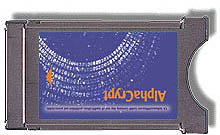
AlphaCrypt
|
|
|
No info yet... |
|
.
|
|
|
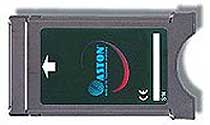
Aston
Seca / MediaGuard
|
|
|
SECA
stands for: Societe Europeene de Controle d'Access
(French). |
|
.
|
|
|
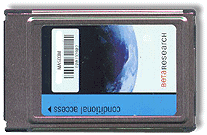
BetaCrypt
|
|
|
No info yet... |
|
.
|
|
|
Conax
|
|
|
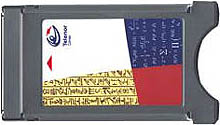
Between 1986 and 1992 the core of Conax was formed as a research team in Telenor's R & D department. The technology, including one of the world's first pay-TV smart cards, was put into large-scale operation from 1992. In 1994 Telenor Conax was established as an independent company within the Telenor group. The company is today owned 90% by Telenor, the leading telecom, IT and media company in Norway and 10% by Telenor Venture II ASA, a new fund of TeleVenture, with its main areas of interest within mobile communications broadband and new media / Internet. The change of name from Telenor Conax to Conax AS in March 2001, reflects a more independent company with a new owner structure, and is a step in the process of establishing Conax AS as the market leader in security- and payment systems for Internet and digital-TV. As an innovative leader in new technology developments, Conax currently focuses on the main areas of; Pay-TV systems, IP-streaming, on-line betting and associated functionalities e.g. e-payment. The company's quality system is in accordance with ISO-9001 and certification was awarded in 1998. Conax is also the first Norwegian industrial company to successfully obtain the BS 7799 security certificate. |
|
.Conax
history article taken from the Conax website
|
|
|
CryptoWorks
|
|
|
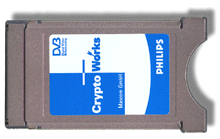
Unlike other CA systems, CryptoWorks CA is based on an asymmetric, public-key mechanism with over-air upgrading of key-length. As a result, the system is highly secure against piracy and will remain so, despite increases in computing power. And if any keys are compromized, only a very small set of smart cards has to be replaced. For exceptional security and performance, CryptoWorks CA uses a tamper-resistant device (TRD), as used in banking applications, instead of mothercards at the head-end to encrypt keys and messages. This unique system is extremely fast and fully secure, allowing all cryptographic functions for a large, multi-million subscriber DTH operation to be performed from a single box capable of handling up to 120 000 subscriber authorizations per hour. |
|
.CryptoWorks
history article taken from the Philips website
|
|
|
Irdeto
|
|
|
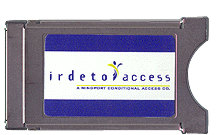
Irdeto was established 30 years ago, named after its founder Ir. Pieter den Toonder (Ir. is Dutch for the title Engineer). Later renamed Irdeto Access, our conditional access technology has achieved significant market penetration in over 50 countries. A first milestone in our history was the successful rejuvenation of Oak technology deployed to launch M-Net in South Africa. This was the basis for our subsequent expansion into other world markets. Our next major innovative technology development was the move from analogue to digital conditional access. Irdeto Access achieved the launch of the first digital MPEG-2/DVB compliant products in the world, and this technology was quickly adopted by a growing number of leading international broadcasters. Today Irdeto Access is a leading provider of conditional access technology, personalising more than 1 million smart cards per year. Turn-key project management services are offered to co-ordinate and integrate the diverse components from different suppliers to ensure smooth implementation of a conditional access system throughout the pay-TV chain. Irdeto Access dedicates a significant portion of our revenue to research and development, keeping us in the forefront of the innovative technology industry. |
|
.Irdeto
history article taken from the Irdeto website
|
|
|
Magic
Module
|
|
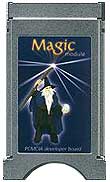
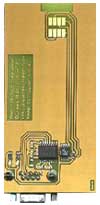 Magic module CAM (left) and its programming card (right) |
Most CAM's
can only do one type of encryption. The Magic Module (apparently now
banned in Germany) can do all these: The big
advantage of the Magic Module CAM is the fact that it can be programmed
(or updated if you like) with the use of its partner programming 'card'.
You don't need to buy the additional programming card but if you want
to keep the Magic Module up to date then your advised to purchase the
programming card. This one
CAM does the job of about 8 CAM's. |
|
.Some
Magic Module info taken fromCardman's website
|
|
|
NagraVision
|
|
|
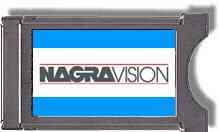
Through its joint-venture company MediaCrypt, Kudelski offers licenses using the IDEAä algorithm with a 128 bit key, reputed to be the most secure on the market and used in encryption modules and smart cards. Over the year 2000, Nagravision developed pre-encryption technology designed to ensure security of digital content on the server of the content provider, at the beginning of the transmission chain. This technique responds to concerns over copyright protection in the context of applications such as video on demand, distance learning, multimedia on demand over broadband networks, etc. Note: NagraVision is mainly used in France, Spain, Turkey and Germany. Nagravision is also known as Syster and Nagra. |
|
.NagraVision
history article taken from the NagraVision website
|
|
|
ViAccess
|
|
|
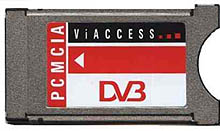
Backed by R&D resources of the France Telecom group, Viaccess helped to enable the digital pay television revolution. The company, which pioneered the development of software for head-end servers and set-top boxes, including powerful algorithms for encoding content, now offers a unique combination of experience and expertise for the management of digital content over convergent media. Today, as an independent solutions provider, and one of the fastest growing players in this specialist sector, Viaccess meets global market needs with leading-edge solutions in line with internationally recognized standards. |
|
.ViAccess
history article taken from the ViAccess website
|
|
|
VideoCrypt
|
|
|
No
CAM available
|
No info yet... |
|
.
|
|
©2002, RTj