 NEUTRAL
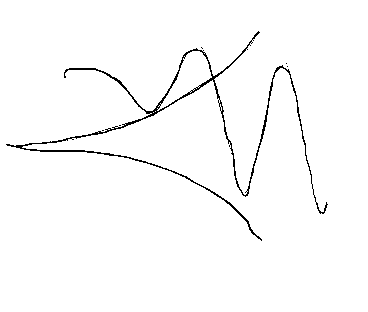
NEUTRALWhen the rod is stopped on the forward cast the tip will bounce.If this bouncing continues it causes a wave to form on the fly line.
These are energy losses.
A great rod will not continue to bounce, it will stop at the neutral point. Too heavy a tip and excessive wrapping can contribute to this slow to stop tip.
Guides up or down, not to the side.With the rod's butt on a hard smooth surface, and applying pressure with your hand at midpoint and supporting the tip, the natural spline* will appear. This should cause the guides to lay up or down. Either is okay. I like it to be guides up, this gives me a better back cast and forward cast.
* Much has been written on the spine of a rod. It is referred to as the spline, spine, and soft side, What this is, is the way a rod is made there is a lap of the fabric, fiberglass or graphite mat (scrim) that causes a side that will be stiffer than the other side of the rod this hard side resist bending more now called the hard or spine side. This will be the power side of the blank and the natural bend will be down if the spine is on the top of the rod as it is bent, as if a fish were pulling on the line. If you could hold the rod up at a forty-five degree angle then applied a pull on the tip with a weight. and allowed the rod the rotate you should see it take a bend and the spline side would be on the top. This spline is used to give more power to the caster or more accurate as needed. Most spinning and fly rods are built with this hard side on the top, giving the rod a better feel and more control. Most casting rod this is on the bottom to give the casting power, better back cast and power forward cast.
++++++