

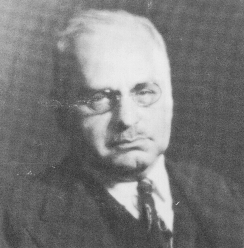
Adler’s Early Life
Alfred Adler (1870-1937) was born on February 7th, 1870 in Vienna. As a youth Adler struggled with rickets, a condition that left him physically frail. Adler recalled that two subsequent doctors suggested that he was beyond treatment. This experience left an indelible impression on young Adler (Adler, 1913). Adler was the second son of a family of seven, and was intensely competitive with his brother Sigmund. In fact, even through middle age Adler felt that his talents and success were eclipsed by his “model brother” (Dagley, 2000). Although Adler had a strained relationship with his mother, his father, a grain-merchant, was his strongest ally and encouraged Adler’s pursuit a medical degree (Prochaska & Norcross, 1999).
Adler was also an individual who thrived on social contact, whether it be for professional contacts or personal interactions. He eagerly worked to share his beliefs and ideas with those around him. Adler also enjoyed making friends, socializing in Viennese coffee houses, singing, and spending time with family (Ansbacher & Ansbacher, 1956; Dagley, 2000). One of Adler’s fondest memories was playing as a child with other children in the neighborhood. He talked about being part of a social group and interacting with many of the families and children in the area in which he lived. “Because of my friendliness and liveliness I was well received wherever I went…At an early age I became part of a wide social milieu, and in our games both the boys and girls learned to look upon one another as communal equals” (Adler, 1939; as cited in Ansbacher & Ansbacher, 1956).
Adler’s bout with illness early in life informed his later philosophy and personality theory. He believed that a motivating factor in one’s life was to overcome a shortcoming, such as Adler’s career choice to become a doctor to overcome a sense of inferiority after his childhood illness. He stated “From that time (of the early childhood pneumonia) on I recall always thinking of myself in the future as a physician. This meant that I had set a goal from which I could expect an end to my childlike distress, my fear of death” (Adler, 1913. (This overcoming of inferiority through goal-striving also highlights Adler’s acknowledgement of private fictions). In fact, Adler, in questioning a large group of doctors on their earliest recollections, found that many of their memories incorporated a serious illness (Dagley, 2000).
Adler graduated from the University of Vienna in 1895. After graduation, he entered private practice as an ophthalmologist in 1898, later had a general medical practice, and then moved into psychiatry (Mosak, 1989). During World War I, Adler served as a physician in the Austrian army. Adler married Raissa Timofejewna in 1897 (Ansbacher & Ansbacher, 1956), shortly after completing his medical degree at the University of Vienna. An intellectual in her own right, Raissa enthusiastically pursued political causes and activism, and had strong interests in socialism, economics, and education. Adler and Raissa would eventually have four children, who pursued careers in sociology, economics, psychiatry, neurology, and drama (Dagley, 2000).
Adler and Freud
Unfortunately, Adler is largely known for his tumultuous relationship with Freud as much as for his contributions to the fields of psychology and psychiatry. Interestingly, Adler began his foray into psychoanalysis through an invitation from Freud in 1902 to join the Wednesday evening discussions (known as the Vienna Society), which were also attended by Carl Jung (Ansbacher & Ansbacher, 1956). In fact, Adler was the president of the Vienna Psychoanalytic Society, an organization created and highly controlled by Freud, up until his theoretical and professional break with Freud. In 1911, Adler resigned as president of the Vienna Society, and Adler’s followers broke off with the Freudian group by forming the Society for Free Psychoanalytic Research (Mosak, 1989). At this time, Freud ruled the burgeoning field of psychoanalysis with a dogmatic iron fist, refusing to allow theoretical breaks from his own conceptualizations.
So what were the general areas of disagreement between Freud and Adler? There was a time in which Adler views corresponded with Freud’s thinking, and Freud highly endorsed Adler’s ideas around organ inferiority. But later, Freud disregarded Adler’s ideas as unoriginal and dismissed them as new or meaningful contributions. Adler highly disagreed with the central role of sexuality in Freud’s psychoanalysis. They also disagreed on “1) the unity of neuroses, 2) penis envy (sexual) versus the masculine protest (social), 3) the defensive role of the ego in neuroses, and 4) the role of the unconscious” (Mosak, 1989, p. 75. Adler believed that individuals were not a bundle of different drives, but were a unified whole, striving for social connection and meaning in one’s life.
Adler’s Later Life
Adler was an enthusiastic lecturer, who, not surprisingly, enjoyed sharing his theories in down to earth terms with professionals and non-professionals alike. He thrived on the social interaction provided by these lecture opportunities. Not surprisingly, Adler was a proponent of social-democratic movements (Ansbacher & Ansbacher, 1956). Like many of his contemporaries, Adler’s professional and personal path was influenced by World War II and the spread of Fascism. His popularity peaked just before Hitler came to power in Europe (Prochaska & Norcross, 1999). Ironically, the influence of Fascism, while causing Adler and fellow proponents to emigrate around the world, also facilitated the spread of Adlerian ideas around the globe (Sherman & Dinkmeyer, 1987).
Adler was influential in developing not only a unique theory of personality development, but also promoting systematic couples and family counseling/education centers, numbering 31 in Europe between World War I and 1934 (Sherman & Dinkmeyer, 1987). At one point, Adler divided his time between Europe and a medical position with the Long Island School of Medicine (Mosak, 1989). He finally settled in New York in 1935 (Ansbacher & Ansbacher, 1956). Despite suggestions from friends that he slow down his vigorous schedule, Adler continued to enthusiastically promote his ideas on individual development (Prochaska & Norcross, 1999). He died of a heart attack on a lecture tour in Aberdeen, Scotland on May 27, 1937. Two of his children, Alexandra and Kurt, went on to practice psychiatry in New York City.
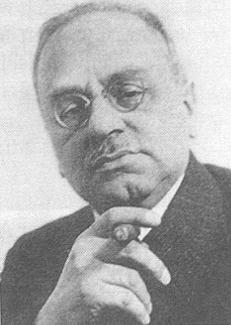 Back to "An Historical Look at Alfred Adler"
This page was created by Ryan Scott

My Webpage