
Could this happen to you?
Scenario - On vacation a man drove his car up a dirt road in the Rocky Mountains, it was a hot sunny day and he was looking for hawks and eagles. As he crested a hill, he saw one soaring over head. Pulling his car off the road, and onto the grassy verge, he jumped out, binoculars in hand, and watched the bird, his car running the whole time. Ten minutes later he jumped back in and drove on.... Behind him, where his car exhaust had been touching the long, dry grass, a small fire started. Fed by a slight breeze the fire began to spread across the meadow. The flames greedily ate the dry parched grass, crackling and growing in intensity, and quickly approached a forest of pine trees. A mile or so away, a neighbor whose house was up high, noticed the smoke, and called the fire department, explaining that the fire was heading directly for her neighbor's house.
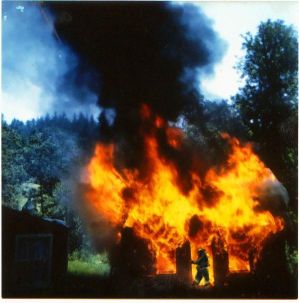
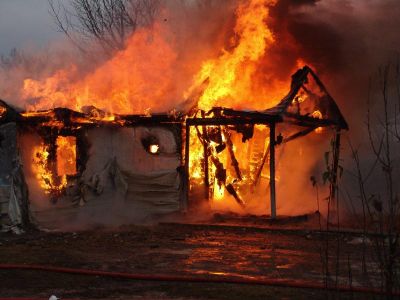
The fire department was dispatched, and set out for the house that was being threatened, as they drove up and down the road, they could not find the house. One time they went up a small driveway, but it was a dead end. There was no sign to help direct them. When finally they found it, the trees surrounding the house were an inferno, the branches hanging over the cabins deck had dropped cinders onto the deck and roof, and the house was on fire. Although the fire fighters fought valiantly, they could not save the cabin.
COULD THIS HAPPEN TO YOUR HOME? Fire season has already begun here in Colorado. It has been suggested that Larimer County is the driest county in Colorado at this time. Many of you will remember the Bobcat fire, and how quickly it spread. Fire fighters could do little to control the flames in such dry conditions with high winds, despite the use of slurry drops, and Hotshots, but did manage to save many of the homes� some were easier to defend than others.
If a wild fire was to threaten your home this summer, would it be fire wise? To help fire fighters protect your home more readily, there are many things you can do, often with little or no expense to you, the home owner.....
*. If your home is surrounded by trees, create a 100 foot safety zone around it. Other homes should have a 30 to 100 foot safety zone. If your home is built on a steep slope, or in a saddle or on a ridge line, contact your local fire department to see what steps you can take to make your home more secure.
*. Make sure your name and address is clearly marked at the end of your driveway. If possible have easy access to your home for fire trucks, with plenty of room to maneuver. Here in the mountain�s driveways are often small, and tight, with only one entrance, keep the driveways clear of rubble, overhanging branches, old vehicles, etc., to give fire fighters more room if needed.
*. Rake dead leaves, pine needles, limbs and twigs from around and under your home. Remove portions of any tree extending within 10 ft of the flue or opening of any stove or chimney. Don�t allow the grass around your home to get higher than 4�. Remove dead branches that extend over a roof or deck, and thin a 15 foot space between tree crowns. Remove limbs from trees, within 15 feet of the ground. Ask the power company to clear branches from power lines. Remove vines from the walls of the home, clean roof and gutters of debris.
*. Clear a 10 ft area around propane tanks and barbecue grills. (Before using charcoal briquettes ensure there is not a fire ban in place.) Place a screen over the grill, using a nonflammable material with mesh no coarser than one-quarter inch. Screen placed over chimneys, stove pipe and attic vents is also a good idea. When cleaning out stove, fireplace or grill ashes, put in a metal bucket, and soak in water for two days. Propane tanks should be at least 30 ft from any buildings.
*. Store gasoline, oily rags and other flammable materials in approved safety cans. Place in a safe location away from the base of buildings. Stack firewood at least 100 feet away and uphill from your home.
*. Keep garden hoses connected to outlets, and have fire fighting tools handy, such as shovels, buckets, axes, rakes and ladders.
*. If a fire threatens get ready for evacuation. Park car with nose pointing to escape route, leave keys in ignition. Have emergency supplies in vehicle, enough for several days. Ensure all family members, pets, etc., are aware of the situation and are ready to go. Lock all door and windows. If you have shutters, close them. Turn off gas and propane. Leave electricity on, and leave all outside lights on so that fire fighters can find your home easier in the smoke. Should the order to evacuate come, do so immediately.
Above I have mentioned a few things you can do immediately, to help protect your home. There are many more things you can do, such as installing protective barriers, ensuring your roof is fire proof, protecting your windows with screens, landscaping your garden with more fire-resistant plants, having an emergency kit ready and evacuation plan. If you plan to build a home, talk to your designer about using fire-resistant materials.
If you want to learn more about protecting your home and family, there are many excellent sources of information on the World Wide Web. I recommend www.firewise.org, or visiting your local National Forest Office, in Estes Park it is located at 161 2nd Street, Tel: 586-3440
Have a safe and happy summer, and remember to be FIRE WISE.
Roxane Whalley - Glen Haven Volunteer Fire Department