
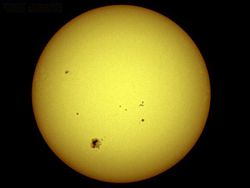
SUNSPOTS
Sunspots Affecting Us Historically and Currently
As a class, we will safely observe the sun by projecting the solar disk onto a screen. For each day of observation, record your observations of the sun and its sunspots on your worksheet. Then discuss the changes you have discovered from each observation. How fast did the sunspots seem to be moving on the solar surface? (Is there a formula you can use to determine the speed?) Where, with respect to the Sun's equator, are most of the sunspots occuring?
Observing The Sun's Rotation via Sunspots:
Solar Science MSFC NASA

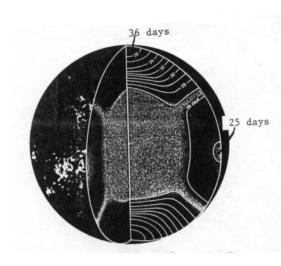
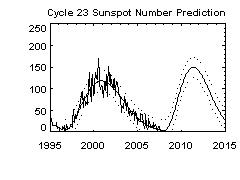
Unlike the Earth, parts of the solar surface rotate at different rates. The parts at the equator are going faster than the poles, rotating in 25 days. Regions by the poles can take up to 30 days to make one rotation. This variable rotation may affect the magnetic field of the Sun, which can lead to sunspots and the solar cycle.
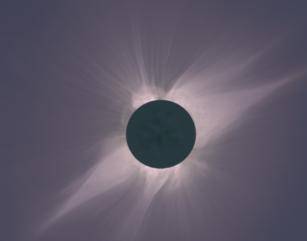
These websites will help to get you going, but you are not restricted to these only.
Technology: Solar Weather and its Effects on Technology and Communications: Spaceweather.com
This website gives an interesting daily solar forecast
Physics: Differential Rotation and Sunspot Cycles:
Differential Rotation
Solar Cycle
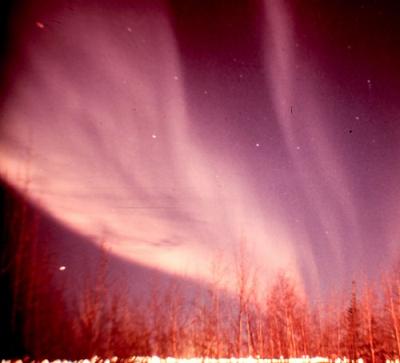
Atmospheric Science: Solar Wind and the Aurora Borealis and Australis: Secrets Of The Polar Aurora
Plasma Physics: Solar Flares and Magnetism:
Flare Characteristics
History: The Maunder Minimum, Volcanic Eruptions, and the Mini Ice Age of 1645 to 1715:
Sun's Impact On Earth
Archeology: Failed Viking Greenland Civilization
Recent News: X3 Flare, Dec 14, 2006.
Solar Flare Disrupts Communication, Astronauts
**Projects may take the form of a paper, a powerpoint presentation, a podcast, a movie, a specialist interview, etc. Also be prepared with your favorite website resource address (picture, movie, animation, approximately 2 min. or less) to share with and explain to the class.
Observing Sunspots Safely
PDF - sunspotsTeachers.pdf
DOC - sunspotsTeachers.doc
Student Observations Worksheet
PDF - sunspotsStudents.pdf
DOC - sunspotsStudents.doc
Additional Resource:
Course Project Outline


