Sharing the stories of Royston Whatley Brooks and his family.
|
|
Ross
W. Brooks & Kin Sharing the stories of Royston Whatley Brooks and his family. |
|||
|
|
||||
|
Douglas Daily Dispatch article
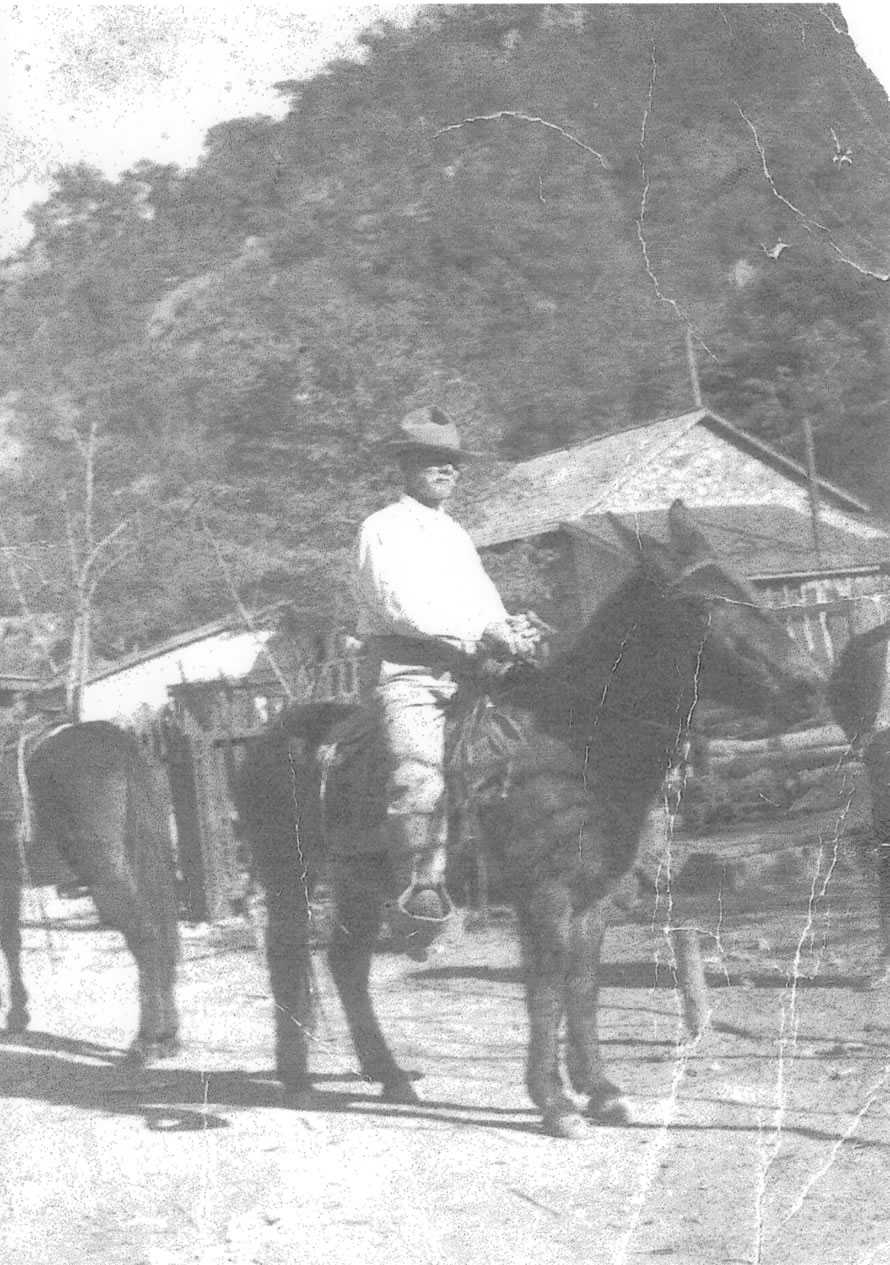
by Cindy Hayostek November 3, 2002 A ceremony Saturday, Nov. 2 celebrated the life of R.W. “Ross” Brooks, a remarkable Douglas resident who died in 1923. Descendants from Florida, California and points in between attended a ceremony in Phoenix’s Greenwood Memory Lawn to dedicate a marker on the grave of a man who’d been a Terry’s Texas Ranger, Arizona Ranger and Douglas Policeman. Members of all three organizations were present. Royston Whatley Brooks was born in Georgia in 1839, said Troy Groves, a researcher who maintains an Internet site on Terry’s Texas Rangers. The Brooks family was in Texas by 1851, and when the Civil War broke out, the 22-year-old Brooks enlisted in Co. C of Terry’s Texas Rangers. During the four years of the Civil War, the rangers fought 275 battles in seven states. Only twice during the war did a cavalry unit defeat an infantry army; both times the victor was Terry’s Texas Rangers. In 1862, Brooks married Martha Clayton. They began a family that continued growing after the war. Brooks worked as a wagoner after the war and prospected. Martha died in 1884. Apparently, a son, Jeptha, who moved to Naco about 1902 pulled the rest of the family to Arizona. Another son, John, enlisted in the Arizona Rangers in 1903; by 1904 he was a lieutenant. The Arizona Rangers were created in 1901 by the state legislature to combat cattle rustlers and other outlaws. The rangers were ordered to headquarter in the Arizona town that most needed their assistance – for most of their nine-year existence that place was Douglas. In 1904, Ross Brooks enlisted in the rangers. He was 65 and patriarch of an extended family centered around a home at 860 13th St. that had been built by his son-in-law, Andy Scott. Brooks undoubtedly felt the rangers wanted younger men than he was, and so he listed his age as 42. Father and son worked together at least once. In 1905, rustlers stole some horses and mules near Pirtleville and the Brooks duo trailed the thieves into Sonora as part of a posse. They rode over 100 miles of mountains and valleys in three days to capture one rustler and several animals south of Magdalena. Later that year, father and son resigned from the rangers. Both became involved in ranching and mining in Mexico. Ross bought property in Naco, married Delores Ballesteros and had a son, Ross Jr., in 1907. In 1915, the couple sold their Naco property, moved to Douglas and lived at 943 Fourth St. In 1916, Brooks became a Douglas police officer; he was 77. That same year, Brooks was serving a warrant on one Jose Mendez when Mendez emerged from his Second Street home firing a pistol. Brooks returned fire, killing Mendez. A coroner’s jury ruled Mendez’s death was justifiable homicide. In 1919, Brooks is listed on the police department’s payroll as a “mounted cop.” He was charged with patrolling the border line and received $67.50 twice a month in wages. Not long after this, he was attacked while on patrol and his skull crushed. He never really recovered from his injuries and his mental state deteriorated. He was committed to the state hospital in Phoenix, where he died late in 1923 at age 84. Brooks was buried in an unmarked grave. That always troubled Brooks’ grandchildren who lived in Douglas, but they didn’t really know where the grave was. Then members of the Arizona Rangers decided to find the grave so a marker could be placed on it. That led to Saturday’s ceremony, which was attended by Brooks’ grandchildren: Isabel West, Clara Brooks, John Brooks and Norma Minges of Douglas, and Alma Marcoux of California; great grand children, Richard Brooks of Florida and Ralph Wisterman of Phoenix.
©2002 Douglas Daily Dispatch
|
|
|
|
©2002 HTML Encoding by Troy Groves
|
||