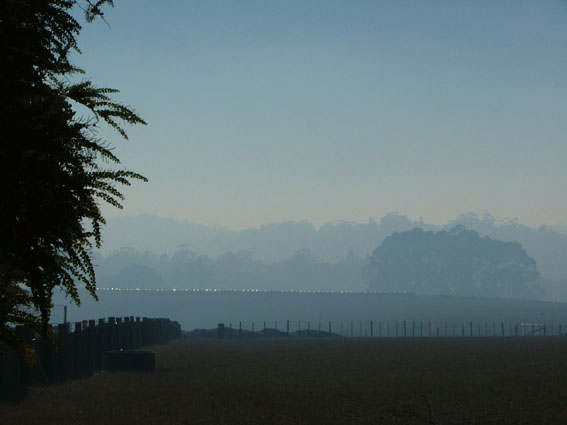
On the evening of 11th April the smoke haze settled over Somerset where I tried to sleep. As the evening went on the smoke worsened. My heart began to race. A headache developed and my lungs began to sting. Puffer medication only eased the shortness of breath a little. After getting up 4 or five times, checking to see that all windows were shut, I gave up on any prospect of sleep at 5am. I had no transport so there was no immediate way out.
The smoke continued. At midday the opportunity came to try to find the source of the smoke. I and a friend headed toward the large pink-brown plume South of Burnie. As we drove up the Ridgely hill the smoke thinned out and it became easier to breath. I hadn't been out that way for some years so the experience of discovering the complete transformation of farmland and temperate forest to an industrial wasteland was shocking.
From Ridgley to Waratah an ugly green desert of Eucalypt Nitens. My friend told me that when she first arrived in Tasmania in the 1970s this land used to be lush rainforest. Most of the destruction of biodiverse native forest, however, has occurred since the signing of the Tasmanian Regional Forest Agreement in 1997. An Agreement between the neoconservative Howard Government and Tasmanian Labor/Liberal Governments respectively.
The above image was taken on the morning of 12/4/07, from a friend's front
yard on Stowport Road in the direction of Minna Road to the East. Quote:
"The smell of wood smoke filled the house and was as strong as if someone
had lit a woodfire in the lounge! My wife and I both suffered from acute
sinusitis and sore throats that day!!
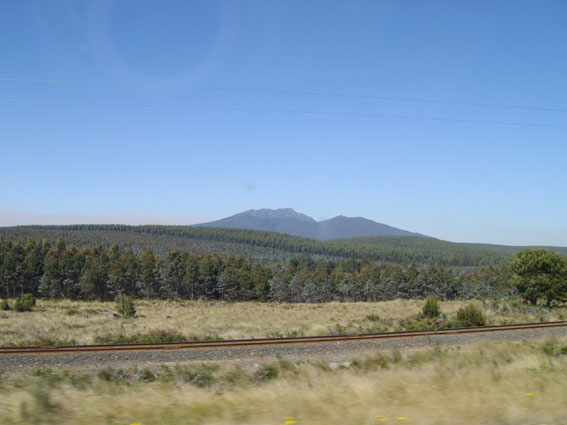
Below and above see the huge pinkish-brown plumes from yet more industrial 'forestry' burnoffs. On this day, one on the West Coast that inundated the North-West towns of Somerset, Cooee and Burnie, Penguin and Ulverstone. Another near Deloraine that further choked the air of residents in Ulverstone. Taken 12th April 2007.
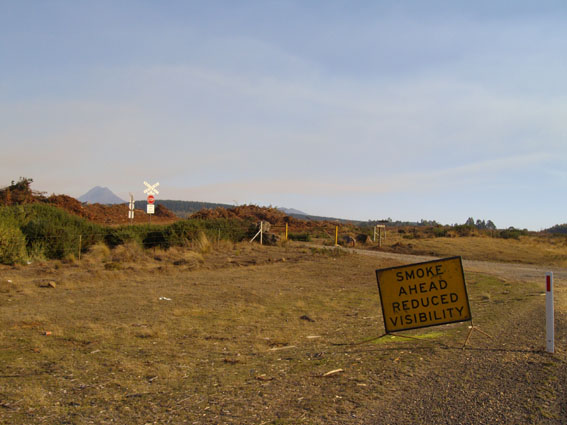
Reduced road visibility from deliberately lit plantation fires has become institutionalised in formal traffic signposts.
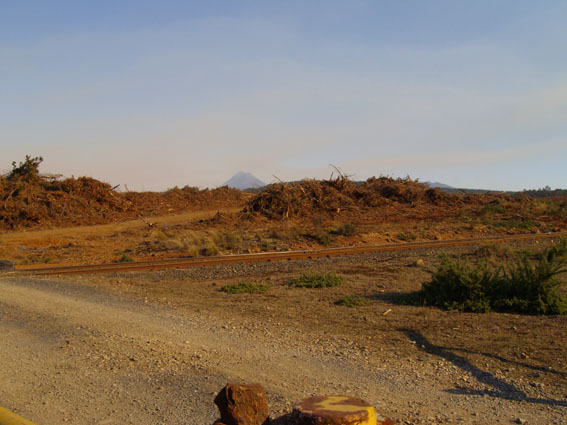
Above. An image of what is actually burnt.
Whilst the industry spin doctors call these conflagrations 'regeneration' burns the fact is that very few are. Why? Because when these transnational corporations clearfell native forest - what little is now left - very few are allowed to regenerate. Most of the 'forest' waste in Tasmania comprises the non-commercial biomass left after the stick-like trunks are harvested for woodchip export.
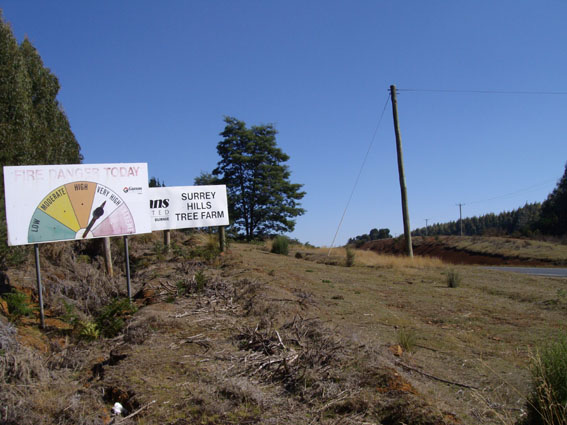
Above. 12th April 2007. A day of 'very high' fire danger doesn't impede the continuation of industrial burn-offs.
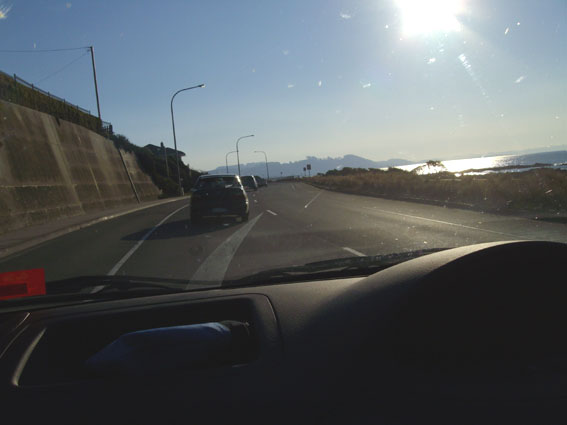
With dusk approaching the air quality remained poor and the plume was still visible as we returned home. At this stage the smoke had continued for well over 2 days and 2 nights since the industry recommenced the burn-offs after the short Easter break. We had to wait till 10am on 13th April (the next day) before our asthmatic lungs enjoyed a reprieve.
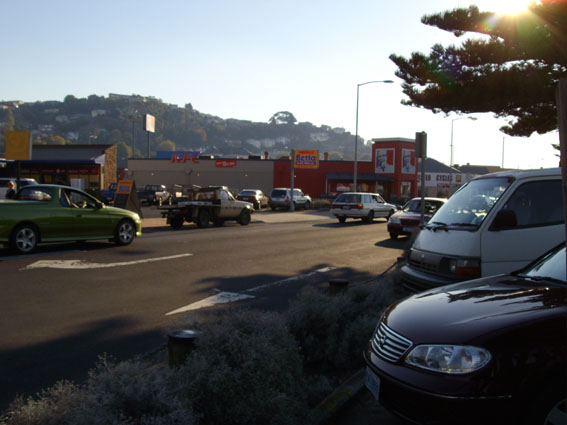
Haze of the hills of the regional town of Burnie.