 |
|
|
|


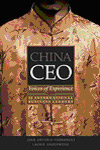
China CEO: Voices of Experience From 20 International
Business Leaders
JobsDB Learning Edge’s interview with Laurie Underwood
|
China is visible everywhere today and this burgeoning market is a “must win” for any business with international ambitions. However, we often hear of difficulties when foreigners work in or with China. What is it really like to do business in China? Why do outsiders fail there? What is the secret to forming successful joint ventures or business partnerships in China? In attempting to answer these ground-shaking questions, co-authors of China CEO, Juan Antonio Fernandez and Laurie Underwood spoke to 20 top executives and eight experienced consultants based in China. |
 |
And in this issue of the Corporate Learner, we caught up with Underwood to discover their responses and more about the book.
Q: Who is the intended audience of
your book?
We wrote the book as a resource for expatriate managers working in,
or hoping to work in China. We interviewed 20 expatriate CEOs of Fortune
500 companies and they come from a mix of backgrounds. Most are either
American or European, but we also interviewed Taiwanese, Hong Kong,
and Japanese CEOs, so there is a wide spectrum of points of view. So
many companies are moving into China or expanding their China operations
right now. We thought it would be useful to talk to those managers already
succeeding in China and simply ask them “How did you adapt as a manager
in order to do your job in China?” This forms the basis of the book.
Our interviewees told us how they do what they do – how they manage
Chinese employees, how they work with Chinese business partners, how
they negotiate with the Chinese government. So China CEO is for
anyone who wants to learn what these CEOs have to say.
Q: In China CEO, you mentioned
that its specific chapters illustrate the different relationships that
top executives must manage in China - internal relations, external relations
and personal relations. Do you regard your book as a substitute to professional
advice and how best would you recommend a foreign businessman/expatriate
to use the book when venturing into China?
No single book can tell you everything you need to know to do business
in China! We can’t pretend to be able to do that. China CEO can
be a starting point, though, pointing people in the right direction.
The book includes the anecdotes and advice from our 20 CEO interviewees
but also includes expert advice from 8 consultants who have built up
businesses advising multinational companies on how to succeed in China.
These consultants – from Boston Consulting Group, McKinsey & Company,
Korn/Ferry, BearingPoint and other firms – help balance the personal
information shared by the CEOs. Our goal was to provide a balanced,
“battle tested” advice on succeeding in China. I would say people could
use the book to get a head start in China, to avoid some of the problems
that our interviewees identify, and to set off on the right path once
they start building their China business.
Q: Your interviewees hailed from
European, Japanese & U.S. MNCs. What were your criteria for choosing
them and why didn't you include anyone from any Chinese MNC (e.g. CNOOC,
Haier, Lenovo)?
One of our criteria for the interviewees was that they should be expatriates,
meaning not Chinese nationals. The focus of the book was on advising
foreigners on how to adapt as managers in China. Each CEO we chose had
to be heading up successful operations for a Fortune 500, non-Chinese
company in China and had to have been working in China for at least
1 year. Actually, the average length of time in China among our CEOs
was 5 years, and some had been here for more than 10 years.
You are right that interviewing the heads of China’s own emerging multinational companies would be a fascinating book. Maybe that could be our second book!
Q: In your opinion, is there really
any difference in doing business in China, the West and anywhere else?
This is a good question – there is a lot of hype about China and the
mystique of doing business here. Some aspects of the challenges of doing
business here are likely overblown and exaggerated. But I can say, after
spending 2 and a half years researching this book, that succeeding in
China does require that Western or non Chinese Asian managers adopt
different skill sets and develop a deeper understanding of the business
environment here. The CEOs and consultants we interviewed all said that
it is not enough for a manager to be excellent at his or her job back
at headquarters – succeeding in China does require expanding your knowledge
and developing new sensitivities. Our interviewees stressed that a successful
manager in China needs to come here with an open mind, humility, patience
and understanding that there will be a learning curve to climb. These
are not qualities that many top managers generally show in their jobs
back home.
For example, managers said they needed to develop new ways of communicating successfully with Chinese employees and business partners in order to maintain “face”. Direct communication sometimes was not the best way to get a message across and could have disastrous results. A casual comment suggesting a change in work strategy from a supervisor using Western-style business communications could cause serious embarrassment to a Chinese employee, resulting in that key employee resigning. These are the kind of mistakes our interviewees warned about.
Q: "Guanxi" - how do you rate its
importance in doing business in China?
Advice about understanding and building up guanxi – or relationships
necessary for doing business - is one of the themes of the book. We
spent a lot of time on the concept because it is a difficult concept
for foreigners to grasp. Our interviewees’ main message was that guanxi
is still a critical concept in successfully doing business in China
– managers do need to spend more time building up goodwill and establishing
trust and friendship with their business partners in China before rushing
into deal making. But they stressed that it is not necessary to cross
the line into corrupt business practices. The big challenge for all
those we interviewed was to set up China-style business practices that
allow for Chinese business culture while maintaining the rules of corporate
conduct established by their companies.
Some of our CEOs were very creative in finding ways to build up guanxi with business partners or government officials while maintaining codes of ethics. They tended to spend a lot of time meeting with officials and business partners, in order to establish goodwill and build trust. For example, they might treat officials or business partners to training seminars or business workshops on some aspect of business practices, as a way to build up the relationship. The bottom line is that guanxi is still a factor that all CEOs grapple with.
Q: How do you describe yourself philosophically?
Me? I’m a real China fan. I’ve spent my entire adult working life in
Asia, first in Taiwan and now in China, working as a business writer.
My co-author, Dr Fernandez, and I definitely have the China Bug – it
is very very exciting to live and work here right now, in the midst
of the China boom, and we have no plans to leave. If I can help other
people to catch the China Bug, then I feel I am doing something worthwhile.
Q: Will you be writing another book
anytime soon? (If so, what will it be about?)
China CEO took more than two years and just came out in March
so it is way too early to think about Book Two. One of the biggest challenges
in writing the book was that the China market is changing so fast that
we had to update every part of the book again just before publishing.
So China books are not easy to write! But there are so many other China
stories to tell that we may get another burning idea soon. If we do,
we’ll let you know!
|
About the authors |
(This article was first published in JobsDB.com - link)