| Conservation |
 |
 |
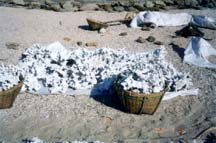
| The conservation of coral reefs is more important now than it ever was because of the explotation of these beautiful structures. Natural disasters, human explotation and coral bleaching are all risking the future existance of coral. Deforestation is also a threat to coral reefs because without the tree roots to absorb water and hold the soil together, heavy rainfall washes excess soil into rivers and out into the sea. The silt and consequently reduction of light, chokes coral polyps. Algae feed on the silt and so reproduction of algae gets out of balance with the natural ecosystem of the reef. Ocean pollution such as oil slicks, pesticides and other chemicals, heavy metals and rubbish can also cause great damage to the reefs. Traditionally, spilled oil is treated with detergent to cause it to break up, but often the detergents do more harm than good. Coastal development and dredging can destroy reefs as well, with the building of hotels, houses and harbors. Fishing with dynamite, cyanide or bleach has killed reefs in the Indo-Pacific region. Just between 1986 and 1991, half the coral reefs in the Philippines were destroyed using thses fishing methods. The hardest part about this explotation of coral is that once the coral is destroyed, it takes hundreds and thousands of years to grow back to its original size and reef. This is why the conservation of coral is so extremely important. Internation aquarium and seashell traders have put a strain on the coral reef and the reef inhabitants. Excessive farming on the reef decimates reef species and upsets the balance of the reef ecosystem. In 1990, the world consumption of corals for the souvenir trade was estimated to be around 2,200 tons a year. Coral skeletons are used to make jewellery and decorations in aquariums, and also living, natural biological filters in saltwater aquariums. Also, the rise in popularity of diving and a larger number of tourists taking longer holidays means that some of the most well known reefs are being damaged. Too many divers, the anchors of dive and snorkel boats and the litter and sewage that go along with them, all contribute to the loss of diversity on the reefs. Not only does human explotation harm the reefs, but natural disasters as well. Changes in sea level are very hazardous to the reef because a devrease in sea level exposes the corals, and a rise in the sea level decresases the amount of sunlight available for the photosynthetic algae. Rises in sea level can also release nutrients trapped in the soil. Also, disease can wipe out massive amounts of coral. This could be connected to a rise in the sea level and /or nutrients. Major tropical storms can also strip corals from miles of reef habitats. |
 |
| Be Respectful Whether you fish, swim, surf, snorkel or dive, be aware that you are sharing marine hhabitats with other inhabitants. Exercise caution when entering and exiting the water. Watch where you step and swim to avoid damaging coral, eelgrass, kelp and even the sandy bottom. Anchor with Care Find ways to avoid habitat damage produced by poor anchoring techniques.Use buoy moorings whenever possible. Storm Drains Don't pour oil, engine fluids, cleaners, or household chemicals down storm drains or sinks. Recycle Find approved motor oil and household chemical recycling or disposal facilities near your home, and make sure your family and friends use them. Use Chemicals Less Use lawn, garden and farm chemicals sparingly and wisely. Weatherman Before spreaking chemicals or fertilzer, check the weather forecast for rain so they don't wash away. Repair Leaks Repair automobile or boat engine leaks immediately. Contact CORAL keeping coral reefs alive thorugh conservation, education, and building partnerships. http://www.coral.org |
 |
| Coral bleaching is the whitening of coral colonies due to the loss of symbiotic algae from the tissues of polyps. This loss exposes the white calcium carbonate skeletons of the coral colony. The exact way by which corals bleach is unknown, there are two hypotheses that have been suggested to answer this. One is that the algae are released into the gut of the polyp and are then expelled from the polyp through the mouth. Another is that stressed corals give fewer nutrients to the algae and therefore the algae leave the polyp. Algae may produce oxide toxicity under stress, and these toxins may affect the polyps. Coral bleaching is caused by many stresses or environmental changes, such as disease, excess shade, increased levels of ultraviolet radiation, sedimentation, pollution, salinity changes, and increased temperatures. In recent years, large scale bleaching has been reported on the reefs around the Maldives and on a smaler scale in the Carribean and on the Great Barrier Reef. |