From Homelessness To College
Updated; April 21/2007
Homelessness is
Have you ever been homeless? Do you know what life is like on the street? Well, I have been homeless and on the street. Here is my story.
In September 1986, our landlord informed us that the house in which we had been renting a basement apartment had been sold. He said we had until the following March to find another place. My husband was working in a furniture store at the time. Every night, he would come home and we would go door-to-door looking for an apartment. We'd spend hours looking every night only to find huge waiting lists or refusals to take a couple. They remained firm on that despite our pleading and begging. Finally, March came and we still had not found a place. We left our home of 2 1/2 years for the street. We stayed in motels and hotels for two weeks. We found a place in the Jane-Sheppard area. We could have a room in exchange for babysitting a hyperactive 3-year old boy. We were there for 3 weeks after we put our belongings in storage at a place in the Don Mills area and {later the west end.} We had no privacy at all. The possessions in our room were open to anybody.

Our landlord told us we could move our belongings in even though we told him we had a lot of stuff. After we moved in, our landlord told us that the owner of the house had not been informed that we had moved in. We were given a week to leave. They couldn't get us out of there fast enough. We had to put our stuff back in storage and move back out on the street. The reason we emphasise this is to show that there are many people who are manipulated by their landlords. To many landlords, the homeless situation has become a game. A game in which people are treated like helpless pawns. We were forced back out on the same treadmill of hopelessness we had been on shortly before. It soon became apparent that we might have to split up.

We accidentally lost my husband's last $150.00 in a phone booth in the subway. We were officially street people from that point on. The problems we faced soon began to erode our four-year-old marriage. For the most part, I relied on my husband to try and find, each night, a safe place to sleep.

After a few weeks, we could no longer find available motel rooms anywhere, no matter how hard we looked. If we were lucky enough to find a room, it was usually only for one night. After many hours of walking and searching,{often in York Region, north of Toronto}, sometimes we would not find a room until 2:00 in the morning. We went through many different phases from sleeping in a friend's car to sleeping on the roof of a four-storey building, always basically living by our wits. My husband had {many years before} combat and survival training in Boy Scouts and later in the Canadian Army. He coupled these skills with his personality and used them to keep us alive in a very dangerous situation.
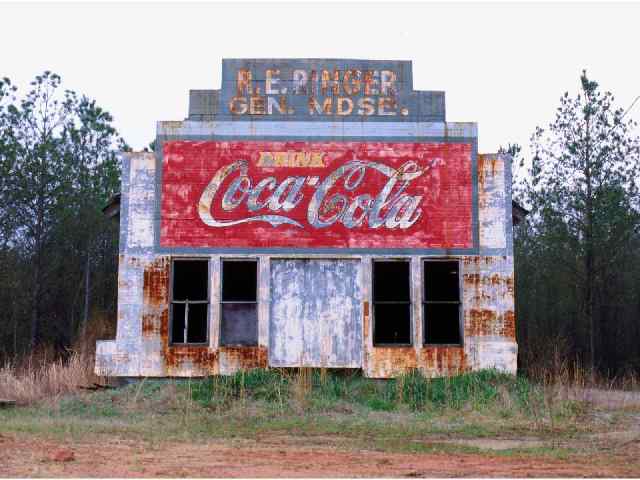
We slept in hospital lounges, abandoned cars, an apartment stairwell{where we were almost arrested for trespassing}, and bus shelters. However, we soon began running out of places to sleep and often went without food and sleep. Neither of our families or our friends was able or willing to help us. In some cases, friendships of many years were almost destroyed. However, there were people who did help us out. Things were tough for me because at that time, only my husband was working. Any money he got from his job went very quickly.
We managed to get a bank loan, but due to the cost of living on the street, it went very quickly

Somehow, my husband managed to perform his job to his usual high standard during all this time. He was never late, never missed a day of work and often worked overtime. All this despite our terrible hell of living on the street. This is testament to his mental toughness and resilience as a person. Often, all he could afford to eat were potato chips, coffee, and doughnuts.

Our marriage by now, was almost at the breaking point, to the point where we couldn't stand each other. We fought over the smallest things and for a while, it seriously looked like we would permanently go our separate ways. Since I was not working, my problems were greater because I had nowhere to go during the day and I was not very good, unlike my husband, at killing idle time.

Finally, he put me into the women's hostel system despite my vehement protests and my fears that he wanted nothing more to do with me. The reality was that he was only concerned for my health and my safety. He did this because it had become apparent that no one would accept two people even though we were married. We had tried hostels before, but no one would accept us because we did not have children. For fear of his own safety and of being robbed, my husband totally refused to go to Seaton House. He was well aware of the inhuman conditions Seaton House has long been famous for; {in his words, he refers to Seaton House as being a "human toilet bowl."} He chose to remain in a wrecked and abandoned car behind a shopping mall close to his work. He used the subway lockers to keep his clothes and belongings safe. The turning point came in June 1987 when he was talked into selling his possessions in order to gain additional money to find a room on his own, which in the beginning of June he was able to do. So at least one of us had found a place, uncertain, at this point, that we would ever be together again. My husband, at least was able to stay close to his work.

In spite of everything, there was still hostility between us and at that point, people were pressuring us to get a divorce. Things looked very dark for our marriage. The night we lost our money in the subway station, the police were unable to help us even after waiting until 3 in the morning for them to show up. We found a Laundromat where we had once done laundry only 3 years before. I slept on the chair and my husband slept on the table.

Without a cent to our names and at my husband's suggestion, we walked and panhandled our way to Bathurst and Wilson. From there, we went up to Steeles, over to Yonge and then finally, from Yonge and Steeles all the way to Yonge and Bloor. Using the pretext of needing telephone change, we managed to accumulate close to $100.00 in change, my husband working the West Side of Yonge and myself on the other side. But when you're homeless, $100.00 will last you only a day and a half. At the same time in March and April of '87, my husband had been coaching hockey teams. The original coach of one of them got fired and at that point the team was threatened with being folded. Despite his personal hardships and despite not having a home, my husband never missed any of the team's practices or games. In fact, he won every game both in playoff and regular season. He guided his team to both first place and the league championship. In May, still homeless, we showed up for his league's awards banquet, despite the fact that when we arrived, we had no idea when or if we would have a safe place to sleep that night.

To this day, my husband has the only undefeated record as a coach, {for both playoff and regular season games} in the thirty-five year history of the North York Hockey League at any age level. In October 1987, he was by then also a member of the league's governing board.

But in spite of his loyalty, success, and involved service, he was fired from his job as coach, from the very team he had coached without any help to victory only several months before. This prompted him to sever all connections with the North York Hockey League.

Meanwhile I was living in the hostel system. My first introduction was in Robertson House. No one who is new to the hostels should go to Robertson House. It is as bad for women as Seaton House is for men. The first week I was there, I kept asking myself "what am I doing here? Get me out of here." Before we became homeless, I had no knowledge of hostels or homelessness. I soon learned all about it. I didn't sleep well, was in a lot of arguments, and had things stolen. I was in Robertson House twice. The second time in there, I was put in the Gym which is used for overflow. I didn't sleep at all and was deathly sick. I had diarrhoea and I was throwing up all night. I tried to get help, but they were not equipped to handle my illness. All they could give me was diluted ginger ale. I stayed in the next day and eventually got better. I also lost a good sweatshirt while in Robertson House.

Other hostels I stayed in were Rendu House and Evangeline. When I stayed in Rendu, my bags and personal effects were thoroughly searched. I felt like I was being treated like a common criminal. I felt I had no privacy at all. The last hostel I stayed in was Streethaven. I was there for a month. I made many friendships, which continue, to the present day. Heaven forbid that anyone should have to go to a hostel. But if the situation arises, they should go to Streethaven. It is a major improvement over Robertson House. During the whole time I was in the hostels,{three months in all}, I didn't see or hear from my husband. He was living in third-floor walk-up in a rooming house at Jane and Lawrence. This was during a major heat wave and my husband had no air conditioning where he was living. This meant that despite having his big windows open day and night, his room felt like a large sauna or oven.

We'd make plans to go out the following week and I'd ask him to come down and pick me up as I had no way of getting up to Jane and Lawrence. He would intend to come and see me, but the heat in his room would put him to sleep and he would miss his appointed meeting time. Every day I would wait for him and every day I would be disappointed. Since we were still relatively newlyweds at the time, I missed him terribly. People were suggesting that maybe he was fooling around on me or he didn't love me.But I remained faithful and defended him to the end. Finally, in July or August of 1987, the time came to leave Streethaven. I was to go back to Robertson House for the third time.
But when I got there, I was told that I could stay for one night and I would have to leave the next day. Where was I going to go? What was I supposed to do? So I left my things at Robertson House and went looking for my husband. I ran into him at Keele and Sheppard at a bus stop. Breaking down, I told him what had happened. He told me it was time to come back to him, to move in with him, even though it might cost him his room. He was willing to risk it rather than see me back on the street again. We went back to Robertson House to see if they would hold my stuff overnight as he was supposed to work that night. But they refused, so we picked up my things and went back to his place.

From that point onwards, despite initial opposition from his landlord, we were able to live there peacefully until November 1988. We were forced to leave then because of politics and because of threats against the owner of the house from the city of North York. We lived with friends until March 1989. For three months we were able to live comfortably in a hotel. We had some money which I had inherited. We used that to live on. We lived there while we looked for a permanent place to live. In June 1989, we were able to finally find what will hopefully be our home for many years to come. We hope and pray that the events of the past two and a half years will never happen again. The hostels are a good thing and a big help. But believe me, they're no way to live.

Footnote:
In February 1989, we went to a homeless rally at Queen's Park. Despite a large number of people, despite my husband giving a scathing speech at 519 Community Centre; a speech which earned him an interview by Channel 11, {which unfortunately was not aired}, it was sadly, for most people who watched the news, just another day in the life of Metropolitan Toronto. Ho hum...

Appendix
Since my husband and I obtained semi-permanent housing, I have become involved with several groups, which are directly related to community work, and to this course. I am presently spending a great deal of my time at the Meeting Place Drop-In Centre of Saint Christopher House at 761 Queen Street West.

One of the major groups which I belong to, that is, Basic Poverty Action Group, uses the Meeting Place as a mailing address and as a meeting space. I am also a member of the North Regent Park Residents' Steering Committee, whose major concern is the redevelopment of North Regent Park in the hopes of creating a better and more productive community in which to live and work.

I also belong to the Toronto Union of Unemployed Workers, which has since been absorbed into the Ontario Coalition Against Poverty.

During the summer of 1992, I was seriously involved with the Fightback Metro Coalition which was formed to combat Community Service cuts and which was expanded to also include protesting the increase in TTC fares etc. This group has since disbanded.

Related to my work with the North Regent Park group, I also belong to the 761 Queen Street West Task Force. It is also related to redevelopment.The Meeting Place Drop-In will be moving out permanently in 1995 and the building will be redeveloped into housing and community space. The Task Force's mandate is to determine what goes into the community space. The Meeting Place space will become community space.

As you can see, my main focus is the poor and the homeless. When I finish this course, I would like to focus on housing. For that reason, a number of my groups are related to housing. My desire to be a Community Worker has its roots in 1987 when my husband and I were homeless. This package will show you what I've been involved in for the last 15 years.

I have four reasons for wanting to be a Community Worker. 1. I've been there. My husband and I were homeless in 1987 as you saw in my story. Since then, I have not seen anything improve. 2. I feel there are not enough "grassroots" people in this field.

You cannot understand what these people are going through if it hasn't happened to you. 3. My husband and I live in an illegal basement apartment in North York. I want to see illegal apartments legalised. It would certainly free up a lot of housing. {Thanks to the Throne Speech announcement, this may finally be a reality.} 4. Last but not least, I want to do it because of a friend of mine. James Jerome was an original member of the Meeting Place Drop-In Centre. He belonged to the SouthWest Housing Group for seven years. They worked together to plan and build affordable housing which finally opened four years ago. When he died, James was only two weeks short of moving into this housing. I feel seven years is far too long for anyone to have to wait for housing. I'd like to see this time shortened. I know this may be an unattainable dream, but I want to see hunger, homelessness and poverty ended in my lifetime.

Now you know my background and a little bit about me. I hope this gives you a favourable impression of me. Thank you for taking the time to read my material. There is just one more thing I'd like to say. With a view to legalising apartments, I belong to a group called the Inclusive Neighbourhoods Campaign. We are part of a province-wide coalition of over 150 groups and organisations committed to ending exclusionary zoning. This zoning makes basement and accessory apartments illegal. We are encouraged by the announcement in the Throne Speech about making accessory apartments legal. We are happy that it was implemented.

Just a few notes of update:
Since this appendix was written, my husband and I have separated and I now live in a second-floor one-bedroom apartment in Parkdale. He is living in a basement-bachelor apartment in North York.

Also, I have left Basic Poverty Action Group. They didn't include me in their activities anymore, so I took myself out. I belong, now to a group which is trying to get a small business started. We make beeswax candles and we call our company "Christopher's Hive Candle Company."

Thank you for taking the time to read my story. Please feel free to e-mail me if you have any questions.
A Further Update:
The Meeting Place Drop-In moved into temporary quarters in January 1996 to await the renovation of their new location at Queen and Bathurst. As a result of the Harris Government cutting housing, the Meeting Place will not become housing. It will, however, still have the Community space. The Task Force has since disbanded. The Meeting Place has since moved into its permanent quarters in the old CIBC building at Queen and Bathurst Sts. The Inclusive Neighbourhoods Campaign has also disbanded, and Bill 120 is under attack from the Harris Government.

I am presently attending George Brown College and taking the Community Worker Program. I am in my first year of a two-year course.

Update February 1998:
I finished the Community Worker course in May of 1997 and graduated with Honours in June of 1997. I am now working part-time and preparing to publish a book of Social Justice poetry; Poems From Street Level.

2002 Update
I can see it's time for a serious update to this story. My husband, Kerre, and I are still married and living together again as of August/2001. We are living in Parkdale, in the West End of Toronto. He is getting involved in a lot of the same issues that I work with. Poems From Street Level has been written and published. There is a link on my home page. We have also written a novel together called The Squat. Thre is also a link to that on my home page. I am no longer working as I am applying for Disability. However, I am still involved in homeless and poverty-related issues.

Let's go back to my my home page.