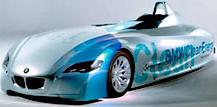
Hydrogen fuel works on a fairly simple principle. Water crosses a Proton Exchange Membrane (PEM) inside a fuel cell and uses electricity to split the water into hydrogen and oxygen. This is known as electrolysis. The opposite of this process is what powers a hydrogen car. The hydrogen and oxygen reenters the fuel cell and crosses the PEM again. This time the hydrogen and oxygen are combined into water and generate electricity.
Hydrogen fuel cell cars would be generate no emissions. Only water is released from their tailpipes. They only use water, not expensive or rare materials. Hydrogen is the universe's most common element. The sun is fueled by unimaginable amounts of it. Nearly every major auto maker is researchin hydrogen fuel cell technology.
Hydrogen, despite its advantages and promise, has numerous problems. Hydrogen CARS produce no emissions. However, if the hydrogen and oxygen is produced using current technology, emissions will actually INCREASE overall. This wll be due to the large amounts of fossil fuels that must currently be burnt to produce hydrogen and oxygen. Alternate energy sources such as wind, solar, nuclear, etc, would have to be used to produce true emission-free cars. Even though hydrogen is the universe's most common element, here on Earth, most hydrogen is bound with other elements. Energy would have to be expended to break the bonds. Somewhat counterproductive, don't you think? If hydrogen were extracted from water huge amounts of water would be needed- 4.2 TRILLION gallons per year. That's about the amount that flows over Niagara Falls every 3 months. Also, even if hydrogen cars were put into mass production today, the vehicles would still be 6X too expensive. In addition, the PEM needs "a fundamental engineering rethink," because they typically give out in the first 2000 hours of use, not nearly long enough for a daily use vehicle. Finally, hydrogen fuel is weak. 1 gallon of gas has about 2000 times more energy than 1 gallon of hydrogen. Gaseous hydrogen would need tanks 4 times normal size. Liquid would require about normally sized tanks, but the car must be driven daily so the liquid hydrogen doesn't evaporate (it must be kept at -253 degrees Celsius).
Hydrogen is a promising fuel that could be the "fuel of the future," but the technology is not likely to be developed any time soon.