
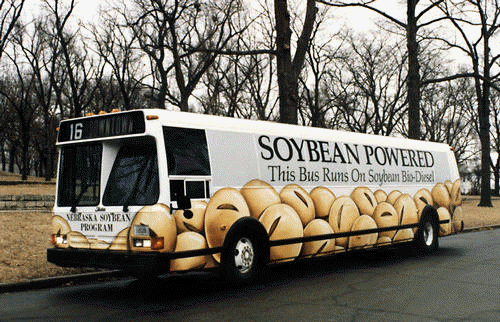
Biomass is fuel from plants. It can also be made from vegetable oil, such as that used in fast food restraunts. It is already used in some places. Germany uses 450 million gallons of biodiesel each year. That's 3% of the country's total consumption of diesel. Ethanol is mixed in with gasoline in the U.S. In addition, 50% (1/2) of all fuel in Brazil is ethanol, most of it made from sugarcane.
Biomass has some definite advantages over other alternative fuels. It burns as easily as petroleum, so no extra energy is required to ignite it. Also, as was shown above, it is a proven technology. Unlike most other alternate fuels (AF's), there is no need to experiment and research for several years before it can be put into mass production. There are no emissions from biomass. Carbon dioxide IS given off, but it was taken from the atmosphere to begin with, so there is no net change in the amount of carbon dioxide in the atmosphere. Last but certainly not least, it is extremely easy to convert gasoline vehicles to biomass. A diesel vehicle doesn't need ANY modification whatsoever to be run on biodiesel. The modifications for ethanol are very minor- a few gasket changes, etc.
Biomass is a very promising AF that could be put into use very quickly and efficiently. It would be by far the easiest to begin using.