|
Hoodia, a plant that tricks the brain by making the stomach feel full, has been in the diet of South Africa's Bushmen for thousands of years. CBS News, 60 Minutes, talking about Hoodia |
|
Miracle hoodia vs. obesity
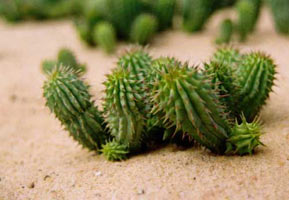
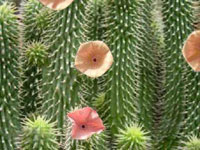
Hoodia gordonii. What is it?If you haven't heard of Hoodia yet, you soon will because it is being touted as the new miracle supplement for safe, effective weight loss. Hoodia gordonii, (Hoodia) is the botanical name for a cactus like plant that grows in Southern Africa. Scientists have recently isolated several compounds in this amazing plant that are responsible for dramatic weight loss. This all-natural appetite suppressant is also being applauded for containing no dangerous stimulants that caused adverse side effects associated with weight loss products of the last decade. Hoodia is a Succulent botanical and is part of the Genus: Trichocaulon and belongs to the Family Name: Asclepiadaceae. There are approximately twenty plants within the Hoodia genus family, however, Hoodia Gordonii is the unique plant that South African San bushmen have used for generations to endure long hunting expeditions. Hoodia Gordonii is a leafless spiny succulent plant ( not a cactus ) with fleshly finger-like stems. Rows of thorns are present along the stems, bearing flesh coloured flowers. Hoodia Gordonii grows naturally in the harsh desert conditions of South Africa. Now Hoodia Gordonii has been found in the semi-deserts of Zambia, Zimbabwe, Botswana, Namibia, Angola, the Republic of South Africa, and now found in some other arid regions of South American Nations such as Chili, Peru and some regions of West China including Gansu, Sichuan and Shanxi. Hoodia gordonii nowIn the wild Hoodia takes 5-6 years to mature but is now being cultivated in as little as 2 years commercially in sustainable quantities and has become widely known for its effects as an appetite suppressant. The Hoodia Gordonii plant originated in the southwestern part of Africa and grows best in the semi-arid areas of South Africa primarily the Kalahari. In its native habitat it is extremely difficulty to identify because it looks similar to succulents of the same family of which there are many. Only an experienced botanist or as the case in South Africa with Hoodia Gordonii a San people can identify the plant prior to it's blooming. How to use Hoodia to actually help youIt basically tricks the brain into thinking that you're full. The chemical constituents in Hoodia work within the satiety center by releasing a chemical compound similar to glucose but much stronger. The hypothalamus in the brain receives this signal as an indication that enough food has been consumed and this in turn stunts the appetite. Hoodia enhances your mood therefore you will not become irritable or weak while you are on the program. The San Tribe could go without food for 24 hours after eating Hoodia, and in the same process hunt for food in the harsh Kalahari desert. It is therefore also known to maintain a high energy level. One of the active ingredients in the herb is a chemical compound called P57, which is thought to be at least partly responsible for the appetite-suppressing effects of hoodia gordonii. But this is probably an oversimplification, since herbs typically work with an assortment of chemical compounds, not just one chemical. For most people, the real weight loss challenge has relatively to do with dieting, exercise, supplements, or how many calories you burn in the gym. The real challenge is controlling their hunger drive. People who are trying to lose weight seem to share the exact same problem. They have trouble getting their appetite under control. Hoodia gordonii, it seems, could make that much easier. Because overcoming your own hunger drive seems almost impossible unless you get some help. To understand how all this works, you have to understand what "hunger" really is in the first place. Hunger is just an illusion. It's a signal in your brain, a chemical message that causes you to feel certain feelings and, ultimately, act on them. The hunger signal is only turned off when your hypothalamus thinks you've eaten enough food. Your hypothalamus -- part of your body's endocrine system -- decides this by sensing the rise of sugar (glucose) in your blood. Eat enough carbohydrates, and your blood sugar rises, which convinces your hypothalamus to tell your brain that you're no longer hungry. Eat this chemical, and your hypothalamus thinks you've just wolfed down three plates of food at the local buffet. Your hunger is abruptly cancelled. You just don't feel hungry anymore. Everything else is fine: there are no known side effects. But you simply don't feel like eating. At least that's what the hoodia companies explain you should experience. Consuming hoodia is surprisingly simple: slice off a piece of the succulent, peel off the thorns, and just start chewing on it. You don't even need to swallow it. The taste is rather bitter by most Americans' palettes, but after several minutes of chewing, you've already started absorbing the chemical. Guess what? Your hunger is vanishing with each passing moment. The San Tribesmen, the original discovers of the plant, also say it makes you feel stronger, more energetic, and more focused. Nobody complains of any side effects whatsoever, and the plant has been chewed for literally thousand of years by various generations of the San, with no ill effects known whatsoever. Not a Hoodia nor a HoodiaHoodia Gordonii is a plant - a leafless succulent. Not a Cactus nor a Herb. In South Africa Hoodia Gordonii is classified as a foodstuff, which is testimony to how safe the product really is. Certainly any hoodia company out there that's selling an honest product is conducting a variety of testing, trying to find out who has counterfeit products and who has real products and trying to inform and educate their own customers about the fact that they have the real thing. But, as always, test results offered by companies who have financial interest in proving their product to be genuine simply don't carry the same weight as independent test results from an unbiased third company. Hoodia is also known by horticulture experts as being extremely difficult to cultivate in captivity. The plants rot easily, and they won't grow in regular soil -- they need sandy soil with excellent drainage. Also, to make things even more difficult, these plants aren't pollinated by bees, they're pollinated by flies. To attract the flies, their blooms emit a strong, repulsive odor that smells a lot like rotting flesh. So buying hoodia is very difficult. It's expensive. And, naturally, there are a lot of fakes on the market. Even now, there are only a few hundred acres of hoodia growing on commercial farms, and the plant is highly susceptible to being wiped out by rather mysterious conditions. Is use Hoodia safe?There are no known reported side effects to using Hoodia Gordonii that have been reported to date. Hoodia was eaten as a fresh food by the San tribe for thousands of years with zero side effects. Hoodia Gordonii is famous for its effects as an appetite suppressant and mood enhancer. Excellent results have been reported from people using it as part of a weight loss program, leading to many international companies making and selling Hoodia as a "new miracle diet pill". The quickness and degree of results will vary depending on the frequency of use and other factors. However, you should start to see the beginning of the weight loss process within two weeks. Please note that the same as with any weight loss supplement, better results will be realized when taken in conjunction with a healthy diet and reasonable exercise.
European clinic of plastic surgery
|
|