School of Health Sciences
University of the Philippines Manila
Palo, Leyte, Philippines
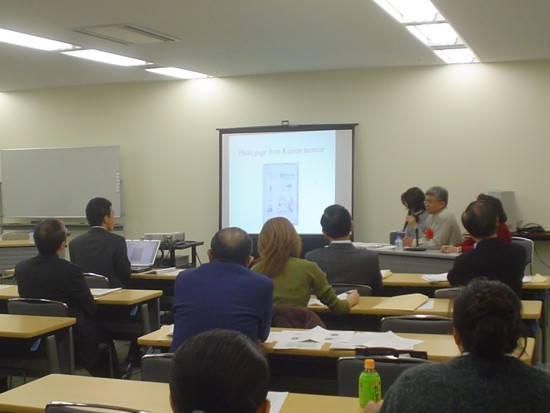
(Public lecture sponsored by Office Tono-oka, a private research firm, and delivered in Tokyo, Japan, on January 28, 2005.)
During the April 2004 interview conducted by the Manila Bureau staff of Yomiuri Shimbun at my school in Palo, Leyte, I expressed the need for revised textbooks in history that would provide Filipino students with a more objective knowledge and critical appreciation of our national historical experience. Of course, this sentiment is neither new nor unique. It is a concern that is generally shared by members of the history and social science communities, not only in the Leyte-Samar Region but also in other parts of the country. But the hope of having revised history textbooks in the near future amounted to wishful thinking at that time.
What I failed to reckon during the interview was that the issue of revising history textbooks for our schools would explode into a media sensation triggered by a concerned educator in Metro-Manila and would lead to quick action at the highest levels of the Department of Education (DepEd) over the next few months.
Erroneous textbook
On September 20, 2004, Marian School academic supervisor Antonio C. Go put out an ad titled “Invisible Crime” in the Philippine Daily Inquirer, the country’s leading newspaper. He claimed he had found 430 assorted errors in the book Asya: Noon, Ngayon at sa Hinaharap (Asia: Then, Now and in the Future), a 316-page textbook used by second year high school students in public and private schools all over the country (1). He also said that the book was full of factual, grammatical and conceptual errors, and he asked college professors and historians to correct this textbook (2).
The newspaper ad, a rather expensive method of expressing grievance on educational issues, apparently arose from the official indifference and inaction on the same complaint that Mr. Go had previously raised and reported to both the book’s publisher, Vibal Publishing House, and the DepEd Instructional Materials Coordinating Secretariat since 2001 (3). Before it evolved into an ad, Mr. Go’s complaint appeared as a letter to the editor of the Inquirer published in the June 6, 2004 issue (4).
The highest officials of DepEd, including Education Secretary Florencio Abad, finally took notice of Mr. Go’s complaint following the publication of his newspaper ad. After initially trying to ignore the issue, Secretary Abad grudgingly admitted that the identified textbook’s errors were more substantial that had been initially thought. He also acknowledged Mr. Go for his September 20 exposé (5).
Within days, the DepEd commissioned a group of 22 historians and academics, mostly from the University of the Philippines, to work overtime in correcting and rewriting the erroneous textbook. The group submitted its output to the DepEd on November 22, 2004 (6).
In an unprecedented move last month (December 2004), the DepEd recalled over one million copies of the erroneous textbook from some 5,700 public high schools all over the country as “an emergency measure.” The recalled books were expected to be replaced this month (January 2005) with a new book titled Pag-aaral ng mga Bansang Asyana (Study of Asian Countries), which was written by 18 U.P. professors and edited by Prof. Grace Estela Mateo of the U.P. Department of Social Sciences (7).
Mr. Go’s successful crusade against one erroneous history textbook was not easy for him. At present, he still faces libel cases filed in two different courts by two co-authors of the book he had exposed (8).
I narrated to you this recent textbook controversy because it highlights the key problems and challenges in revising history education in our country. At the center of the controversy is an obviously erroneous Asian history textbook written by authors who were obviously not experts in this academic field, even if they held supervisory positions in the education bureaucracy in the National Capital Region. What made the situation worse was that the book not only passed the initial evaluation by the Instructional Materials Council Secretariat, the DepEd bureau in charge of approving the contents of textbooks. The book was also approved for reprinting and distribution without revisions in 1997, 1999, and 2001, respectively (9).
We can only imagine the types of errors found in other textbooks used in public elementary and high schools, not only in history but also in other subject areas. Mr. Go himself had exposed gross errors in three other public high school textbooks.
Realities in Philippine history writing
Aside from the content errors found in our high school history textbooks, history education in the Philippines is also heavily pro-American in its perspective and orientation, even at the university level. This is particularly true in many colleges and universities in the countryside, which still use outdated textbooks written by an author whose published works that prettified the American conquest of the Philippines were refuted and discredited during the wave of historical revisionism in the 1970s (10). So far, only the University of the Philippines and a few other private universities have updated history textbooks which contents reflect recent findings and educational thrusts. These few schools also promote a critical approach in the study of history.
But even the history textbooks and reference materials in the more progressive universities that take an adversarial view of the American-influenced perspective also suffer from a tradition in Philippine historiography that prevailed until the 1960s.
John A. Larkin, an American scholar who is considered the trendsetter in local history research in the Philippines and author of The Pampangans: Colonial Society in a Philippine Province, defined the twin problems as follows (11):
“One of the major problems in the writing of Philippine history stems from the inadequate knowledge of historical conditions in the rural Philippines. In general, historians have concentrated their attention on the highest levels of national government and politics, on foreign relations and commerce, on the biographies of prominent figures, on the colonial administrations, and on the broadest aspects of the Philippine revolution. This singular concern with Manila and its immediate environment tends to distort the archipelago as a whole. Local history has, for the most part, been neglected, even though Philippine society has remained overwhelmingly rural throughout its existence.
“Focusing on the Manila area, the seat of Spanish and American authority, reveals only the ‘Western’ face of Philippine society … [And yet] the bonds which historically link the Philippines to the rest of Southeast Asia are found mainly in the rural area - in the traditional agricultural life of the peasant, in the more superficial acceptance of outside influence, including religion, and in the strong emphasis on family, village and language-group loyalty.”
A second problem arose from the tendency of scholars to treat “rural society as a monolithic structure susceptible to influence and change at a uniform rate. By neglecting to account for the diversity of rural society they have failed to assess meaningfully the impact on the Philippines of such phenomena as colonialism and the revolution of 1896. Regional diversity, however, may be the most dynamic force in Philippine history.”
Given this tradition in national history writing, only five historical events in the Leyte-Samar Region figured prominently in traditional history textbooks (12). These are:
1) The “discovery” of the Philippines by the Magellan expedition on March 16, 1521 and their landfall on Homonhon Island south of Samar;
2) The recorded first Catholic Mass in Limasawa Island on Easter Sunday, March 31, 1521;
3) The failed Bankaw Revolt in Leyte in 1621;
4) The failed Sumuroy Rebellion in Samar in 1649; and,
5) The Leyte Landing of Gen. Douglas MacArthur and the Allied Forces during World War II on October 20, 1944.
The Philippine-American War in the region and the famous 1901 Balangiga Incident in Samar, which I mentioned in the first lecture, did not appear in our national history textbooks until the 1970s, and only in U.P. textbooks and reference materials at that (13).
Counter-culture in historical research
A counter-culture in historical research since the 1970s came with the appearance and publication of regional or local histories that, when viewed collectively, revealed something about the unity and diversity of Philippine society. Aside from Larkin’s book, another classic in this field is the doctoral dissertation of Bruce Cruikshank, an American scholar, which had been published as a book titled Samar: 1768-1898. (14)
Prof. Larkin had described the possibilities in Philippine historiography in the 1960s as follows:
“The body of Philippine historical writing has so far given us only isolated glimpses of the history of the Archipelago. No writer can yet present a meaningful overview of the progress of all the Filipino people through more than four hundred years of recorded history. The problem is one of approach. Scholars have not treated Philippine society as it has always been, a collection of integrated societies developing at different rates and subject to diverse stimuli. Until each unit is studied as a unique entity and then compared with other regions, Philippine history will remain incomplete. Local histories will supply the necessary building blocks that will someday help in the construction of a substantial edifice for Philippine historiography.” (15)
Philippine National Historical Society
At the national level, an academic society that has consistently pursued the cause of local historical research is the Philippine National Historical Society (PNHS), which was established in 1941 and is the oldest voluntary professional organization devoted to the study and research in Philippine history. The PNHS seeks to catalyze nationwide interest in and appreciation of history as the bedrock of the Filipino national identity. (16)
In the late 1970s, the PNHS effected a major intellectual shift in the agenda of Filipino historians away from what has been described as “classical colonial scholarship” towards studies depicting the grassroots of Filipino civilization and the life histories of individual Filipino communities showing rural life in its full detail and color.
The shift was concretized by the PNHS in its First National Conference on Local and National History held at Xavier University in Cagayan de Oro City, on the island of Mindanao, in 1978. In turn, such a shift in intellectual focus has led to stimulus being given to more research by local historians on the finer aspects of Philippine history, thus enabling Filipino historians to be in a better position to contribute towards the breaking down of age-old stereotypes and perceptions regarding the Filipinos and their history and culture.
Since 1978 the PNHS has conducted a total of 25 national conferences on local and national history in different regional venues all over the country. For each of these gatherings, a conference theme was featured to draw attention to the region where the conference was held. These conferences have brought to teachers and students of history the most recent researches on local and national history and related disciplines, as well as encouraged further researches on these fields.
Aside from publishing The Journal of History, which features selected papers from the annual national conferences, the PNHS has also started a Monograph Series that has so far produced five titles.
During the Philippine Centennial in 1998, with the assistance and sponsorship of the National Centennial Commission and the National Historical Institute, the PNHS conducted 16 regional-workshops on oral and local history in different parts of the country on the theme “History from the People (Kasaysayan Mula sa Bayan),” thus continuing its tradition of advancing the frontiers of historical research in local history in the context of national history. The proceedings of the 16 seminars have been published in 16 volumes and are now in circulation.
Since 2001, the PNHS Board of Trustees has also started a series of informal fora on Philippine history, historiography and Philippine studies. I was invited to discuss the Balangiga Incident during the PNHS Forum No. 7 held on September 24, 2003.
I am proud to have become a member of the PNHS family since 1998, when I applied for lifetime membership. I have since presented three papers in different PNHS national conferences and I was recently named member of its Board of Trustees to represent my region during the 2004-2007 term of office.
The need for continuing research
Though much has been accomplished and published in the field of local history in the Philippines over the past 25 years, much remains to be done in terms of continuing research and the production of region-specific local history and culture materials and literature for the schools in different regions of the country.
Let me relate to you the case of the Leyte-Samar Region, where the historical gap is very wide and there are few published materials on our local history. Until the present, nobody has written and published a book on the general history of our region, and the students’ knowledge of historical events in our area is largely limited to the few events I mentioned earlier that had found their way into our traditional history textbooks, particularly for the elementary and high school levels.
Of course, it is my hope and dream of writing the definitive history of the Leyte-Samar Region. But this is something that could not be done right away. Following the PNHS’s bottom-to-top thrust of writing a “history from the people,” I have to start with a compendium of municipal histories for the different towns of the region, which would serve as building blocks for this regional history.
I am presently working on the Spanish-era municipal history project for our region using hundreds of pages of manuscripts, raw translations from Spanish to English, and copies of archival documents bequeathed to me by the late Father Cantius J. Kobak, OFM, an American Franciscan missionary who had served on Samar Island and was considered the leading scholar on the history and culture of the Leyte-Samar Region during his prime. He passed away at the age of 74 in August last year.
The manuscript of The Colonial Odyssey of Leyte: 1521-1914, which I mentioned in the first lecture and had been submitted to the publisher, was my first collaborative work with Fr. Kobak and completed while he was still alive. This manuscript on the history of Leyte translated from Spanish to English the general history chapters of the rare book Reseña de la Provincia de Leyte, which was written and published in Manila in 1914 by Manuel Artigas y Cuerva, a Spanish-Filipino journalist and writer who was born in Leyte (17).
The extensively documented book of Artigas is interesting in the sense that it was written from a pro-Filipino but extra-Manila (or, not Manila-centric) perspective, and published before the American influence took root in our educational system. This book preceded the local history movement in the 1970s and its prescriptions by some 50 years.
The chapters on the municipal histories of Leyte towns in Artigas’ book will form a different compendium to be complemented with data and materials derived from Jesuit and Franciscan archival sources.
For a related exercise, and in deference to the clamor of concerned intellectuals and educators in my home province of Biliran, which was separated from Leyte in 1992, I am also working on the manuscript for the Biliran history from the Spanish contact until the early American period. I hope to complete this task this year. Some of its chapters, which now need updating, have been on-line in my Internet website since 1999 (18).
The use of the Internet
The reason why I posted in the Internet some of my published papers and newspaper feature articles on aspects of Leyte-Samar history and culture was to make them available to a wider audience of interested readers and researchers. They seemed to have served a useful purpose, based on the grateful feedback I received by e-mail or through guestbook items from satisfied surfers, many of them natives of my region now based in other parts of the country and abroad.
Unfortunately, only a small segment of the population in my region have access to the Internet, and part of my public service, particularly to officemates and friends, is to answer queries or to allow them to copy materials on Leyte-Samar history and culture from my library collection and archives for the social studies assignments of their school-aged children. This is a small price to pay for some idea that might have originated from a suggestion I had made.
In 2001, the then Secretary of Education Raul Roco introduced the curriculum called Makabayan (literally, Pro-Town, but intended to mean Pro-People or Pro-Country) at the elementary level. One of the component subjects of Makabayan is Social Studies, to include the study of history, civics and culture with focus on local history.
In May 2003, the DepEd’s Division of Biliran was tasked to develop the lesson plans for the Makabayan curriculum for use by elementary teachers all over the Leyte-Samar Region. For this activity, I was invited to speak before the participants of the Division-Based Training of Trainers on Makabayan (Elementary Level). I read the paper on the historical survey of Biliran Province (19). During the ensuing discussion, I mentioned historical and cultural events not only in Biliran Province but also in other parts of the region that are worth incorporating in the Makabayan lesson plans.
At present, I provide upon request Makabayan reference materials for the children of some officemates and friends, especially when they have no access to the Internet or have not clipped my feature articles on related topics in the national newspaper.
Why stop at the early American period?
At this point, you might wonder why my general history writing projects for Leyte and Biliran end up at the early American period and do not extend to World War II and beyond. The answer is related to timing and confronting presentational problems one at a time. There is general ignorance of the events that happened in the Leyte-Samar Region during more than 300 years of Spanish colonization until 1898, and the basic narration of the objective facts and their interpretation related to this major historical gap would not likely lead to angry reaction and debate from the potential readers.
But the case of the early American period is something else. There is an imposed belief in American “benevolent assimilation” that has to be reckoned with, which is reinforced by the imposed belief that the Japanese were brutal and cruel in the country during World War II. In a sense, the intended message is that the Americans were good conquerors while the Japanese were bad conquerors. You get this drift when you read all the popular history textbooks at the elementary and high school levels.
I grew up believing the elementary and high school history textbook claims that the transition from the Spanish to the American regime went peacefully and smoothly in the provinces outside Manila. I kept this belief through my university years even though my U.P.-authored textbook (20) presented facts that contrasted with that belief. But then my post-university readings and research on Biliran history finally showed me facts and details that fully contradicted every claim made in American-influenced textbooks that I have read.
I thought what happened in Biliran was unique and probably did not represent a pattern for the whole region. However, my subsequent research on the events related to the 1901 Balangiga Incident in Samar showed patterns similar to what happened in Biliran (21).
Still I thought there might be some gaps in my analysis and perception. But after I had translated Artigas’ chapter on the Philippine Revolution and the Philippine-American War in Leyte, the additional eyewitness accounts finally convinced me that the American conquest of the Leyte-Samar Region was never peaceful and smooth at all. Indeed, it was generally bloody and brutal, characterized by the U.S. Army’s widespread use of “water torture” methods, destruction of food supplies and the local economic base, reconcentration of entire villages, and “kill and burn” campaigns.
The population generally resisted the American occupation and thousands suffered and died in the process. They only succumbed after years of struggle when they ran out of leaders to sustain their resistance.
To this day, I believe that in terms of actual numbers, more civilians in our region were killed during the Philippine-American War than during World War II. About the latter, I believe that more civilians died from American carpet-bombing associated with the return of General MacArthur than at other times during the entire war. For example, some 3,000 civilians were estimated to have died from American bombs in Dulag, Leyte, in the morning of October 20, 1944 (22).
Sadly, the ugly realities of the early American occupation in our region may not appear in our history textbooks particularly at the elementary and high school levels in the near future. There are strong forces that will block their inclusion, if only because tales about the bloody and brutal nature of the Philippine-American War would not be good for young children to read and hear.
Brutal wars of conquest
It is established fact in world history that wars of conquest were always brutal and cruel. This was true for the American conquest of the native Indians in North America until the 1860s and their conquest of the Philippines at the turn of the previous century. This was also true for the Japanese colonial adventure in Asia in the 1930s and 1940s. This is one hard lesson that we Filipinos have yet to learn from our historical experience.
Given this context, an appropriate approach to writing the 20th-century history of the Leyte-Samar Region is to subject both the American and Japanese wars of conquest to a common analytical framework before judgments would be made pertaining to the severities inflicted on the local population during both conflicts. For me, this is a work in progress faced with practical difficulties in terms of gathering comparable World War II data.
May I remind this audience that it took nearly 60 years for the first Filipino eyewitness accounts of the 1901 Balangiga Incident in Samar to be published (23). Among the American survivors of that incident, it also took nearly 30 years for them to open up and tell their versions of the event that contrasted or contradicted the official version. The “code of silence” among the U.S. survivors was partly influenced by the fear that their veterans’ pensions and other benefits might be affected if they went “out of tune.”
In the case of World War II in the Leyte-Samar Region, it took at least 50 years for independent Filipino versions of the event that contradicted or contrasted with the American official line came out in published form. Former Filipino guerrillas particularly remain cautious about contradicting the American version of events. They fear such move could affect their campaign for both veterans’ recognition and better benefits from the U.S. Government.
Variations of the wartime theme
My research to establish the Filipino side of events in Leyte that were described by Mr. Nakajima in his memoirs (24) led me to virtually unexplored themes not found in existing accounts of World War II in Leyte.
The first was the active neutrality displayed by the people and the Japanese-appointed officials in Biliran Island. As a result, the island became the rest-and-recreation (R&R) area for both Japanese soldiers and Filipino guerrillas. When guerrillas once sought permission to attack the Japanese detachment in Naval town, the mayor refused because of the certainty of brutal Japanese retaliation on the local population. The proposed attack was called off. (25)
In Biliran town, the people virtually led normal lives and the Japanese-appointed mayor had emotional links with all parties in the conflict. One of his daughters was married to a guerrilla officer who came from this town. Another daughter became the fiancée of a Japanese officer assigned in the company headquarters in town (26). Even “Elsa,” a peasant’s daughter who was Mr. Nakajima’s closest friend in Biliran, attested that the war years were peaceful in her hometown (27).
In Leyte-Leyte town, the people were described by Mr. Nakajima as “not friendly” with the Japanese. After the local Japanese detachment was pulled out around April 1944 to join the mopping up operations in northwestern Leyte, the guerrillas attacked the town and took away with them “Nene,” a local lady who was friendly with the Japanese soldiers stationed there.
I have identified and interviewed Nene’s sister and frequent companion when they visited the Japanese camp for her version of that event (28). What I learned was that the guerrilla attack had a totally different motive. The guerrilla leader, Justo Granados, who came from the same town, simply wanted to eliminate his pre-war political enemies who had accepted Japanese appointments as town officials. As a result, the mayor, vice-mayor, and first councilor (who was Nene’s father) were captured during a Holy Week ritual in the church and executed by the guerrillas. Nene was also executed after she refused the marriage offer of the guerrilla leader’s closest aide.
In other parts of the region, the Pulahanes in central Samar, a millenarian group of peasants who had fought against the Americans decades earlier, were actually friendly with the Japanese (29).
In southern Leyte, the war years were generally peaceful as described in the recently published memoirs of a mechanical engineer who had lived through those times (30).
Only two guerrilla fronts were active in engaging the Japanese Imperial Army in combat, mainly through ambuscades. One was the Northeastern Leyte Front under the command of Major Alejandro Balderian (31). The other was the Southern Samar Front, which guerrilla feats were credited to a different leader (32). Incidentally, both guerrilla fronts provided the main entry points for General MacArthur’s Leyte Landing in October 1944.
An autonomous history
John R. W. Smail, an American scholar who wrote a classic essay titled “On the Possibility of an Autonomous History of Modern Southeast Asia,” had been quoted to have said that, in the writing of a regional [or local] history, “we are not filling in details of an existing picture; we are sketching a new one … For in regional [or local] history the facts are more insistent and compel the revision of unconsciously held perspective.” (33)
I mentioned Prof. Smail’s statements because they exactly describe the drift of my research on Leyte-Samar history. I am aware that I am sketching a new picture and not only filling in details of an existing one. Indeed, the facts that I have accumulated about the two wars of conquest in my region during the first half of the previous century could overwhelmingly refute the textbook-imposed belief in American “benevolent assimilation” and the peaceful and smooth transition from the Spanish to the American regime. This belief had no factual basis at all in the Leyte-Samar Region.
In the same way, the textbook-imposed complementary belief in Japanese brutality and cruelty during World War II is deficient in equivalent accounts of water torture, destruction of the rural economic base, reconcentration of entire villages, and “kill and burn” campaigns. At least, none of these U.S. Army tactics during the Philippine-American War was employed by the Japanese Imperial Army in Biliran Island, which was ravaged by the American conquerors decades earlier (34).
It seems the most glaring and insulting offense attributed to the Japanese soldiers in my region was the public slapping of Filipinos who had failed to bow or do so properly in their presence. The food confiscation and the “comfort women” issues did not evoke emotional reactions among my informants when mentioned. After all, food confiscation was equally done by the guerrillas. None of my informants also had any knowledge of girls in their localities that had been abducted for “comfort women” roles (35).
In my view, it is evident that the local history that could be written about the Leyte-Samar Region based on currently available data and facts would be an “autonomous history” and would contradict in many ways the traditional textbook perspectives and prescriptions about our Spanish colonial experience and the wars of conquest by the Americans and the Japanese, respectively. The great challenge is how to convert the revised findings into lesson plans and classroom teaching materials for the students of our region.
There is yet no program in the Department of Education to support the publication and acquisition of region-specific history textbooks, even if the lesson plans for the Makabayan (Pro-Country) curriculum in the Leyte-Samar Region are already receptive to the inclusion of contents about our regional history and culture.
The lack of such decentralized textbook program contributes to the continuing gap between research generation in local history and the dissemination and utilization of its findings at the classroom level. For the betterment of our history education, I hope this problem would be addressed in the near future. Until that happens, the image of General MacArthur and everything that it stands for will continue to dominate our collective subconscious and consciousness.
Thank you and good evening.
References
(1) Pazzibugan, Donna, “Corrections to erroneous textbook fill 100 pages,” Philippine Daily Inquirer, Nov. 28, 2004. p. A4.
(2) Pazzibugan, Donna, “Publisher, DepEd execs behind flawed book may face charges,” Philippine Daily Inquirer, Dec. 16, 2004. p. A4.
(3) Ibid.
(4) Pazzibugan, Donna, “No People Power revolts happened in this textbook,” Philippine Daily Inquirer, Nov. 24, 2004. p. A1.
(5) Inquirer News Service, “DepEd recalls 1M erroneous textbooks,” Philippine Daily Inquirer, Dec. 15, 2004. p. A11.
(6) See Note No. 1.
(7) See Note No. 5.
(8) Pazzibugan, Donna, “Authors in denial, stand by error-filled history book,” Philippine Daily Inquirer, Nov. 21, 2004. p. A1.
(9) See Note No. 2.
(10) Dr. Gregorio F. Zaide was the foremost national historian until the 1960s and had authored history textbooks for high school and university students. For some reasons, his works fell “out of fashion” among the progressive thinkers and intellectuals in the 1970s. But his books, which are being updated by his daughter, remain in circulation and are still widely used.
(11) Larkin, John A. The Pampangans: Colonial Society in a Philippine Province. Quezon City: New Day Publishers, 1993. (The original edition was published by the University of California Press in 1972 and is now out of print.) pp. vii-viii.
(12) The outline is based on memory recall of what I have learned in high school.
(13) The University of the Philippines use two textbooks for its Philippine history courses: 1) Agoncillo, Teodoro A. A History of the Filipino People (Eighth Edition). Quezon City: GAROTECH Publishing, 1990, and 2) Constantino, Renato. The Philippines: A Past Revisited. Manila: Renato Constantino, 1975. Agoncillo devoted almost a page on the Balangiga Incident and the U.S. Army retaliation on Samar. Constantino devoted about three pages on the Filipino resistance against the Americans in Leyte-Samar.
(14) Cruikshank, Bruce. Samar: 1768-1898. Manila: Historical Conservation Society, 1985. (The doctoral dissertation was completed in the mid-1970s and was initially disseminated in typescript.) Another work considered a classic in the field of local history is James Francis Warren’s The Sulu Zone: 1768: The Dynamics of Trade, Slavery, and Ethnicity in the Transformation of a Southeast Asian Maritime State (Quezon City: New Day Publishers, 1985). This was originally published by the Singapore University Press in 1981. A book edited by Alfred W. McCoy and Ed C. de Jesus, titled Philippine Social History: Global Trade and Local Transformations (Quezon City: Ateneo de Manila University Press, 1982) compiles representative works in Philippine local history of 13 scholars including Cruikshank and Warren.
(15) Cruikshank, Bruce. “Regional History and Historical Perspective: A View from Samar,” Philippine Quarterly of Culture and Society XVIII (1990): 97-117. Prof. Larkin was quoted on p. 99.
(16) The narrative in this section was liberally quoted from the introductory essay on the Philippine National Historical Society in the printed program titled Focus on Cavite and Beyond: Local History in the Context of National History, published for the 25th National Conference on Local and National History, held at the Cavite State University in Indang, Cavite, on October 21-23, 2004.
(17) Artigas y Cuerva, Manuel. Reseña de la Provincia de Leyte: Estudio Historico Bio-Bibliografico. Manila: Imprenta “Cultura Filipina,” 1914.
(18) “Rolly’s Vintage View” at http://www.geocities.com/rolborr/. The sections on “Biliran Province” and “Hometown Naval” provide access to my posted historical papers and newspaper feature articles.
(19) Borrinaga, Rolando O. “A Survey of Historical Activities in Biliran Province,” at http://www.geocities.com/rolborr/surveyhistory.html.
(20) Agoncillo, Teodoro A. and Milagros C. Guerrero. History of the Filipino People (Fourth Edition). Quezon City: R.P. Garcia Publishing Co., 1973.
(21) Borrinaga, Rolando O. The Balangiga Conflict Revisited. Quezon City: New Day Publishers, 2003.
(22) Personal communication with Emil B. Justimbaste. He has completed writing the chapter on the Dulag Massacre based on oral accounts and some published sources for the manuscript of a projected book that would review the guerrilla movement in Leyte during World War II. It is not known if the U.S. military conducted an official investigation of this incident.
(23) Arens, Fr. Richard, SVD, “The Early Pulahan Movement in Samar,” reprinted in Leyte-Samar Studies XI (2: 1977), 57-113. The article was originally published in The Journal of History VII (4:1959), 303-370. Fr. Arens’ published a portion of his paper as a popular magazine article titled “The Filipino Side of the Balangiga Massacre” in the Philippines Free Press on Nov. 21, 1959.
(24) English translations of portions of the Nakajima memoirs are on-line at http://www.geocities.com/rolborr/sunsetchap1.html; http:www.geocities.com/rolborr/orders.html; and http://www.geocities.com/rolborr/sentitrips76.html.
(25) Personal communication with Mrs. Trinidad Icain-Bugho, in her mid-70s, daughter of Isaias Icain, the wartime mayor of Naval town.
(26) Borrinaga, Rolando O., “A love story doomed by war,” Philippine Daily Inquirer, October 21, 1999, p. 18. Also on-line at http://www.geocities.com/rolborr/wardoomsinq.html.
(27) Personal communication with Mrs. Francisca Laurente-Chan, 77 years old. She was 17 years old when she befriended Mr. Nakajima in 1944. An article I wrote about her, titled “A song and friendship in wartime Biliran,” was published under my column in the Philippine Daily Inquirer on October 18, 2003, p. A18. It is on-line at http://www.geocities.com/rolborr/vinasong.html.
(28) Personal communication with Mrs. Teresita Gahum-Casas, 68 years old. She was an 8-year old girl in Leyte-Leyte when both her parents and Nene (Emilia) were executed by the guerrillas. She was spared partly because she was still a child, and partly because the guerrilla leader was her baptismal godfather.
(29) See Note No. 23.
(30) Kuizon, Porfirio, “The Good War.” (Manuscript of his World War II memoirs. A major part of the memoirs was published in the Bulletin of the American Historical Collection, Fourth Quarter 2004.)
(31) Borrinaga, Rolando O. “Major Alejandro Balderian: A tribute to a local hero.” (Speech delivered during the 2nd Balderian Day Program in Burauen, Leyte on May 5, 1999.) Also on-line at http://www.geocities.com/rolborr/tribute.html.
(32) Personal communication with Rev. Tax B. Rosaldo, who is researching on the WWII guerrilla movement in southern Samar.
(33) See Note No. 15. Prof. Smail was quoted on p. 97, at the start of the article.
(34) Borrinaga, Rolando O. “Atrocities and Intemperances: Revolutionary Ferments in Biliran Province from 1899 to 1909,” In: Churchill, Bernardita R. (ed). Resistance and Revolution: Philippine Archipelago in Arms. Manila: National Commission for Culture and the Arts, 2002. Also on-line at http://www.geocities.com/rolborr/atrocities.html.
(35) There is however a published tri-lingual account (Tagalog, Japanese and English) of a former “comfort woman” from Leyte. See Felias, Remedios. The hidden Battle of Leyte: The picture diary of a girl taken by the Japanese Military. Tokyo: Bucung Bucong, 1999. In the 1995 NHK documentary on the Battle of Leyte, the case of Cristeta Alcober, a former “comfort woman” from Leyte, was also featured.