The world of Beowulf and that of modern America have some interesting similarities. The Anglo- Saxon belief in "wyrd," or fate, is alive and well in the 21st century. Like the Anglo- Saxons, our culture regards the crime of killing one�s own kin or family to be the most heinous of all. Americans love entertainment just as much as the Anglo- Saxons of Beowulf�s time did. Of course, with our modern technology like movies, television, and the Internet, we are allowed to experience many more methods of enjoyment than medieval people were able to enjoy. However, their culture is remembered through portions of our popular culture.
Within its pages, Beowulf contains the notion of �wyrd.� This is the Anglo- Saxon concept of fate, the idea that everything is destined or planned to happen. The Anglo- Saxon people believed that everything was predetermined and that all their fates were already fixed. Beowulf says to Unferth that �Fate often saves an undoomed man when his courage is good,�(p.12) meaning that fate may save a warrior if he has true courage. In modern- day America, this idea of fate is similar to the idea of having �an angel on your shoulder.� Many of the people who survived the September 11th tragedy did so by missing their train that day or getting struck in traffic. One gentleman who worked high up in the first tower surfed down twelve flights of stairs as the building collapsed and survived with only a broken leg. Some believe that it was just chance or a random thing, but many believe that it was fate that saved them, the idea being that some other force had plans for these people and that their time on this earth was not yet over.
In Beowulf�s time, the worst of all crimes was the killing of one�s own kin. To murder a member of one�s own family or tribe was a horrible thing. In Beowulf, Hrothgar refers to the story of Heremod, an evil king who kills his own people, and in turn his people finally kill him: �He lived joyless to suffer the pain of that strife, the long- lasting harm of the people.�(p.30) In our society, the weight of a crime against one�s own family is a heavy one as well. The Andrea Yates case is one such incident that has gripped the country�s attention by the sheer unbelievable nature of the crime. Yates� drowning her own children has shocked the entire nation. According to psychiatrist Phillip Resnick, who testified on Tuesday, March 5, �Yates knew she was legally wrong when she killed her children in the bathtub on June 20th.�(NBC) However, she murdered them anyway, and regardless of her mental state, it is hard to forgive or even understand this crime. Like the Anglo- Saxons� culture, American society believes that the family unit is most important part of our civilization and it is unthinkable to harm anyone in one's own family.
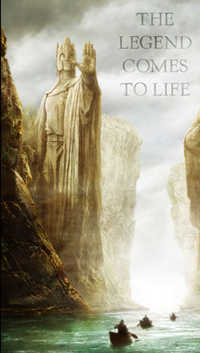
Our society loves entertainment just as much as the Anglo- Saxons did. Warriors would sit around the mead- hall listening to the scops spinning their tales and hearing of the feats of their heroes. Modern Americans go to movies and love to watch television shows, especially those with hero themes. Movies like Gladiator and The Patriot are excellent examples of this style of storytelling with larger than life heroes who perform amazing acts to save others. We also pay homage to the Anglo- Saxon past by making films that are reminiscent of this time period. The movie The 13th Warrior, with Antonio Banderas, is Michael Crichton�s version of the Beowulf tale retold through the eyes of Arab historian, Ibn Fadlan. Also, the movie Lord of the Rings, originally a trilogy of books written by J.R.R. Tolkien, pays respect to the ancient culture and ways of the Norse people, with their traditions of oral story telling and epic quests embedded within the story�s plot.
These similarities show where some of our roots as Americans come from. Our culture is a massive patchwork quilt of various cultures and ethnicity. There are strong strains of this ancient culture running through our modern society. Beowulf is only one example of the Anglo- Saxon literature we possess today, but from it, we obtain more of what their culture was and we keep some these values alive in our own ways.