 |
Copyright © 2004 by kidzone.ws |
|
Copyright © 2004 by kidzone.ws |
Since we were children, we learned about that what is water and where is it. We learned how water is composed too. We recognized water is such a vital liquid to our lifes and is essential to do dialy activities like take shower, wash, or drink. However, what we really didn't learn is how much water we needed in order to be healthy human beings. In addition we didn't learn how important it is to drink water for all of the human body activities.
Just like air, water is essential to life. Two-thirds of the water present in the human body is contained in 50,000 billion cells. Drinking water is therefore vital. Although it is possible to go without food for a month and sometimes longer, we cannot go without water for more than 2-5 days. Another fact is that our requirements in relation to water change over time. According to our age, our needs vary and our bodies require different types of water and mineral compositions. This means that babies, adolescents, adults and seniors not have the same requirements. In the same way, people practicing sports must take particular care with regard to their body hydration level.
In this brief research paper, the author will provide an overview about how important it is to drink water, through graphics, pictures, and general information, readers can know the main details around this amazing and extensive topic.
Of all drinks, our body likes water the best. It is the main component of our cells, tissues, and blood. That is why sufficient water every day is so important for health. In a recent interview (Beteta, 2004), a university student explains why she drinks water everyday. Click HERE to listen the information. (recorded in mp3 audio-399 kb).
From this interview, we can conclude, although people have general knowledge around the importance of drinking any beverage, they do not know why and how water becomes the most important liquid for human body. The interwiee states that most of the people prefer to drink different beverages, even though they give failures to human health. She ended stating the quantity of water she drinks, that is more than average in adults ( 1.5 liters per day). Next the author will provide the main causes of why people drink water.
1.1. A Health Giving Activity
Water is also an engine of human body, and accounts for sixty to sixty-five per cent of the weight of an average adult. This gives a measure of how important water is in the normal functioning of the body. Kayushin (1985, p. 70) states, -by virtue of its accounting for seventy-nine percent of the blood, water transports nutrients, vitamins, minerals and trace elements to cells. Through evaporation (transpiration and sweating), water helps control temperature. And, through its key role in the formation of urine, it helps the kidneys in their filtering action which rids our bodies of potentially toxic impurities.-
1.2. In Search of Lost Water
We lose water by sweating and transpiration in the air expired from the lungs, and in the urine, and feces. In these various ways, every day, we get rid of over three liters of the total of forty to fifty liters of water in our bodies. At this rate, what would become of us if we did not replace it in full?
We obtain an average of 0.9 liters (between one half and one liter) from food, and we generate 0.6 liters by burning fats and carbohydrates. This leaves a difference of about 1.5 liters a day, this is the volume of a person living in a temperate climate. This person needs to drink every day to stay healthy (someone in hot weather or who is sweating heavily will need more).
Even without drinking, eating, or any kind of effort, we lose a significant amount of water in a day (about 1.2 liters) which absolutely has to be replaced in order to survive. Williams (1995, p. 111) states that "during the night alone, we lose about half a liter which is why we should drink in the morning, immediately after getting up and before eating anything."
1.3. Avoid Dehydration
Nobody can go for long without drinking (between two and five days at most). Dehydration is a danger for everyone but the elderly, athletes, and women, and most of all babies are particularly susceptible (water accounts for about seventy-five per cent of a baby's weight). A loss of just 10 - 15 % of body water can be fatal. Less profound dehydration can have more or less serious consequences, from simple headaches to slower reflexes.
1.4. Clearance Through the Kidneys
The blood is constantly being filtered by the kidneys to remove impurities. An equivalent of 1,700 liters of water flows through this pair of organs every day, it is a river. The faster the flow rate, the better the kidneys work and the more efficient their filtration action. This is why drinking water is so important. In addition, inadequate fluid consumption can lead to urinary tract infections and the formation of kidney and gallstones.
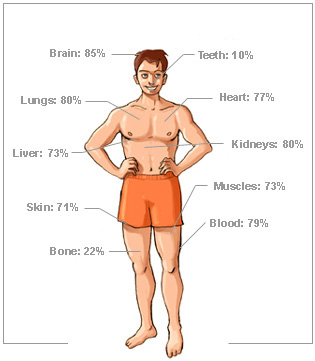
A great number of cells inside human body contain water. It is not difficult to appreciate how dependent on water our existence is. Just like the air, water is essential to life.
An absolute majority inside the human body, water is sixty percent of our total weight. Although, we can go without food for a month or longer, we cannot do without water for more than two to five days. Water is absolutely essential to life, and a loss of just ten to fifteen per cent can kill us.
According with the survey results of 30 people of The Importance of Drinking Water (Salazar, 2004), 43.75% drink 1.5 or more litters of water every day, 34.38% drink 1 liter, 15.62% drink 1/2 liter and 6.2 % do not drink water every day. However, most of this people do not know what water is doing inside of the human body or why what the human body require water.
The web site, www.insitut-eau.com (2003, ¶ 2) states that the quantities of water that the human body needs to consumption, disposal, and use, are as follows:
 |
Copyright © 2004 by kidzone.ws |
"Water consumption.. drinking water (1.5 liters per day)
. water in food (0.9 liters per day)
. water produced during the metabolism of food (0.6 liters per day)
Water disposal.
. respiration (0.5 liters per day)
. sweating and transpiration: 0.9 liters per day (and more in hot weather)
. urine (1.5 liters per day)
. feces (0.1 liters per day)
Water use.
. Saliva: about one liter per day
. Gastric juice: between 2 and 2.5 liters per day
. Bile: 0.5 liters per day
. Pancreatic juice: 0.7 liters per day
. Intestinal secretion: about three liters per day
. Blood contains between three and four liters of water."
 |
Copyright © 2004 by kidzone.ws |
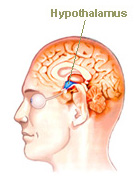
A feeling of thirst is sent by a message from the cells that they are beginning to become dehydrated. When any cell begins to lose water, it starts to shrink and, in a dehydrated body, such retraction induces certain specific cells in the hypothalamus to send a message to the brain. This is the first step in generation of the thirst response.
Durning and Passmore (1994, p. 125) state that "the thirst response does not only relate to the lack of water. In association with other processes, this physiological mechanism is also important in maintaining the electrolyte balance, essential in the fluids which condition the intracellular and extracellular environments of our cells."
3.2. Thirst a Balancing act
Whenever we eliminate water, we raise the concentration of the salts in the fluids around our cells (the extracellular fluids). This disturbs the balance between the salt concentrations in the intracellular and the extracellular environment and, in order to compensate, the cell will expel some water across its membrane into the extracellular space. Therefore, dehydration causes the cell to retract, the signal which sends the thirst response.
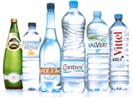
The most of people who drink water are failed to recognize that the human body needs different types and quantities of water according two main aspects, age and weight. In regards to the survey results of 30 people of The Importance of Drinking Water (Salazar, 2004), 40.62% consume tap water, 21.88% consume mineral water, and 37.50% consume bottled water. Williams (1995, p. 109) states that "the requirement for body water depends upon the body weight of the individual, and this requirement will vary in different stages of the life cycle."
According to the web site, font size="2" color="#oooocc" face="georgia"> www.insitut-eau.com (2003, ¶ 2), the requirements to consume quantities and types of water are included below:
"Baby. From breast milk to mineral water, the form in which we consume fluid changes with time. Our requirements change with age and our bodies feel the need for different forms of water with different mineral content profiles. During the first three months, babies get the seven hundred milliliters of water they need in the form of milk. However, in the following months, when the baby starts eating solid food, he or she does not need as much milk and therefore often consumes less water.Requirements: At birth, 150 ml of water per kilo of body weight. At first year, 100 ml of water per kilo of body weight.
Juniors. Mineral and vitamin requirements, the need to strengthen the growing body, the importance of plain water. Far too often, the eating and drinking habits of children and adolescents are incompatible with healthy growth. Notably, they fail to drink enough water.
Requirements: 1 iter to 1.5 litters per day according to the age.
Adults. A mineral water can contain minerals in various proportions. When the mineral concerned happens to be either calcium or magnesium, the water is particularly sutable for not only children and adolescents, but also for adults and especially mothers to be.
Requirements: 1.5 litters or more per day.
Seniors. Water is essential at all ages. However, it is in old age that our bodies are at their most dehydrated and we feel the least thirsty.
Requirements: 1.5 litters or more per day."
 |
Copyright © 2004 by Nestle Waters. |
About. (2004). The beverage your body needs most. Retrieved November, 30, 2004, from World Wide Web: http://www.nutrition.about.com/od/hydrationwater/a/waterarticle.htm.
Beteta, C. (2004). Personal interview. Salt Lake City. Utah
Durning, J., & Passmore, R. (1994). Energy, work and leisure. London. Heinemann Educational Books.
Food and Nutrition Board. (1990). Recommendations for water consume in the american diet. Nutrition Reviews , (pages 108-109)
Institut of Water. (2003). Everyday water . Retrieved November, 25, 2004, from World Wide Web: http://www.institut-eau.com/uk/d-everyday_water.asp.
Kayushin, L. P. (1989). Water in biological system. New York. Consultants Bureau.
Kidzone.ws (2004). The Water cycle. Retrieved December, 3, 2004, from World Wide Web: http://www.kidzone.ws/water.
Salazar, R. (2004). The Importance of drinking water. Retrieved Decamber, 2, 2004, from World Wide Web: http://www.createsurvey.com/c/21762-XiqpoS/
Saltin, B. (1990). Medicine and science of sports. New York. J. Wilmore.
Williams, M. H. (1983). Nutrition for fitness and sport. Wm. C. Brown Company Publishers. Iowa
View Zone.com (2004). Why drink water? Retrieved November, 30, 2004, from World Wide Web: http://www.viewzone.com/water.html