Please allow time to load
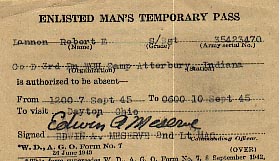
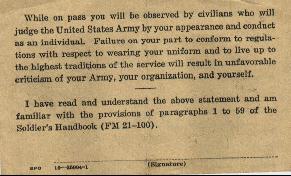
Here we have a copy of a three day pass that was given to Dad while he was recovering at Camp Atterbury, Indiana. As we have mentioned he suffered from combat fatigue. I also thought that the reverse side of this pass was worth reading. Also note that this was only for a 50 mile radius. Dad pushed this to the limit, as Xenia was a "few" more miles away than 50.
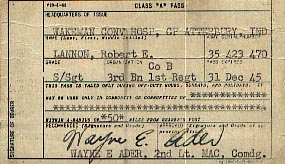
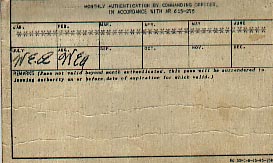
These documents were simply passes to get off base in the local area. Still a 50 mile radius. The difference is this was not an excuse from duty, they still had to report back in the morning.
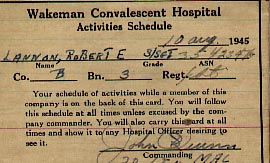
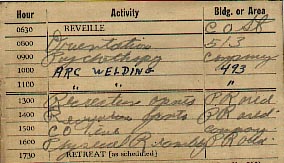
The Army, ever organized, even provided Dad with a schedule. It is obvious from the activities listed that the Army wanted Dad to return to civilian life productive. He was given psychotherapy, group counseling, and they even provided vocational training. In this case welding. Dad did come home and he was productive. But the demon raged inside as he never confided the truth of his combat breakdown to anyone.
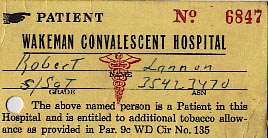
The wartime rationing of cigarettes was not over, and this gave Dad the right to buy them. He quit, cold turkey, for Lent in 1950 and never smoked again.
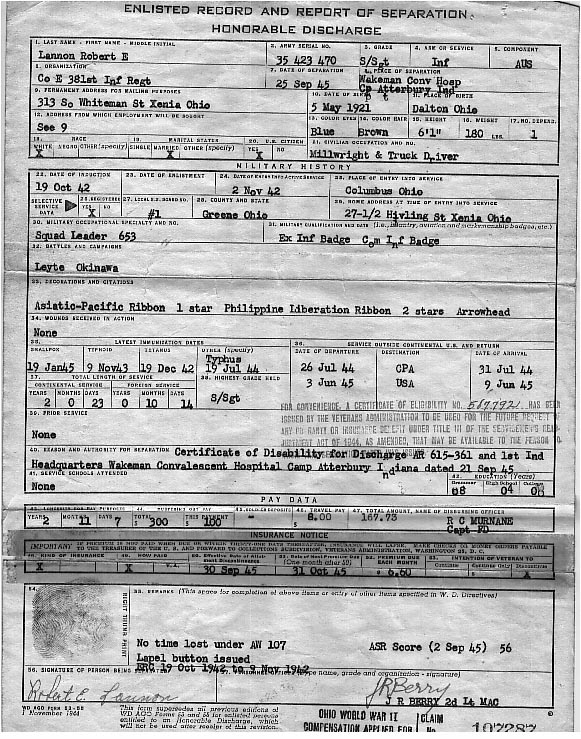
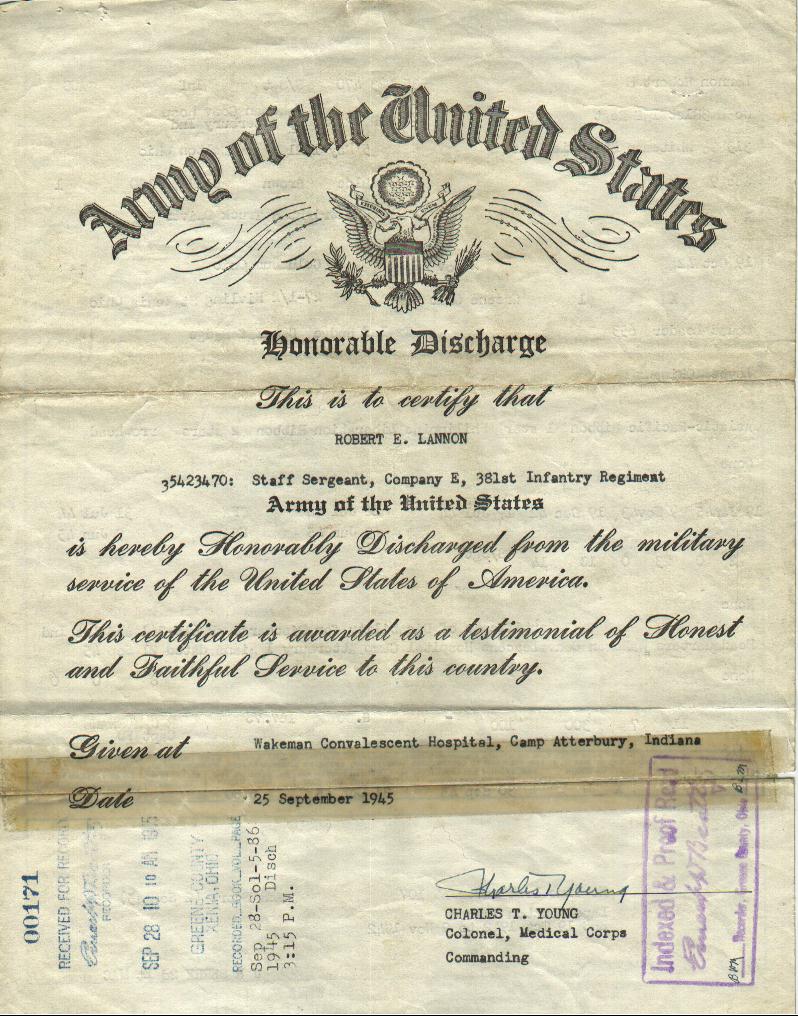
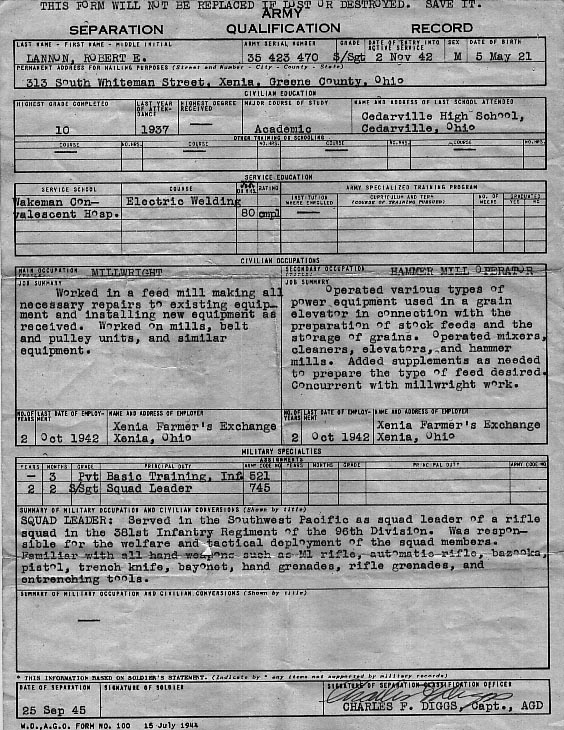
This is the equivalent of the current day DD214. For any of you who are looking into sending away for information on a loved one who served in WW2 you will do a lot better if this form is in your possession. It contains a wealth of information that can help the National Personnel and Records Center in St. Louis locate the records you seek. It might be of help here to note that a disastrous fire struck the St. Louis facility where most of the Army records from WW2 are stored. It is of the utmost importance to the reconstruction branch that when you send in a request for information that, if possible, you identify down to the lowest military unit the person you seek said information on.
This form was used to identify a civilian counterpart to the job, or MOS, the Army member held. It tells bundles here that there is a blank area for Dad. There is no counterpart for the infantry in civilian life.
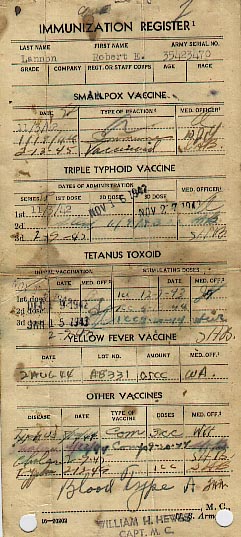
When Dad returned from WW2 he was sterile. Much speculation and attention was paid to the shots, or immunizations he received. This is the forerunner of the international shot record we carried in the 70's, and is required by all who travel to international destinations where immunization are required.
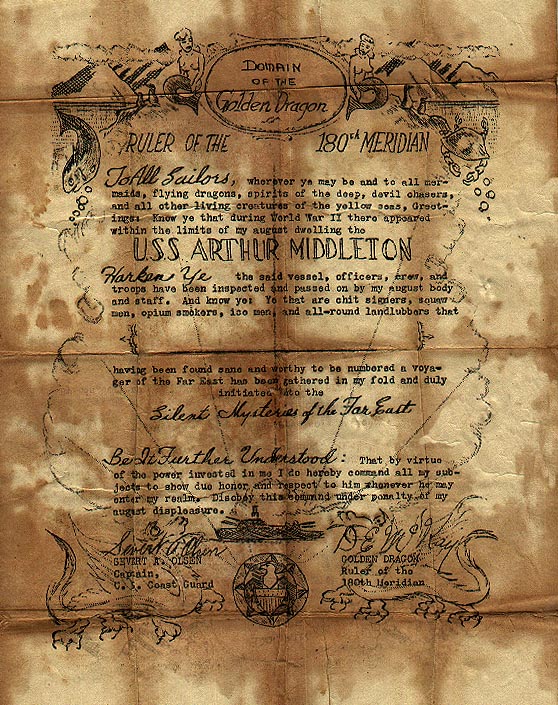
On a more lighthearted note, this form is from the USS Middleton, the US Coast Guard manned ship that took the 96th from Hawaii to Leyte. Whenever you cross the international dateline, there is a ceremony aboard most Naval vessels. Dad had to highly impressed as he carried this with him throughout the entire war, and did not ask Mom to tear it up like everything else.
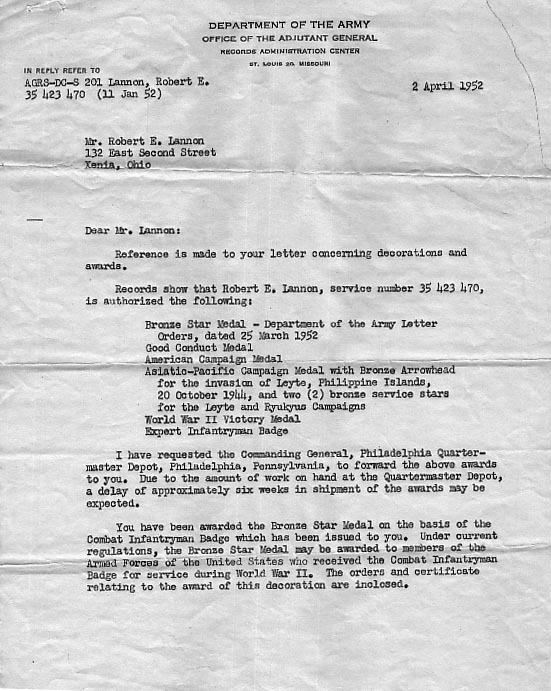
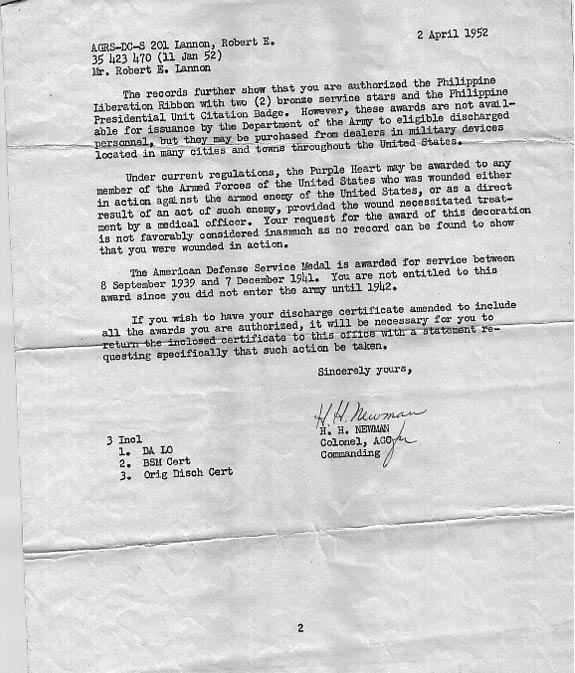
There is mixed emotions presenting this here. Frankly, and not as an insult to my Father, but his Bronze Star was not for any heroic act. It was a "gimme". He sent away for it. He got it. And that certainly explains why he kept it hidden away in a closet. And the actual framed citation laid in a drawer in the basement where no one, except a nosey kid, would look and find it. And, of course, I did. There is one point we are researching now, and that is the Purple Heart. He did have head trauma, that is for certain. It was part of what eventually killed him via hydrocephalous. Dad claimed he had it coming, and that was one point he was VERY clear on. And to our knowledge Dad was not a liar.
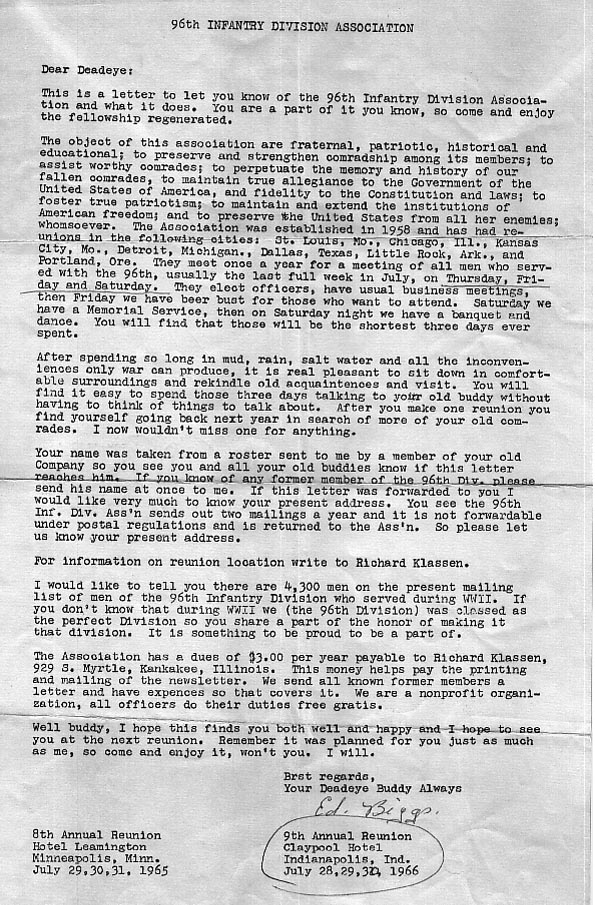
Dad received several of these invitations, all sent to my grandparents address, which would have been his address of record. He would look at them, pick them up again, start to the phone, and then eventually give up and do nothing. I frankly asked several of the members if he would have been welcome or shunned because he "lost it" on Okinawa. After all his actions could have cost lives because he was not doing his part. The response from 96th members was that not all men could handle it. And that he would have been welcome as anyone else.
In fact it may have helped Dad a lot!