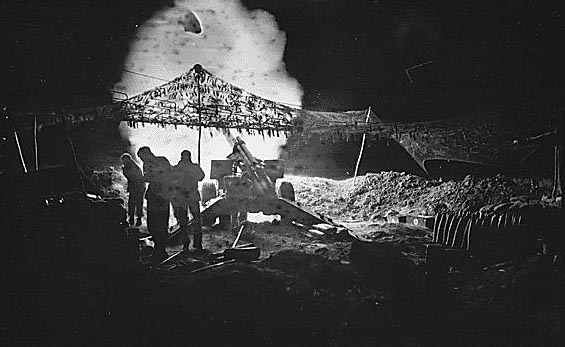
Okinawa. The Japanese knew it was the last stop for the Americans before they invaded their homeland. Their orders were to fight to the last man. And they did. Here we see artillery fire at night. Artillery was heavily used on Okinawa due the way the Japanese had dug into the sides of the hills. But the enemy also used a tremendous amount of artillery on the Americans.
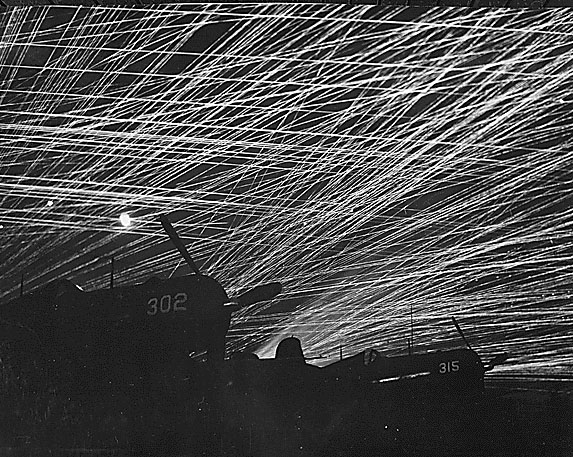
Japanese night raiders are greeted with a lacework of anti-aircraft fire by the Marine defenders of Yontan airfield, on Okinawa. In the foreground are Marine Corsair fighter planes of the "Hell's Belles" squadron.
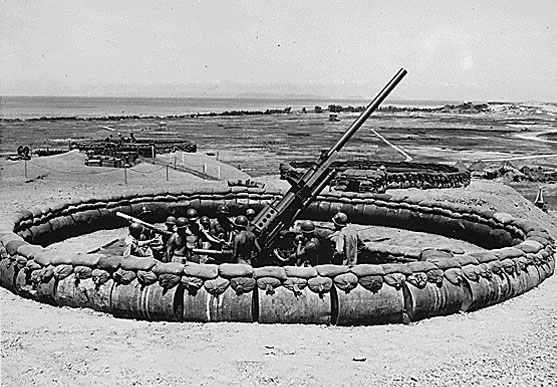
View of #4 90mm Anti-aircraft artillery gun emplacement with crew in pit. "D" Battery, 98th Anti-aircraft artillery Gun Battalion, 137th Anti-aircraft artillery Group Okinawa.
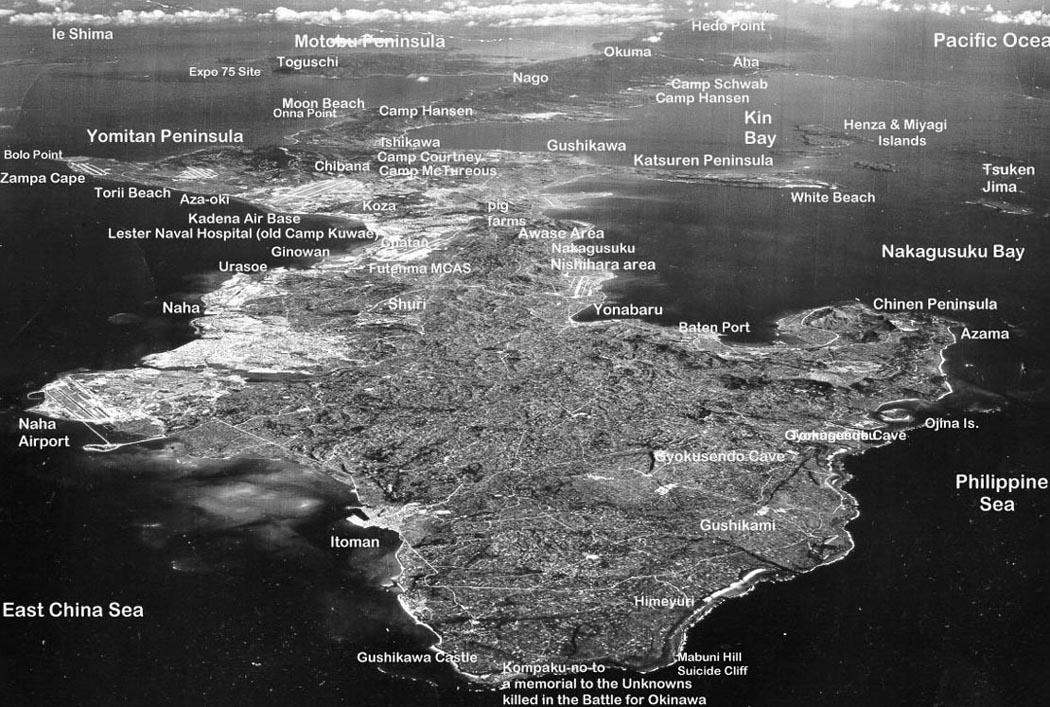
Aerial view of Okinawa. Few if anyone really knew where this tiny island was before 1945. But like other tiny islands in the Pacific, it was crucial in the defeat of the Japanese Imperial forces.
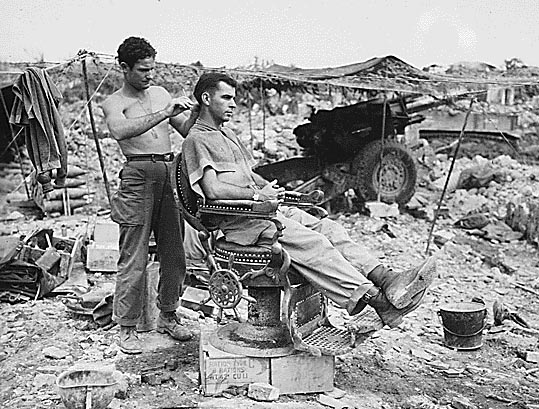
Time to relax was far and few between for the infantry during this conflict. The 96th, my Fathers, division had only 11 days of rest in 3 months. Here 2 GI's, in the midst of rubble, use a Japanese barber chair to clean up and bring some sanity to a tough battle.
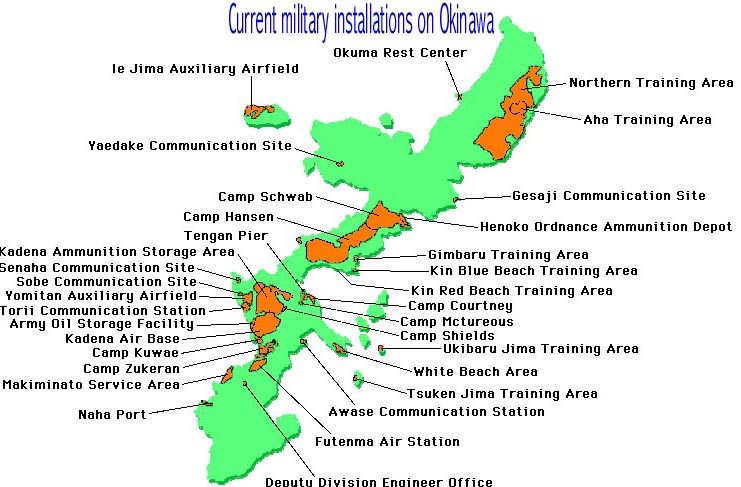
Today Okinawa is home to many American military installations, much to the displeasure of many Japanese. Much work has been done to restore relations with Okinawans after the tragic 1995 rapes by American Marines on the island. In any event, it is unlikely that any of these bases will be removed, as they are crucial to both American and Japanese interests in the increasingly complex Asian arena.
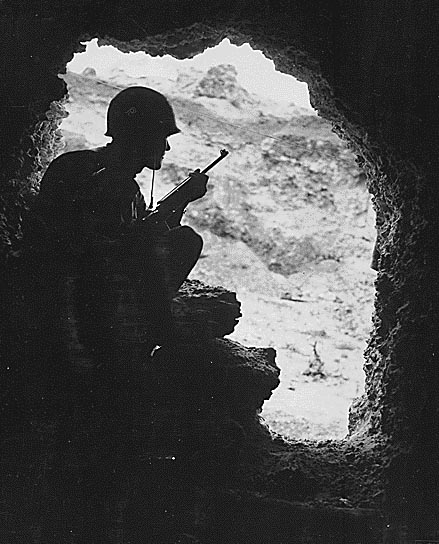
Before the Americans arrived the Japanese knew they had little chance to actually win the battle. They were undermanned and outgunned. They therefore took the position that digging into the hillsides and building intricate underground fortifications was their best chance at survival and defense of their island. These were designed with the thought that they would inflict a terrible price on the Americans. In this photo we see an unidentified GI taking up a position in a recently taken cave.
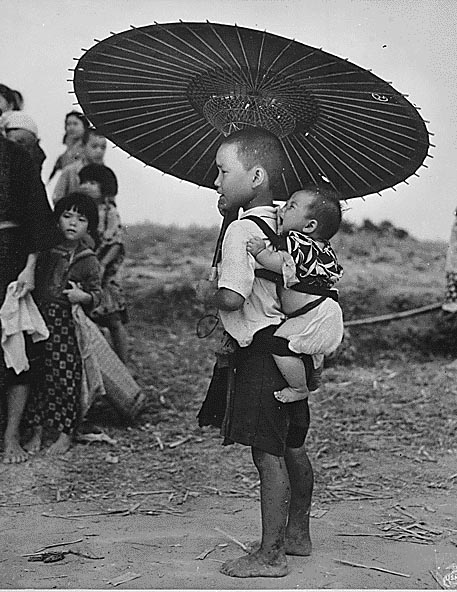
One of the lucky survivor watches as Americans pass by. Estimates are that one third of the population perished during the three month conflict.
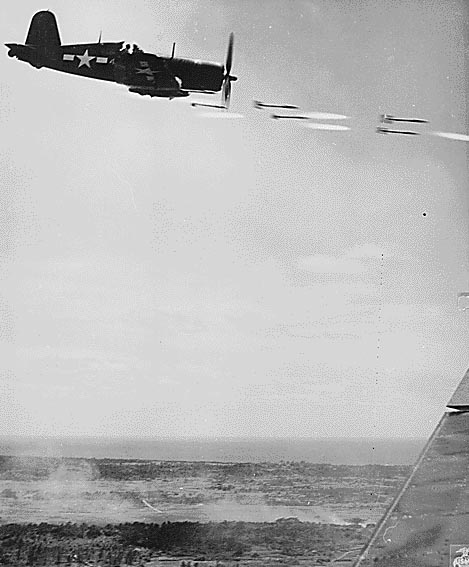
A Corsair pounds an enemy position so the GI's can move on.
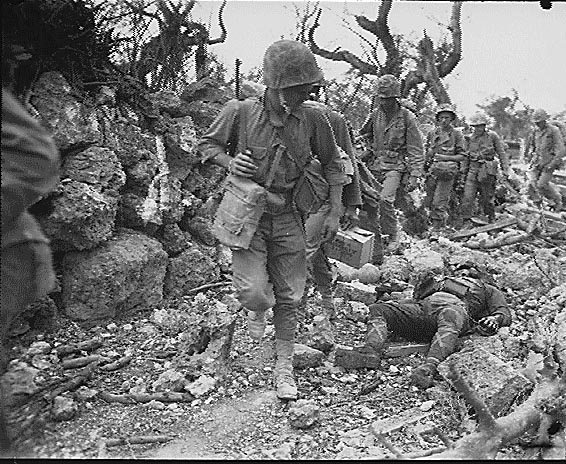
A dead Japanese soldier lies in the path as a GI passes through a village on the way to the front lines. Trees and greenery, in the background, are utterly destroyed. One veteran we spoke with said there was not a tree or blade of grass left at the end of the conflict that was not charred or destroyed during the battle. It was a barren place in the summer of 1945.
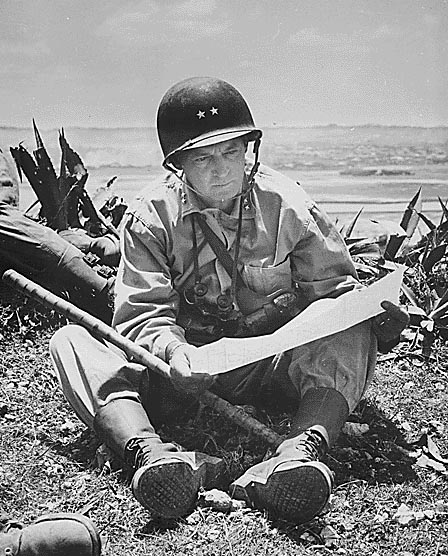
With the captured capital of Naha as a background, Marine Maj. Gen. Lemuel Shepherd, commanding general of the 6th Marine Division, relaxes on an Okinawan ridge long enough to consult a map of the terrain.
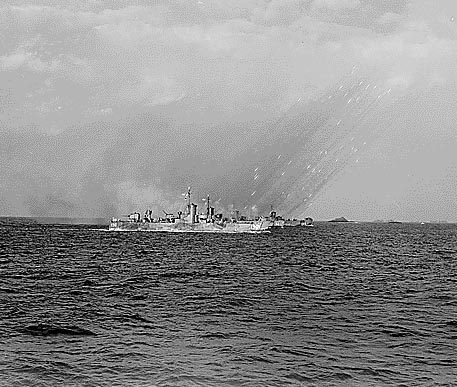
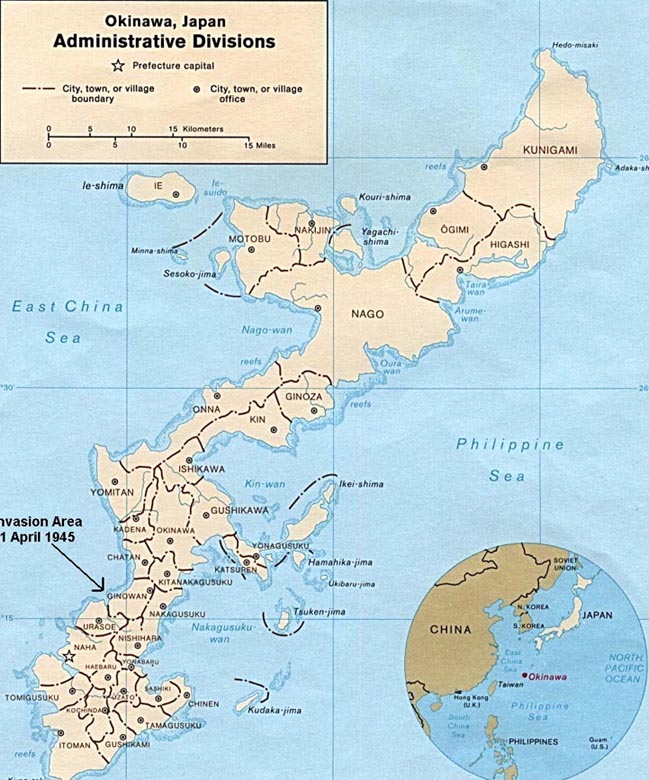
5 days prior to the April 1, 1945 invasion a LSM fires rockets to soften up landing zones on the beach. Unknown at the time was that the Japanese had decided to just lightly defend the beaches. Their strategy was to dig into fortified positions and do the most damage possible.
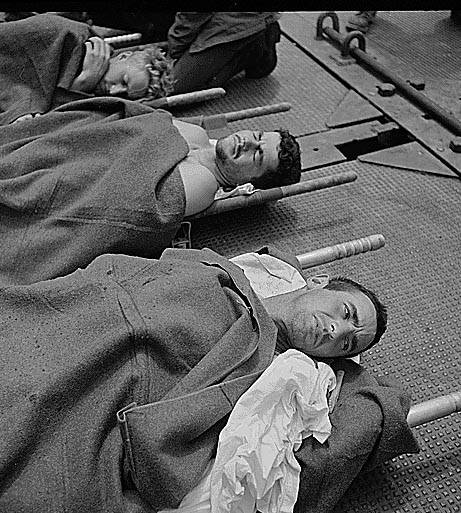
If a picture is worth a thousand words then the look in these soldiers eyes are priceless. They are awaiting loading onto a hospital ship for the trip home. The struggle of the battle has not yet wore off, and coupled with whatever injury they have, even going home, does not seem to bring happiness. For some, like my father, the sacrifice lasted a lifetime. And no one who fought on Okinawa ever forgot.
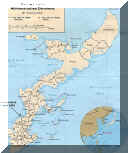
Map of the island. Just looking at the scale tells you how small this place is.
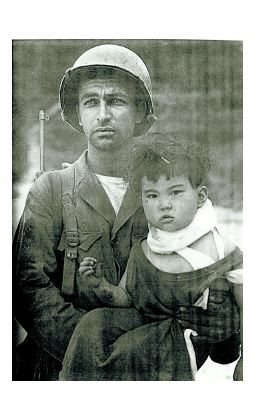
This photo was anonymously sent to us, along with several others. I think the look in eyes says it all.
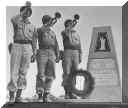
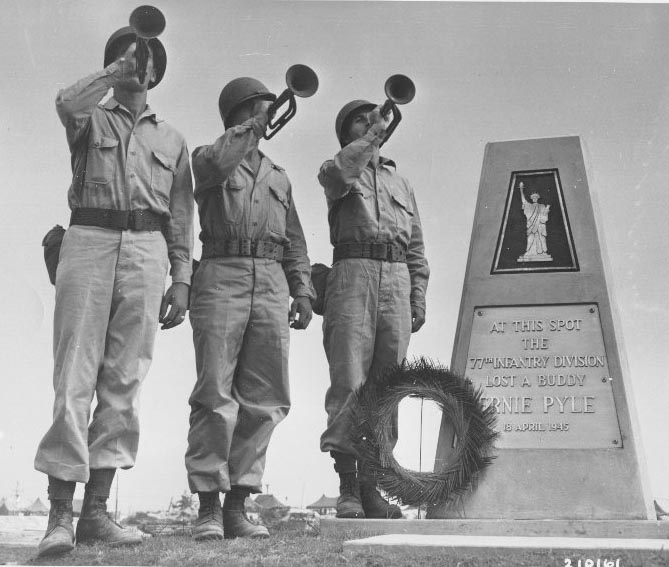
Ernie Pyle, a popular writer and journalist was killed on April 18, 1945 by a sniper while on the island of Ie Shima. . He was very popular with the soldiers for his reporting and his appreciation of life on the front lines. Here in this photo members of the 77th Infantry pay homage to a buddy.
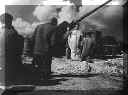
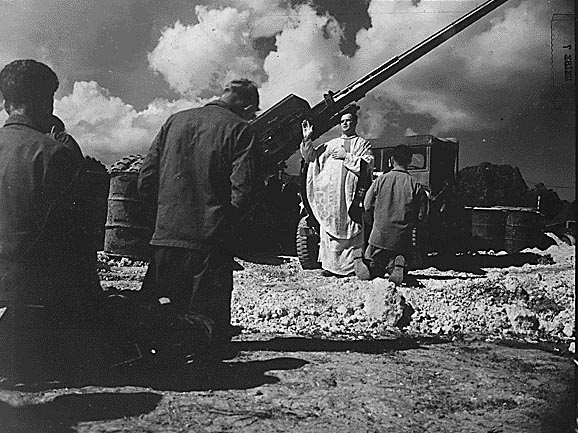
Mass in the field. Chaplains had a hard job on the front lines. Not only did they conduct services, they also gave comfort to the wounded. To this day only Doctors and Chaplains are still drafted by the military!
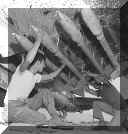
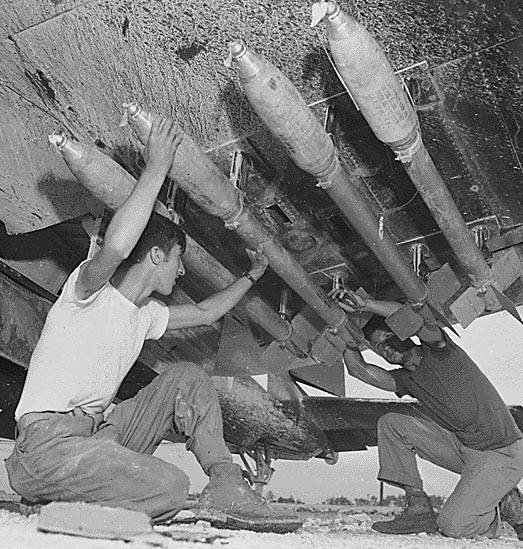
Munitions men prepare a Corsair for another mission. Securing airfields in preparation for the planned invasion of Japan was one of the prime objectives of this battle.
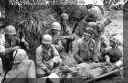
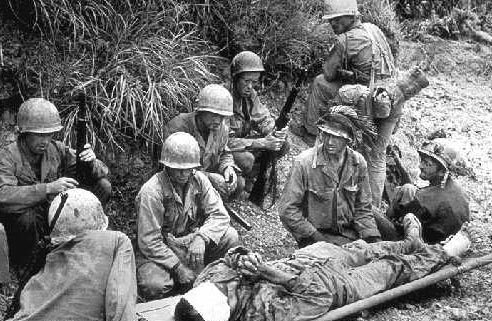
With transportation hard to come by due to heavy rains in May, it became necessary for men to carry the wounded out on litters. Even then they were targets of a ruthless enemy who saw them as targets of opportunity.
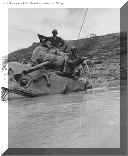
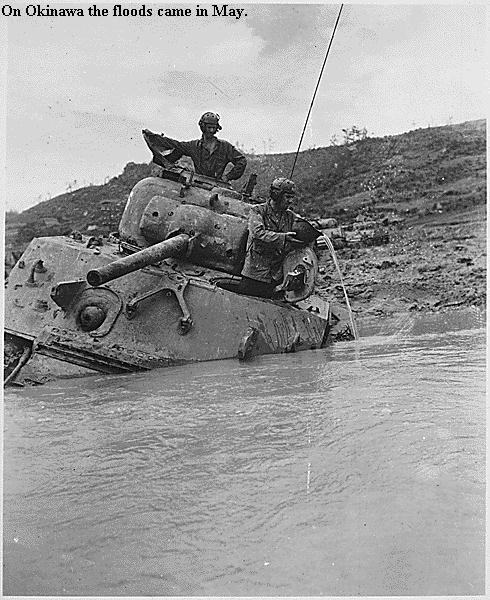
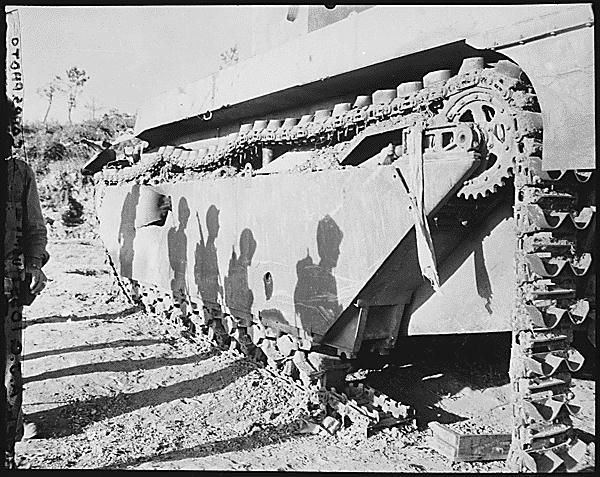
Even the tanks succumbed to the heavy monsoon like rains. Everything was slowed down, including getting supplies to the front lines. The tank commander here appears less than happy, and his photograph being taken must have added to the frustration level.
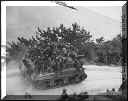
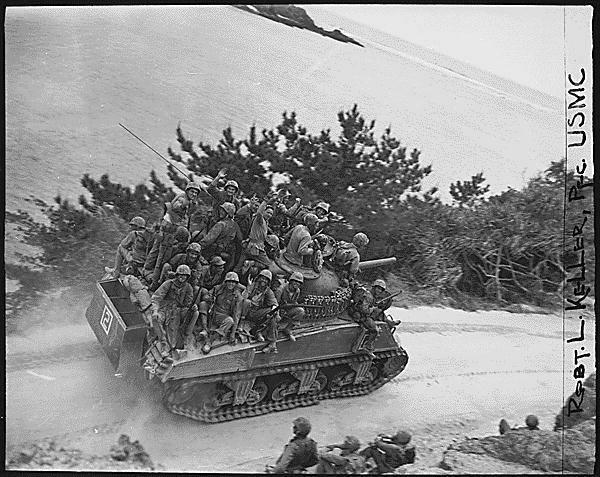
Happier days for some Marines hitching a ride. This photo was taken on 1 April 45. These men had yet to face the deeply entrenched enemy.
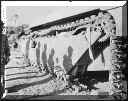
A tank provides some protection to troops on the way to the frontlines.
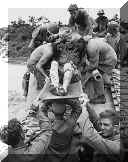
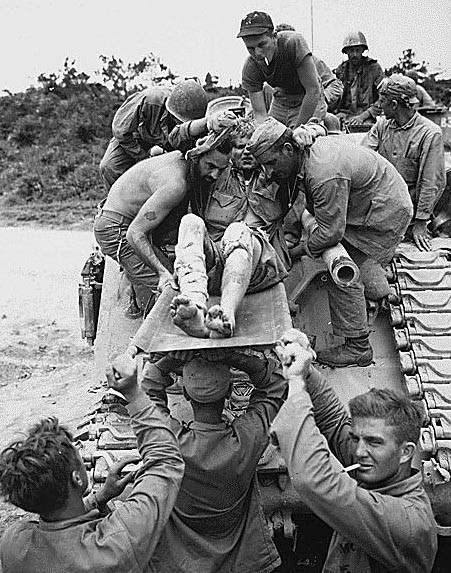
Wounded GI being readied for transport to a field hospital. Again transportation was a problem. We see here a tank being used to get the injured to safety.
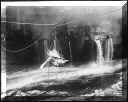
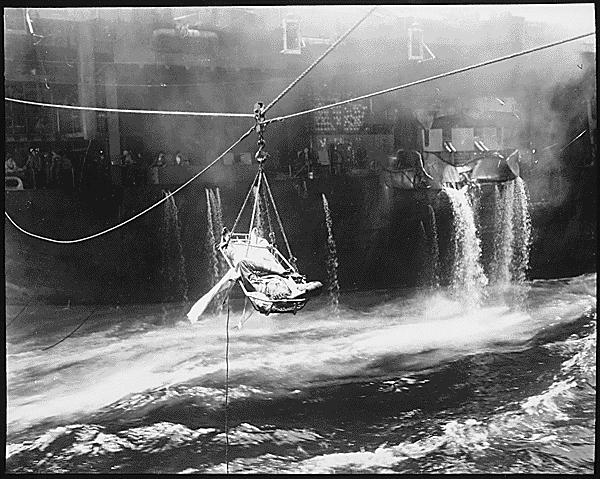
Wounded being transferred off the USS Bunker Hill after she was hit directly by Kamikaze missions. In the battle for Okinawa the Navy lost 30 ships, while 300 were damaged. In fact the Navy had the highest number of casualties.
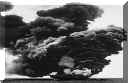
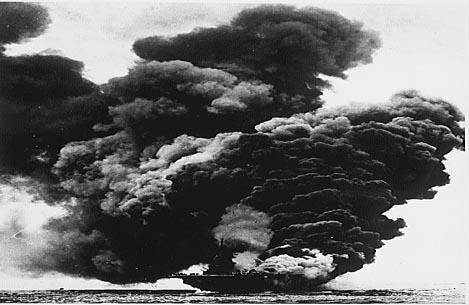
The USS Bunker Hill minutes after she was attacked 3 times within 30 seconds.
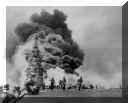
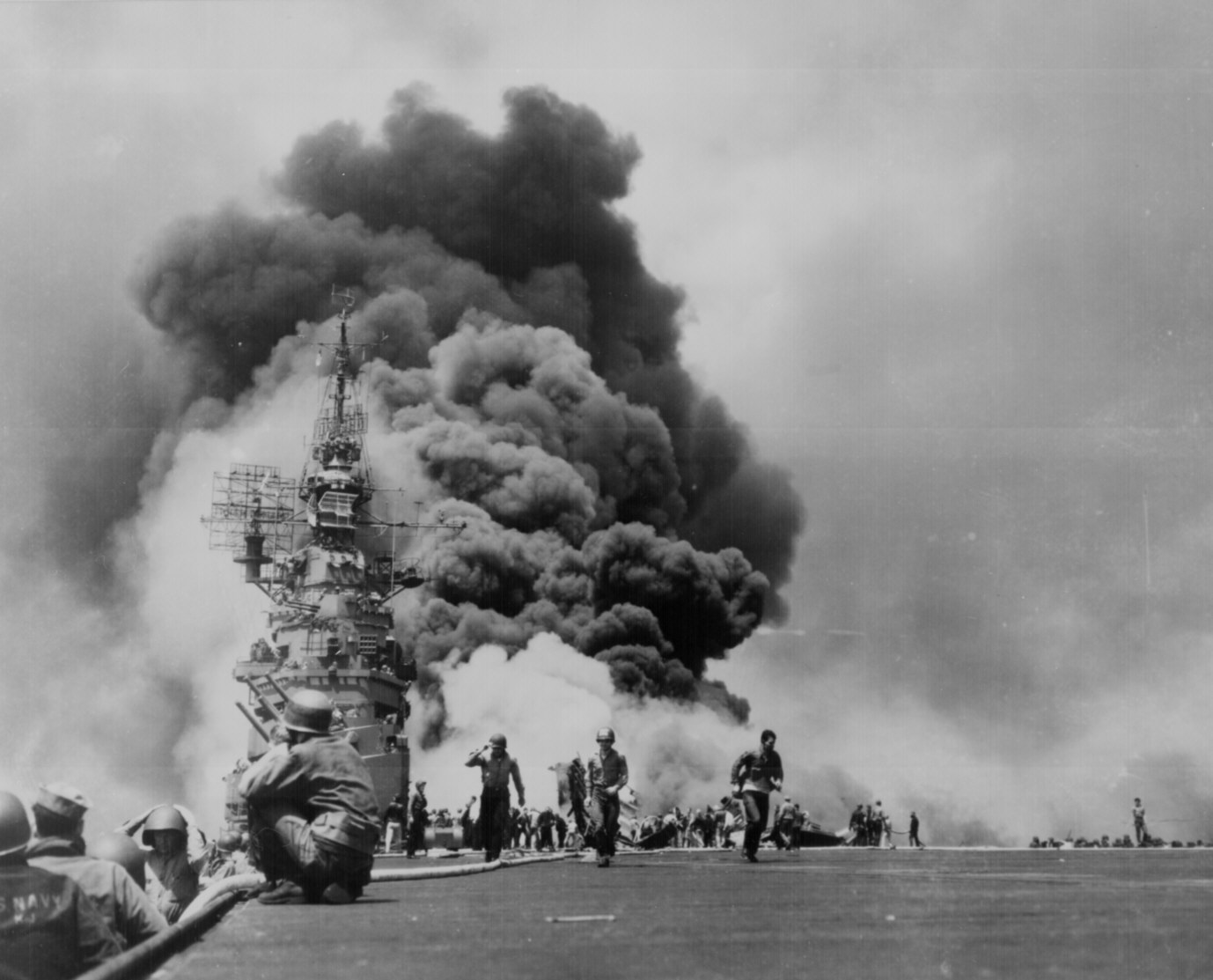
On deck of the Bunker Hill. The full size of this picture is very detailed and presents an excellent study of the confusion on board.
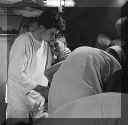
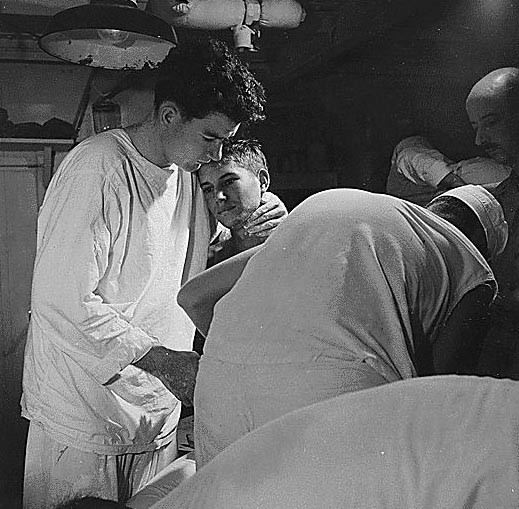
Surgeons attend to a wounded soldier enroot to Guam on board the hospital ship USS Solace.