Gymnastiorka Details
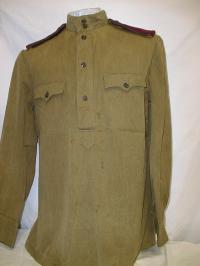
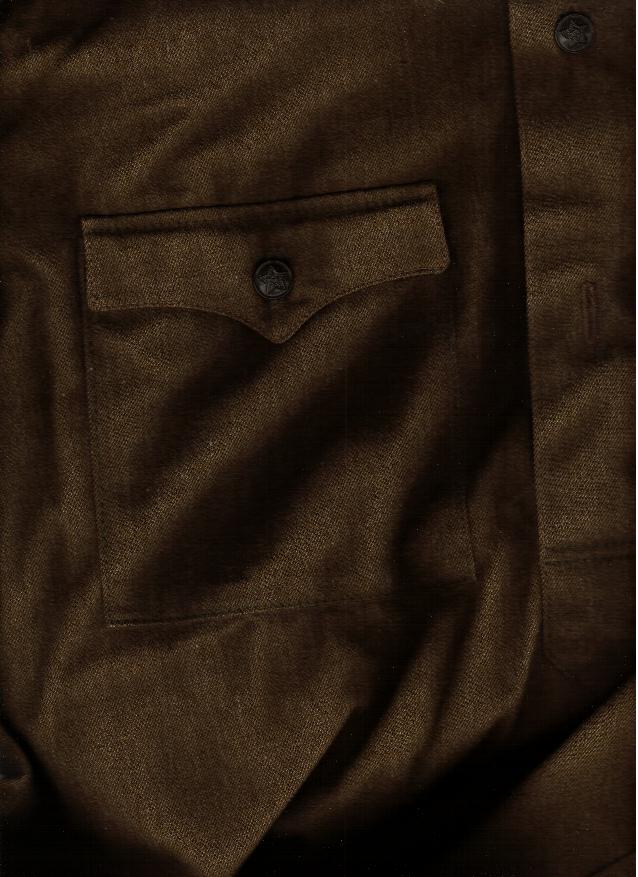
The Gymnastriorka in these three photos are of a M43 pattern. The first photo shows a later war tunic with external pockets. The buttons are a dark olive color. The shoulderboards are a darker color of cloth with rasberry piping of the infantry.
A note about Red Army uniforms in general. NONE OF THEM ARE EXACTLY ALIKE!!!! I've looked at many, Dan Welch has looked at thousands, and they all have minor (and sometimes not so minor) differences to them.
To say, this picture is how all Red Army uniforms were, would be such a falsehood, and yet many reenactors want just that.
So, a word about uniformity and the Red Army...you ain't gonna get it. O.K. enough about that.
As you can see the standing collar is closed with two small buttons. These collars are generally a inch and a half tall, give or take a few mm. The tewo buttons are so close together it is often hard to get then closed!
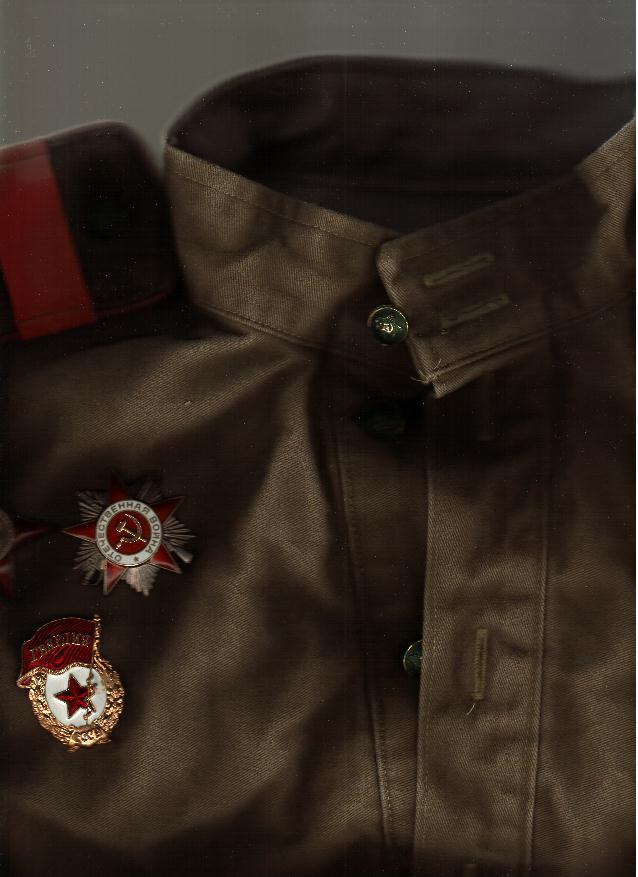
Close up scan of the collar.
There is no collar liner in this tunic and the buttons are a greener shade than the first. On the right chest, parellel with the second button is a guards badge. Above that is an Order of the Great Patriotic War.
The placket front one this example is 13 inches long, reachingabout mid-chest on me. the three buttons are generally spaced evenly. There is a regulation out there that states the distance from the top seam to the second button. None of the uniforms I have and have measured are the same in this aspect so I won't bore you with the details for a regulation that was given a hand-wave by the factories.
The soulderboards are a dark olive drab felt/wool with rasberry piping of the infantry and the rank stripe of a senior sergeant in red lace.
Understanding Soviet logistics in uniforms is like understanding the mating patterns of the Great Grey Penguin of Northern Wisconsin. You go a lot of data to go on, but none of it matches what's really going on...
On this tunic there are no pockets.
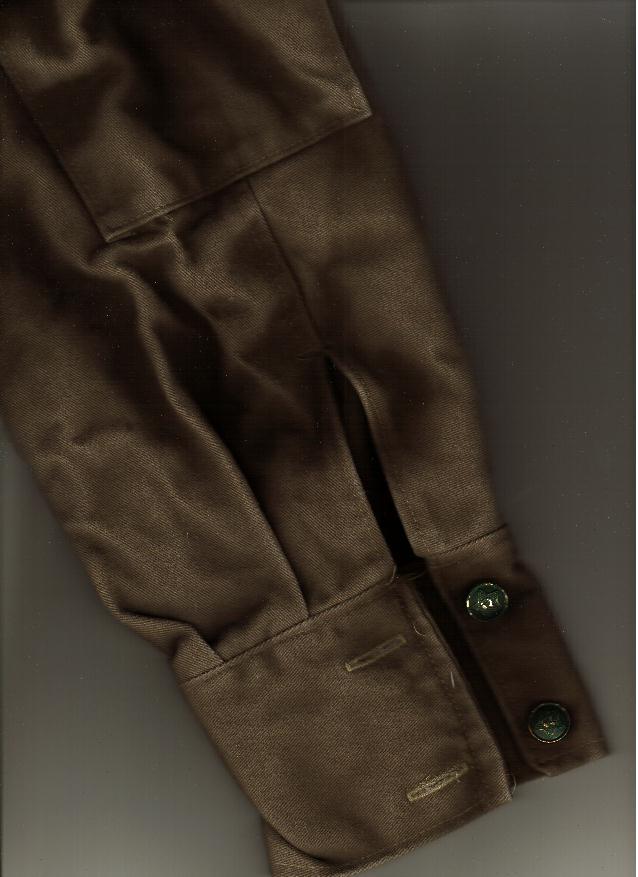
Close up scan of the sleeve cuff.
The sleeve is gathered at the cuff in three to four tucks. The cuff is three inches (generally) in depth. The sleeve opening extends anywhere from four to five inches up the back seam of the sleeve. There is no fansy work done to close this edge. It is simply turned over and sewn down.
You can see the bottom of the elbow re-enforcing patch. This is in a coffin shape with the 'head' end towards the shoulder. This and the reenforcing patch on the knee of the trousers no doubt extended the life of the garment greatly.
The two buttons close the cuff quite snugly.
As you can see all three of these tunics very in shade of their cloth. All are a heavy cotton twill with a clear weeve. All the buttons have been painted a 'medium' green. (although none match exactly...)
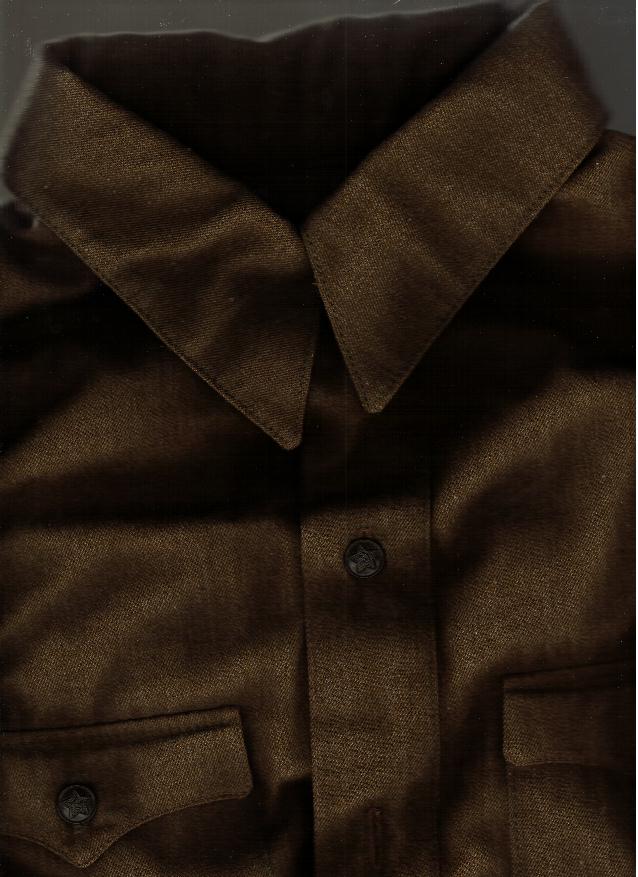
Scan of an M35 tunic collar.
The M35 tunic had a falling collar. This collar came in several patterns, this one being one piece with reenforcing stitching in the neck to form a type of 'band'.
Again the placket is about 13 inches long and closes with three buttons. The collar closes with one black metal hook and eye.
The two external chest pockets are small with the flap being very pointed and small as well.