Center
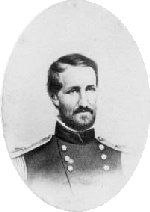
Maj. Gen. George H. Thomas
First (Late Third) Division
Maj. Gen. Lovell H. Rousseau
Fourth Brigade
Lieutenant Colonel Oliver L. Shepherd
15th United States, 1st Battalion:
Maj. John H. King
Capt. Jesse Fulmer
16th United States, 1st Battalion, and Company B, 2d Battalion:
Maj. Adam J. Slemmer
Capt. R. E. A. Crofton
18th United States, 1st Battalion, and Companies A and D, 3d Battalion:
Maj. James N. Caldwell
18th United States, 2d. Battalion, and CompaniesB, C, E, and F, 3d Battalion,
Maj. Frederick Townsend
19th United States, 1st Battalion:
Maj. Stephen D. Carpenter
Capt. James B. Mulligan
Report of Major-General Lovell H. Rousseau, U. S. Army, commanding First Division
Nashville, Tenn., January 11, 1863
Sir: I have the honor to report the part taken by my command, the Third Division of the army, in the battle of Murfeesborough,
begun on the 31st ultimo and ended on the 3d instant.
Early on the morning of the 30th ultimo, in obedience to the order of General Thomas, my division moved forward toward Murfeesborough
from Stewartsborough, on the Nashville and Murfeesborough turnpike, about 9 miles from the latter place. On the march forward, several
dispatches from General Rosecrans reached me, asking exactly where my command was and the hour and minute of the day. In consequence,
we moved rapidly forward, halting but once, and that for only five minutes. About 10:30 a.m. we reached a point 3 miles from Murfeesborough,
where General Rosecrans and Thomas were, on the Nashville and Murfeesborough turnpike, and remained during the day and bivouacked
at night.
At about 9 a.m. on the 31st, the report of artillery and heavy firing of small-arms on our right announced that the battle had begun, by an
attack on the right wing, command had given way and was yielding ground to the enemy. His forces seemed to swing around toward our
right and rear. At this time General Thomas ordered me to advance my division quickly to the front, to the assistance of General McCook.
On reaching the right of General Negley's line of battle, General Thomas there directed me to let my left rest on his right, and deploy my division
off toward the right as far as I could, so as to rest the pressure on General McCook. We consulted and agreed as to where the line should
be formed. Ths was in a dense cedar break, through which my troops marched in double-quick time, to get into position...
From the evening of the 31st until the ensuing Saturday night no general battle occured in front of my division, though firing of artillery and small-
arms was kept up during the day, and much of the time, of small-arms, during the night. The rain on the night of the 31st, which continued, at intervals,
until the Saturday night following, rendered the ground occupied by my command exceedingly sloppy and muddy, and during much of the time my men had
neither shelter, food nor fire. I procured corn, which they parched and ate, and some of them ate horse-steaks, cut and broiled, from horses upon the battlefield.
Day and night, in the cold, wet, and mud, my men suffered severely, but during the whole time I did not hear one single man murmur at hardships, but all were
cheerful and ever ready to stand by their arms and fight. Such endurance I never saw before. In this severe trial of their patience and their strength they were much
encouraged by the constant presence and solicitous anxiety of General Thomas for their welfare....
The brigade of United States infantry, Lieut. Col. O. L. Shepherd commanding, was on the extreme right. On that body of brave men the shock of battle fell heaviest,
and its loss was most severe. Over one-third of the command fell, killed or wounded; but it stood up to the work and bravely breasted the storm, and, though Major King,
commanding the Fifteenth and Major Slemmer ("Old Pickens"), commanding the Sixteenth, fell, severly wounded, and Major Carpenter, commanding the Nineteenth,
fell dead in the last charge, together with many other brave officers and men, the brigade did not falter for a moment. These three battalions were a part of my old (Fourth)
brigade at the battle of Shiloh.
The Eighteenth Infantry, Major Townsend and Caldwell commanding, were new troops to me, but I am now proud to say we know each other.
If I could, I would promote every officer and several non-commisioned officers and privates of this brigade of regulars, for gallantry and good
service in this terrific battle. I make no distinction between these troops and my brave volunteer regiments, for, in my judgement, there never
were better trrops than those regiments, in the world. But the troops of the line are soldiers by profession, and, with a view to the future, I feel
it my duty to say what I have of them. The brigade was admirably and gallantly handled by Lieutenant-Colonel Shepherd.
I have the honor to be, &c.,
Lovell H. Rousseau,
Major-General
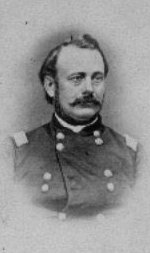
Maj. George E. Flynt,
Chief of Staff (Center), Fourteenth Army Corps,
Department of the Cumberland
Headquarters Brigade U. S. Regular Troops,
Third Div. (Rousseau's), Center, 14th Army Corps.
Camp at Murfeesborough, Tenn., January 10, 1863.
Sir: I have the honor, respectfully, to report the operations of this brigade, under my orders, during the recent
five days' battle before this place.
The brigade, on going into action, consisted of the First Battalion Fifteenth U. S. Infantry, comprising of 16 officers
and 304 enlisted men for duty, Major King commanding; the First Battalion Sixteenth U. S. Infantry, and Company B,
Second Battalion, same regiment, attached. comprising 15 officers and 203 enlisted men, Major Slemmer commanding;
Battery H, Fifth U. S. Artillery, comprising of 3 officers and 120 enlisted men for duty, Captain Guenther commanding;...making a
total of 77 officers and 1,485 enlisted men, not including the staff officers and the commanding officer of the brigade, 4 in
number, and 1 acting sergeant-major (Commissary-Sergeant Gill, Third Battalion [18th U. S. Inf.]).
The balance of the brigade, including the sick, were left behind to guard the brigade and battalion trains, where they did
good service, under their respective battalion quartermasters, in repelling the attacks of the enemy's cavalry, saving thereby
the entire trains of the brigade. The musicians were under orders of the various surgeons.
The brigade, thus constituted and in the order enumerated, went first into action under your eye and general supervision
at about 9.30 a.m. December 31, 1862, forming line in the dense cedar forest to the right of the turnpike and railroad, with
design of succoring the right wing of the army, under Major-General McCook. After being placed partially, in quick time, on
position and line, the rebel enemy attacked briskly the two battalions (Fifteenth and Sixteenth) on the right of the battery.
On observing that the battery and the three battalions to the left were seperated from and not in view of these two battalions,
I sent my acting assistant adjutant-general, Lieutenant Sutherland, with orders to Major King to take command on the right, while I proceeded
toward the center and left of the brigade to bring them into this contest, which was shortly terminated by the Fifteenth
and Sixteenth being forced to retire with considerable loss; however , without having checked the advance of the enemy,
who soon succeeded in possessing the flank by their long extended line, and having at first been deceived by the enemy,
who advanced dressed in American uniform, and without firing till within a short distance, supported by a heavy line behind.
(See official report of Capt. J. Fulmer, commanding First Battalion Fifteenth Infantry.)
A regiment, believed to be the Sixth Ohio Volunteers, withstood the fire of the enemy along with these two battalions.
On arriving on the left of the brigade, I found that the battery had fortunately received your orders to retire by the same narrow cut in the
cedar forest by which the brigade first entered. The three battalions of the Eighteenth and Nineteenth were directed to accompany this
movement just in time to save the battery from capture, and under fire of the advancing enemy.
In this first conflict in the cedar forest, Captain Bell, of the Fifteenth, was killed, and Captain York and Lieutenant Occleston,
Fifteenth, severely wounded, and also about 8 enlisted men were killed and 42 wounded.
After emerging from the cedar forest, the battalions of the brigade drew up in their proper positions to the right and left of the battery,
which had taken position, from which, by its effective fire, the advancing lines of the enemy were driven back and dispersed from view
in the forest.
While waiting in this position, the enemy's batteries to the front, along the turnpike and railroad, were throwing shot and shell upon our
ground, by which Captain Dennison, Second Battalion, Eighteenth, lost his leg, and the heroic first sergeant, George F. White, of Company F,
Third Battalion, his life. Other men of the brigade were also killed and wounded.
At about 12 m. the brigade, including the battery, was again directed to advance to the front along the railroad and turnpike, and, after reaching
the farther side of the open ground, was suddenly directed to the right, to enter again the cedar forest, to sustain the troops
which were receding, exhausted of ammunition. This movement was made in pursuance of orders directly from yourself and
Major-General Thomas. The brigade being halted just along the edge of the forest, the battery was ordered to retake the
former slightly elevated site near the railroad.
The brigade, having the battalion of the Nineteenth shifted, at the request of its commanding officer, Major Carpenter, from
the extreme left to position in line between the battalions of the Fifteenth and Sixteenth, was projected about 50 yards into
the dense cedar forest toward the enemy, and, after allowing our retiring regiments to pass through the lines to the rear, the fire
was opened in return to that of the pursuing enemy. The excellence of the firing by file by all the battalions of the brigade could not
be excelled, and was terrifying and destructive to the enemy, who were brought to stand for about twenty minutes.
During this stubborn combat most of our losses in killed andwounded took place; Major Slemmer, commanding Sixteenth, wounded
at its commencement. The enemy's lines extending, however, beyond both flanks of the brigade, enabled them to pour an incessant
fire from the three directions - the front, left, and right flanks; and the brigade being unsupported by any other forces on either flank,
and having secured the required time for the receding regiments to reform, I thought it proper to order a retreat, hich was
probably quite long enough deferred.
Just after the order to retreat was given, a regiment came up the in line in the open field on the extreme right of the brigade, but its
fire, though brisk, came too late, and was unavailing against so large a force as filled the forest, three lines being discernible.
It is proper here to remark that, notwithstanding the loss in the brigade had been nearly half its strength, the battalions
evidently gave ground with reluctance, probably not having looked to such result, and being too much engaged to know the full extent of their
losses. The retreat of the brigade across the open field was done handsomely, and with as much order as was desirable,
having in view to prevent further loss of life. On this retreat Major King, commanding Fifteenth, and Captain Douglass, acting field officer
of the First Battalion Eighteenth Infantry, were wounded, causing them both to retire to the hospital.
The brigade was at this time reformed in line near the railroad, in proper place, to the right and left of the battery, as directed
in previous orders, for the formation in line of battle, and in this position it remained the balance of the day and during the
following night, within reach of the enemy's cannon.
In this last terrific combat in the cedar forest many brave men and officers perished; 4 officers killed and 18 wounded, and
78 enlisted men killed and 430 enlisted men wounded, exclusive of the missing.
At the moment of retreating a few steps, the brave and gallant Major Carpenter, commanding the 19th Infantry,
fell from his horse wuth six mortal wounds, regretted by all who knew him. The left wing of the brigade, 1st and
2nd Battalions 18th Infantry, was, during the remainder of the battle, committed mostly to Major Townsend, the
right wing, deprived of its field officers, requiring, as I thought, more of my attention.
About the middle of the afternoon an extended line of men was discovered far to our front, advancing with our national colors, and, having
passed over a slight rise, descended into a corresponding depression, partially concealing them, when a white flag
with a dark ball in its center was substituted, after which they unfurled the rebel flag; whereupon Captain Guenther
directed the fire of his battery, causing the line to break in double-quik time to their left flank and disappear into the
cedar forest.
Though occasionally visited by the enemy's shot, but little heed was given to it, and thus closed the
action of the brigade the first day, being the last day of the year, December 31, 1862. During the night our wounded
were gathered together, as far as the enemy's pickets would permit.
A short time before daybreak of New Year's day the brigade retired, according to orders, to a point in the rear of the
commanding general's headquarters, to meet an attack on our right. Some shiftings of position took place until about
2 p.m., when it marched toward Stewart's Creek, and on arriving near there it was ordered back in double-quick time,
which being executed, and night coming on, the brigade bivouacked on the left of the roadway and near the commanding
general's headquarters.
On the third day (the 2d instant) the brigade marched, before breakfasting, to the front to meet the enemy's attack, and
we retained this position during the day and following night, the battery assisting to silence the enemy's batteries and
effect the repulse of the enemy in their attack on the left wing of the army, under General Crittenden, in the afternoon.
On the 3d instant (the fourth day) the brigade and battery moved forward to the standpoint of the first day, December 31,1862,
where slight epaulements were thrown up, principally by the men of the brigade, and encamped within them, though rendered
almost untenable by heavy rains, which filled them partially with water and made the adjoining ground miry. As this day closed,
and at dark, a severe attack was made by some portion of the division upon the enemy in front, which resulted in gaining
possession of the enemy's first line of breastworks for a time, and subsequently abandoning them, owing to exhausted ammunition.
On the 4th instant I reported, at 7.30 a.m., that the enemy had evacuated our front. The brigade held the same position, employing the
day and following night in the sad duty of collecting our dead, who were interred with military honors just in front of our intrenchments,
and on the standpoint of the brigade and battery, maintained from the first to the last day's conflict.
The heavy rains of the 2d and 3d instant covered this portion and the trenches with mud and water, in which
the whole brigade had to stand or recline while seeking to obtain a little rest. Not a murmur escaped the lip in
all this trying and painful as well as arduous were evident on their countenances, and this while subsistence was
so scarce as to force a consumption of horses killed in the battle.
It is hoped that the bearing and whole career of
this brigade of regular troops during the five days' conflict were of a character to meet the approbation of the major
general commanding the division.
The brigade was not without the ambition of deserving also the commendation of Major-General Thomas, commanding
the center, whose experience has been so succesful and so long, and likewise of the commander-in-chief,
whose uniform success inspired confidence. In fine, the brigade having combatted so well, we need hardly
search for examples, but should rest satisfied that there are none to excel it in courageous action and mournful losses.
Of 77 officers with the battalions, 5 were killed and 21 wounded, some mortally; and of 1,366 enlisted men, 90 men
were killed and 469 wounded, many mortally, besides 47 missing, supposed to be prisoners. The casualties of the
battery were not so great, on account of its position and of its fire dispersing every line of the enemy approaching
sufficiently near, at one time completely routing the Second Arkansas (rebel) Regiment, causing it to abandon its
colors, which were picked up by skirmishers of the 2nd Ohio before the officer sent for it reached the ground
where the regiment was broken; and 22 rebel prisoners were taken during the day.
...
The honor of this brave conduct of the brigade belongs properly to the chiefs of battalions and of the battery,
repectively, Majors King, Carpenter, Slemmer, Townsend, and Caldwell; and after Majors King and
Slemmer were wounded and Major Carpenter was killed, to their successors, Capt. Crofton, 16th, Fulmer, 15th,
Mulligan, 19th, and also Capt. Guenther, commanding Battery H, Fifth Artillery. Great credit is reflected by the good condition
of their repective commands.
...
Resting in the hope that this brigade, but recently organized, has displayed in this great battle of five days' duration
a career worthy the approbation of the Government and the cause in which engaged, I have the honor, respectfully,
to subscribe myself, very truly, our humble servant, &c.,
O. L. Shepherd,
Lieutenant-Colonel Eighteenth U. S. Infantry, Comdg. Brig.
Maj. Gen. Lovell H. Rousseau,
Comdg. Third Division, Center, Fourteenth Army Corps.
Hdqrs. First Batt. Fifteenth U. S. Infantry,
Camp at Murfeesborough, Tenn., January 10, 1863.
Sir: I have the honor to report that, on the morning of December 31, 1862, the First Battalion
the First Battalion Fifteenth U. S. Infantry, comprising eight companies, entered into action before
Murfeesborough, Tenn., under the command of Major John H. King.
The number of enlisted men present and entering into actionwas 304; Lieutenant Ogilby, battalion adjutant, and the following company
officers, to wit, Captains Fulmer, Wise, Bell, Ketelas, and York, and Lieutenants Jewett, Wikoff,
Woodward, Occleston, King, Semple, Galloway, and Gray, were present and participated in the
engagement.
The aggregate strength of the battalion on entering into action was 319 officers and men.
This battalion with others of the brigade of regulars, commanded by Lieutenant-Colonel Shepherd, 18th US,
advanced several hundred yards into a dense forest of cedars, about 9 o'clock on the morning of the 31st of
December, to engage the enemy. The 15th, with the First Battalion of the 16th Infantry on the left, were moved
a short distance from the other battalions of the brigade and formed a line of battle. Captain Keteltas' company
was immediately ordered forward as skirmishers, and, as such, advanced them some 400 yards beyond our line.
He had been enticed thus to advance by the action of scattering rebels in our front, who, wearing our style of
uniform, feigned to be of us.
This piece of deception, however, was timely detected, and a heavy firing
between the skirmishers was immediately commenced. Ours were driven back, and the enemy, in two or three
lines of battle, hurriedly advanced, with a strong line of skirmishers in front. Our line of battle suffered somewhat
by mistaking a body of rebels dressed in our uniform for our troops. When commanded to open upon the
enemy, the battalion poured in a heavy fire upon them, but were soon compelled to give way to the vastly
superior numbers of the enemy. We fired retreating, until we reached the rear of the position just that moment
taken by the 6th Regiment Ohio Volunteers. Here we halted to reform our line, but, while so doing, the
overwhelming numbers of the rebels, and, the fierce onslaught they made on the 6th Ohio, forced those
gallant volunteers to fall back also; whereupon we moved out of the woods, returning the enemy's fire,
and, under cover of Guenther's battery, succeeded in taking favorable position and reforming our line.
It was in this engagement that Captain Bell was killed, Captain York wounded, and I fear, mortally, and
Lieutenant Occleston severely wounded. The battalion reformed, advanced, and again took positionin the
woods, as also the others of the brigade. This was done promptly, and with a zeal highly creditable to the
men who had only a few moments beforebeen under a most galling and terrible fire. Very soon we were
again engaged with the enemy, and, after a spirited engagement for a while, were ordered to fall back.
Then it was that Major King was wounded, and the command of the battalion devolved upon me. I
continued the movement, firing upon the enemy, and moved up to the support of Guenther's battery.
In this affair Captain Wise fell, mortally wounded, and has since died.
For the remainder of that day
we acted in support of Guenther's battery, and remained on the front of our lines that night until nearly
daybreak, when we moved to the rear. Later in the morning we moved forward again, first supporting
the center, then the right.
Friday morning we again moved to the front, supporting Guenther's battery, and
remained there until the battle of that day ended.
Advancing a short distance on Saturday morning, we threw up intrenchments in
face of the fire of the enemy's skirmishers and sharpshooters. These we occupied Saturday night, supporting Guenther's battery during the brilliant and
successful attack made upon the enemy's lines that night.
In addition to the casualties already named, the battalion had 84
enlisted men killed and wounded, 10 of whom are positively known to have been killed outright, 2 captured,
and 15 missing, who have, doubtless, either been killed, wounded, or captured. The aggregate casualties to
officers and men 106.
The conduct of the officers and of the men engaged merits commendation, and the
battalion, in all of the advances movements into the cedars, and in the several actions engaged, did well in
aiding to check and drive back the largely superior numbers of the enemy confronted by the brigade of
regulars.
I am, sir, very respectfully, your obedient servant,
Jesse Fulmer,
Captain Fifteenth U. S. Infantry, commanding First Battalion.
First Lieutenant Robert Sutherland,
Eighteenth Infantry, Actg. Asst. Adjt. Gen. Brig. of Regulars.
Fourth Brigade
15th U. S., 1st Battalion...1 officer and 10 enlisted killed; 4 officers and 74 enlisted wounded; 17 missing
16th U. S., 1st Battalion and Co. B 2d Battalion...16 enlisted killed; 7 officers and 126 enlisted wounded; 16 missing
18th U. S., 1st Battalion and Cos. A and D, 3d Battalion...1 officer and 28 enlisted killed; 5 officers and 98 enlisted wounded; 2 missing
18th U. S., 2d Battalion and Cos. B,C,E and F, 3d Battalion...1 officer and 30 enlisted killed; 5 officers and 98 enlisted wounded; 5 missing
19th U. S., 1st Battalion...1 officer and 6 enlisted killed; 57 enlisted wounded; 10 missing
5th U. S. Artillery, Battery H...5 enlisted wounded
Total...4 officers and 90 enlisted killed; 22 officers and 475 enlisted wounded; 50 missing; 641 men aggregate
Back