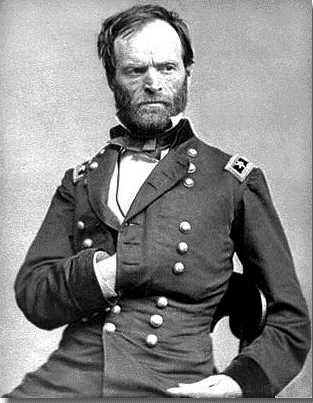
Sir: When I left Louisville in the cars, in charge of the Home Guards, followed by Rousseau's brigade, I understand,
my orders to be to station parties along the road to guard the bridges, secure the road, and to occupy the Muldraugh's Hill. On
reaching the Rolling Fork of Salt River we found it a deep stream, with railroad bridge burned down and still burning. This, of course,
stopped our progress, and we disembarked the men. Various rumors to the force of the enemy which had done this wanton mischief
and stolen various cars and locomotives reached me, but estimating the force not to exceed 200, I sent forward a strong picket
of 400 men, under Colonel Rousseau, and afterwards strengthened it by another 400, but receiving a telegraphic order from you
on the 21st, I recalled Rousseau. Finding the effect of this to be very bad, and that great importance was attached to Muldraugh's Hill,
and having notice of re-enforcements, I concluded we should reoccupy the hill; and accordingly, on Sunday morning, the 22d instant,
I put in motion Rousseau's brigade, and followed up with the Thirty-eighth Indiana, Colonel Scribner, and the Forty-ninth Ohio,
Colonel Gibson, and a detachment of regulars, under Captain Swaine. We ascended Clear Creek Valley, near the railroad, to the
top of Muldraugh's Hill. We examined the ground near the tunnel, and then proceeded to Elizabethtown, and encamped near the town.
The next day we moved on the Lebanon road to this camp, where we have been ever since.
Since our arrival the command has been re-enforced by the Thirty-ninth Indiana, Colonel Harrison. On our way up I left Colonel Crittendon's
regiment to guard the road to Colesburg, but have since called him forward, and he is now posted beyon Elizabethtown, the
guarding of the road being intrusted to Colonel Hughes' [Hecker's?] Illinois Regiment.
This is not an isolated hill, but a range seperating the waters of the Rolling Fork of Salt Creek and Green River, the ascent
from the north being very abrupt and the descent to the south being very gradual. Our position is far from being a strong one
when held against a superior force. Roads will enable the enemy with cavalry to pass around us and cut off our
communications and starve us out. We have no safe line of retreat, and must stand our ground let what will happen.
Our opponents, led by General Buckner, who is familiar with the ground, are now supposed to be along the railroad
from Green River to Bowling Green. Their forces are variously estimated from 7,000 to 20,000 men, and I doubt
not they have 15,000, some well and some poorly armed, but all actuated by a common purpose to destroy us.
I am fully alive to the danger of our position and to all its disadvantages, especially that of supplies. Our provisions
have been hauled up the rugged valley of Clear Creek by hired wagons and by some which were brought along by
the Thirty-ninth Indiana. We can barely supply our wants, and are liable at any moment to have those wagons seized.
The reason I came to Muldraough's Hill was for effect. Had it fallen into the hands of our enemies, the cause would have been lost,
and even with it in our possesion a week nobody has rallied to support. I expected, as we had reasonto, that the people of
Kentucky would rally to our support, but, on the contrary, none have joined us; while hundreds, we are told, are going to
Bowling Green. The railroad from Bowling Green towards us is broken at Nolin, 10 miles off, and at another trestle
beyond some 7 miles. I doubt if this was done by Buckner's orders, but rather by the small parties of guards left
to protect them, and who were scared at our approach. I have from time to time given you telegraphic notice of these
events, and must now await the development. We should have here at least 20,000 men; but that has been an
impossibility.
Truly, yours,
W. T. Sherman,
Brigadier-General
Brig. Gen. L. H. Rousseau will move his camp [the detachment of regulars is in this camp] as soon as
practicable forward to the vicinity of Nolin, selecting, with the advice of
Captain Prime, a position for a large force. He will cause scouts to be sent forward towards Green River, and
take every advantage of position left unoccupied by the enemy.
By command of Brigadier-General Sherman:
Oliver D. Greene,
Assistant Adjutant-General