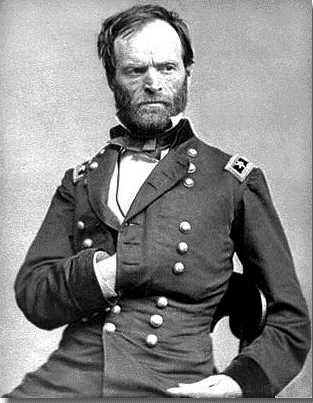
Organization of the Union (field) forces, commanded by Maj. Gen. William T. Sherman, in the Atlanta Campaign, May 3 - September 8, 1864
Army of the Cumberland
Maj. Gen. George H. Thomas
Fourteenth Army Corps.
Maj. Gen. John H. Palmer
Brig. Gen. Richard W. Johnson Assumed command August 7
Bvt. Maj. Gen. Jefferson C. Davis Assumed command August 22
First Division
Brig. Gen. Richard W. Johnson Disabled and absent May 29 to June 6
Brig. Gen. John H. King
Brig. Gen. Richard W. Johnson Disabled and absent June 13 to July 13
Brig. Gen. John H. King
Brig. Gen. Richard W. Johnson
Brig. Gen. John H. King
Brig. Gen. William P. Carlin Assumes command August 17
Second Brigade
Brig. Gen. John H. King
Col. William L. Stoughton
Brig. Gen. John H. King
Col. William L. Stoughton Wounded July 4
Col. Marshall F. Moore
Brig. Gen. John H. King
Maj. John R. Edie
11th Michigan ordered to Chattanooga Aug. 25
Col. William L. Stoughton.
Capt. Patrick H. Keegan.
Col. William L. Stoughton.
Capt. Patrick H. Keegan.
Lieut. Col. Melvin Mudge.
Capt. Patrick H. Keegan.
69th Ohio
Col. Marshall F. Moore.
Lieut. Col. Joseph H. Brigham.
Capt. Lewis E. Hicks.
15th United States (nine companies First and Third Battalions)
Maj. Albert Tracy Sick from May 8
Capt. Albert B. Dod On leave from Aug. 1
Capt. James Curtis Wounded Aug 7
Capt. Horace Jewett.
15th United States (six companies Second Battalion)
Maj. John R. Edie In command of First and Second Battalions from May 8
Capt. William S. McManus
16th United States (four companies First Battalion)
Capt. Alexander H. Stanton In command of First and Second Battalion to May 21
Capt. Ebenezer Gay. In command of First and Second Battalions May 21 to Aug. 24
16th United States (four companies Second Battalion)
Capt. Robert P. Barry. In command of First and Second Battalions from Aug. 24
18th United States (eight companies First and Third Battalions) Consolidated Aug. 11
Capt. George W. Smith
Capt. Lyman M. Kellogg
Capt. Robert B. Hull
18th United States (Second Battalion)
Capt. William J. Fetterman
19th United States (First Battalion and A, Second Battalion)
Capt. James Mooney
Capt. Lewis Wilson
Capt. Egbert Phelps
Capt. James Mooney
Reports of Maj. John R. Edie, Fifteenth U. S. Infantry, commanding Second Brigade.
Hdqrs. Second Brig., First Div., 14th Army Corps.
Atlanta, Ga., September 19, 1864
Captain:I have the honor to submit the following report of the operations of this brigade during the campaign which
commenced 7th of May, 1864, at Ringgold, Ga., and ended 1st of September, 1864, at Jonesborough, some twenty-two miles
south of Atlanta, on the railroad leading from the latter place to Macon, Ga.:
The brigade was under the command of Brig. Gen. John H. King, and was constituted as follows: First Battalion, Fifteenth
Infantry, Maj. Albert Tracy, 8 officers, 376 men; Second Battalion, Fifteenth Infantry, Maj. J. R. Edie, 10 officers, 307 men;
First Battalion, Sixteenth Infantry, Capt. A. H. Stanton, 8 officers, 245 men; Second Battalion, Sixteenth Infantry, Capt. R.
P. Barry, 5 officers, 257 men; First Battalion, Eighteenth Infantry, Capt. G. W. Smith, 13 officers, 257 men; Second Battalion,
Eighteenth Infantry, Capt. W. J. Fetterman, 10 officers, 373 men; First Battalion, Nineteenth Infantry, Capt. James Mooney,
11 officers, 266 men; Eleventh Regiment Michigan Volunteers, Col. William L. Stoughton, 16 officers, 428 men. Total, 81
officers, 2,509 men. The brigade staff at the commencement of the campaign was: First Lieut. William J. Lyster, aide-de-camp,
acting assistant adjutant-general and ordnance officer; First Lieut. H. G. Litchfleld, acting assistant inspector-general; Capt.
J. B. Mulligan, provost-marshal; Capt. J. R. Morledge, commissary of subsistence; Surg. Lewis Slusser, brigade medical director.
We left Ringgold on the morning of the 7th with the rest of the division, marching via Tunnel Hill in the direction of Dalton, Ga.,
the vicinity of which place we reached on the
9th of May, took position in front of Buzzard Roost Mountain, within range. of the enemy�s guns, posted on its summit. The
brigade remained in this position till the
[May] 11th, when it was moved back about half a mile to get out of range of the rebel guns, some small loss having been
sustained from their fire. On the 11th the Sixty-ninth Regiment Ohio Veteran Volunteers. Col. M. F. Moore, having returned
from its veteran furlough, rejoined the brigade with 23 officers and 324 men.
On the 12th broke up camp at daylight and marched for Snake Creek Gap, which point we reached after night-fall, and
bivouacked till morning.
On the 13th the brigade was put in line of battle, moving in the direction of Resaca, Ga., with the Eighteenth Infantry as
skirmishers.
On the 14th the line of battle was kept up, and skirmishing continued throughout the day, which ended in driving the enemy
to their works in and about Resaca. Occupying a position with the rest of our corps in the center of the army, we lay within
800 yards of the enemy�s intrenchments till the morning of the 16th, being under fire all the time.
[May 16th] On this morning, the commanding officer of the Eighteenth Infantry having been directed to detail a company to
advance and feel for the enemy, Capt. Anson Mills was sent with his company to the front and entered Resaca, returning
with some 20 prisoners, and reporting that the enemy had evacuated Resaca and left our front. The brigade then moved into
Resaca, and
on the morning of the 17th started with the rest of the army in pursuit, passing through Adairsville and Calhoun
on the 18th, Kingston
on the 19th, and to a point near Cass Station
on the 20th, where we remained till the 24th. At this point all the regimental wagons were taken, by order of the division
commander, which will account for the subsequent delay in reports, all company and regimental papers and desks being left
behind.
The brigade again moved on the 24th, crossing the Etowah River at Island Ford, passing Burnt Hickory,
and reaching Pickett�s Mills, or New Hope, on the evening of the 26th. Here the brigade was put in line of battle as a support
to a part of the Fourth Corps, and at night threw up works covering their whole front. The brigade remained in this position
from the 27th of May till the 5th day of June, under fire all the time. Incessant vigilance and resolute deterinination were all
the time necessary to hold the position. The enemy kept up during these days a continuous and fatal discharge of musketry,
shell, and canister. The casualties at this point were numerous. During the time the brigade remained at Pickett�s Mills,
General R. W. Johnson, commanding the division, was somewhat injured by a 12-pounder shell, and being otherwise in ill
health was granted a leave of absence. This placed General King, our brigade commander, in charge of the division, and the
command of the brigade devolved upon Col. William L. Stoughton, Eleventh Michigan Volnnteers, who retained it until 4th of
July following. The conduct of the officers and men during the nine days the command lay at this hazardous point is worthy
of great commendation, and I take great pleasure in bearing testimony to their gallantry.
It having been ascertained on the morning of the 6th of June that the enemy had again fallen back from our front, the
brigade, with the rest of the army, started in pursuit and marched to a point near Big Shanty, on the Georgia State railroad.
Here we remained till
June 10, when the brigade again marched, skirmishing and feeling for the enemy till the
22d, when it reached Kenesaw Mountain and relieved a brigade of the Fourth Corps, commanded by General Whitaker. Here
we remained within 100 yards of the enemy�s works and under fire of his artillery and sharpshooters till the morning
of the 3d of July, when the opposing force once more retreated, and we again followed, picking up more prisoners and
deserters by the way.
The brigade passed through Marietta on the morning of the 3d in pursuit of the retreating enemy, following him in the
direction of the Chattahoochee River. After advancing about two miles from Marietta, our troop's came up with rear of the
enemy, and sharp skirmishing ensued, participated in by the Fifteenth and Sixteenth Infantry. This continued till night,
when the brigade bivouacked till morning. July 4, commenced pressing the enemy with a strong skirmish line, parts of the
Eighteenth and Nineteenth Infantry and Eleventh Michigan Volunteers.
During the 3d and 4th the whole brigade was under severe and destructive fire, losing in killed and wounded some 50 men.
On the latter day Colonel Stoughton, commanding the brigade, was severely wounded in the leg by a piece of shell. He was
sent to the rear. and the command assumed by Col. M. F. Moore, Sixty-ninth Ohio Volunteers, who retained it until General
King returned to the brigade on the 13th of July. The troops behaved with coolness and bravery on both these days, and
on the 4th succeeded in dislodging the enemy from their rifle-pits, and driving them into their main line of works.
July 5, enemy again gone, having fallen back to the Chattahoochee, we started after and took position
on the 6th about one mile to the right of Vining�s Station, on the Georgia State railroad, fronting the enemy and the river.
Here we remained in range of the enemy�s artillery, an occasional shot passing our camp,
until the 17th of July. when, the enemy having once more made a retrograde movement, we crossed the Chattahoochee at
Pace�s Ferry.
On the 13th, and during our stay on the north side of the Chattahoochee. General Johnson having returned from leave of
absence, General King resumed command of the brigade.
On the 13th of July the Sixty-ninth Ohio Volunteers were temporarily detached from this brigade and attached to the Third
Brigade of the division.
July 18, pushed forward and crossed Nancy�s Creek in pursuit.
July 20, crossed Peach Tree Creek and, took position in line of battle in the afternoon of that day. Here, although the
brigade was not actively engaged with the enemy, it was exposed to a dangerous fire of shell and canister, which the enemy
opened upon our forces. In the evening the brigade was ordered to the left about two miles to fill a gap on General Newton�s
left, the Fifteenth Infantry being detached and sent to a mill farther to the left to guard a bridge crossing the Peach Tree
Creek. Remained in this position till
the morning of July 22, when we rejoined the division and marched in the direction of Atlanta until within two miles of that
place, where we took position, built works, and remained till
August 3, all the time under severe musketry and artillery fire. During these twelve days all the battalions composing the
brigade were engaged at different times on the picket and skirmish line, and in the face of fire engaged in steadily forcing
the enemy back from our front.
August 3, the brigade marched to the extreme right of the army and camped for the night.
August 4, ordered to the front near Utoy Creek, where the Eighteenth and a part of the Fifteenth were deployed as
skirmishers, and the rest of the brigade drawn up in line of battle near Bankston�s house. The skirmishers drove the rebel
picket across the Utoy, when we were ordered back for the purpose of breaking camp and crossing the Utoy, which we did
that night.
August 5, this brigade was sent out with First Brigade, First Division, Fourteenth Army Corps, on reconnaissance, remaining
out till dark, when upon our return we were ordered to the left, bivouacking in a field near the Utoy Creek.
On the morning of the 6th we took position in the line of our army in works to the right of the Fifteenth Corps. On this day
General King again assumed command of the division, and being notified that I was the senior officer present with the
brigade for duty, I took command. General King did not return to the brigade during the remainder of the campaign. Lieut.
Col. M. Mudge, Eleventh Michigan Volunteers, who joined after Colonel Stoughton was wounded, was present with the
command, but was sick at the time and did duty but two days from the 6th until his regiment was withdrawn from the brigade;
those were the 7th and 8th.
August 7, about 1 p. m. I was directed by the division commander to throw forward the Eighteenth Infantry as a skirmish line,
to be followed by the Fifteenth Infantry in line of battle. This was done, and subsequently the Eleventh Michigan was sent
forward to take position on the right of the Fifteenth. A spirited and determined engagement ensued, which resulted in
driving the enemy from his rifle-pits, capturing a large number of prisoners, and advancing our line to within 150 yards of the
enemy�s main line of works. Here works were thrown up at night, and the position held until our army made its grand
movement to the right, on the night
of the 26th of August. I cannot speak too highly of the conduct displayed by the officers and men in this engagement. It
was as severe as any of the campaign, and right well and nobly did the forces engaged sustain themselves. Capt. L. M.
Kellogg, commanding the Eighteenth; Capt. Horace Jewett, commanding the First Battalion, Fifteenth Infantry, and Capt. W.
S. MeManus, commanding the Second Battalion, Fifteenth, are entitled to be mentioned with special commendation for their
bravery and for the skill with which they handled their commands. Capt. James Curtis, who had been in command of the First
Battalion, Fifteenth Infantry, was struck in the mouth with a musket-ball just before the Fifteenth advanced. I respectfully
refer to the reports of battalion and detachment commanders for the names of those officers who distinguished themselves
on this occasion. Our casualties in this engagement were quite large, having lost 4 officers wounded, 22 enlisted men killed,
146 wounded, and 7 missing, making an aggregate of 179. The loss of the enemy is not accurately known, but it is believed
to have nearly equaled ours in killed and wounded, and there was sent to the rear by the troops of this brigade over 125
prisoners, besides a considerable number sent to the rear who fell into the hands of troops not engaged in the fight.
During the night of the 7th a spirited attempt was made to dislodge us from the ground we had gained, but was handsomely
repulsed.
On two successive days (19th and 20th), while we remained in the works at this position, our places were taken by an
extension of the lines of the First Brigade, while we moved on each of those days some three miles to the right, to make, in
connection with two brigades of the Second and two of the Third Division, a support to the Twenty-third Corps.
On the night of the 26th of August, at 8 o�clock, we withdrew from the works, and moved with the rest of the army to the
right, commencing that series of movements which ended with the battle of Jonesborough, on the 1st. day of September.
We marched some three miles to the right on the 26th, went into camp, and remained there during next day, and on the
evening of the 28th reached the West Point railroad, which we assisted in destroying on the 29th.
On the 30th moved again to the right, camping on the farm of Mrs. Evans, about two miles from Renfroe�s.
The 31st marched to Renfroe�s in the morning, went into line of battle, and about the middle of the afternoon moved in the
direction of the Macon railroad for about a mile and a half, when we were halted and ordered back to our camp of the
previous night.
At an early hour on the 1st of September we moved in the direction of Jonesborough. On this day the memorable engagement
of Jonesborough took place. As I have made that engagement the subject of a special report, I would respectfully refer to
that report for an account of the day�s operations, and ask that it be considered a part of this, in order that I may not be
too voluminous.
On the 2d we went into Jonesborough, where we remained till the afternoon of the 4th, when we leisurely fell back to a
position near Atlanta, which place we have occupied since.
At the commencement of the campaign we had 109 commissioned officers and 2.933 enlisted men. This number was
increased during the campaign by recruits joining the different regiments to the number of at least 300. On the 15th of July
the Sixty-ninth Ohio was detached from the brigade. On the 27th of August the Eleventh Michigan was relieved from duty
with the brigade and ordered to Chattanooga, preparatory to being mustered out of the service, the time of the regiment
having nearly expired. The casualties of the brigade during the entire campaign were, 1 officer killed and 16 wounded; 122
enlisted men killed, 512 wounded, and. 43 missing, making an aggregate of 694. It is proper to state that Capt. E. Gay joined
the Sixteenth Infantry, and assumed command of it at Cass Station, and Capt. Lyman M. Kellogg joined and assumed
command of the Eighteenth Infantry on the 14th of June. These officers, soon after joining, consolidated their commands,
making but one battalion out of the two in the Sixteenth, and one out of the two in the Eighteenth. On the 1st of September
the number of officers and men present for duty with the brigade were, commissioned officers, 39; enlisted men, 1,318;
aggregate, 1,357. I transmit herewith the reports of the commanders of such battalions as remained with the brigade on the
1st of September, 1864.
I cannot close this report without calling attentioh to the fact that more than one-half of an entire campaign of 120 days
was passed by this brigade under the fire of the enemy, and that in every position in which they were placed, both officers
and men performed their duty so as to entitle them to the thanks and gratitude of the country.
I have the honor to be, captain, very respectfully, your most obedient servant,
John R. Edie,
Major Fifteenth Infantry, Commanding.
Capt. G. W. Smith,
Actg. Assi. Adjt. Gen., First Division, 14th Army Corps.
Reports of Maj. John R. Edie, Fifteenth U. S. Infantry, commanding Second Brigade.
Hdqrs. Second Brig., First Div., 14th Army Corps.
Jonesborough, Ga., September 3, 1864
Captain: I have the honor to submit for the information of the general commanding the division the following report
of the operations of this brigade on the 1st instant:
At an early hour in the morning we took up our line of march from Mrs. Evans� farm in the direction of the railroad leading from
Atlanta to Macon. We marched in rear of the Third Brigade. After proceeding some four or five miles, we reached a point on
the Jonesborough road, about a mile and a half from the town and the railroad. A line of battle was there formed on the left
of the Third Brigade, deploying the Sixteenth Infantry, Captain Barry, as skirmishers, and sending him forward with instructions
to advance his line and drive the enemy until the railroad was reached. Capt. W. J. Fetterman, Eighteenth Infantry, acting
assistant adjutant-general of the brigade, accompanied the Sixteenth, and reports its duties well and creditably performed.
Captain Barry�s regiment took possession of a point on the railroad, about two miles north of Jonesborough, and held it until
the troops of the Fourth Corps occupied the ground. It then returned to the brigade, which had in the mean time been
ordered forward and taken position on the right of the Third Brigade. The Nineteenth Infantry had been thrown to the front
to make a connection with the skirmish line of General Morgan�s division, on our right, and the Third Brigade, on our left. As
we advanced some of the companies of the Nineteenth Infantry were thrown out of the skirmish line, and were formed in the
line of battle on the right of the brigade. About 3 p. m. the brigade in a single line of battle, and without any support, was
ordered to advance and attack the enemy in his works. Two regiments, the Sixteenth and Eighteenth, had to move through
a dense thicket, which caused some confusion in their alignment. The two battalions of the Fifteenth and that part of the
Nineteenth in the line of battle passed through an open field. After emerging from the wood the entire brigade had to pass a
morass, densely covered with brambles and undergrowth, so that it was impossible to preserve an exact alignment. The
officers and men, however, pressed through the swamp, and rushed gallantly up the hill in the face of a galling fire from the
enemy, and before support of any kind was given them, succeeded in driving the enemy from their front line of works, which
was held until some troops of General Baird�s division were brought up to our relief. On the arrival of General Baird�s troops
the brigade, which had suffered severely from the enemy�s fire, and had exhausted its supply of ammunition, fell back to the
rear of the support, leaving them to finish the work they had so well begun; this General Baird�s troops did with great
gallantry. At dark, our ammunition replenished, we were again put in the front line, to the left of our point of attack, threw
up works, held them through the night, and in the morning found no trace of the enemy. They had fled. In our attack a large
number of prisoners were sent to the rear, but on account of troops from two divisions participating in the attack at the
same point, it is impossible to say how many of the prisoners belonged to the brigade and how many to General Baird�s
troops. I deem it a most pleasurable duty to express the opinion that the officers and men of this command are entitled to
high commendation for the manner in which they went into and sustained themselves throughout this engagement. I but
quote the language of a distinguished division commander, who witnessed the progress of the battle, when I say that �no
troops ever fought better or more bravely.�
I have the honor to transmit herewith the reports of the different regimental and battalion commanders, and would
respectfully call attention to their commendation of officers for gallant conduct. I would also respectfully call attention to
the fact that there is not a sufficient number of officers with the command to enable the brigade to operate as effectively
as it could if more were present. In my judgment, the thanks of the country are due to all the officers of this brigade who
participated in the battle for the intrepidity of their conduct in action. To the battalion commanders�Captain Jewett,
First Battalion, Fifteenth Infantry; Captain McManus, Second Battalion, Fifteenth Infantry; Captain Barry, Sixteenth Infantry;
Captain Kellogg, Eighteenth Infantry, and Captain Mooney, Nineteenth Infantry�great praise is due for the manner in which
they maneuvered their commands, and for their personal bravery in action. I regret to say that Captain Kellogg was severely
wounded in the arm while leading his command (Eighteenth Infantry) up to the breastworks of the enemy. Captain Kellogg
had crossed the works on horseback, and was urging the men forward at the time he was wounded. Captain Hull, of the
same regiment, then assumed command, and fully sustained his high reputation as a soldier. It is due to the three officers
serving on the brigade staff, Captains Fetterman and Mills, Eighteenth Infantry, and Lieutenant Estes, Sixteenth Infantry, to
say that throughout the whole day�s operations, their conduct was conspicuous for gallantry and bravery in the discharge of
their duties.
Appended I have the honor to submit a condensed report of the number of muskets taken into the battle, together with the
loss in killed, wounded, and missing.
John R. Edie,
Major Fifteenth Infantry, Commanding
Capt. G. W. Smith,
Acting Assistant Adjutant-General, First Division.
Report of casualties of the Second Brigade, First Division, Fourteenth Army Corps, for September 1. 1864.
15th Infantry:
1st Battalion...4 Enlisted men killed...1 Officer and 8 Enlisted men wounded...9 Enlisted men missing...22 total...130 muskets taken into action.
2d Battalion...5 Enlisted men killed...22 Enlisted men wounded...3 Enlisted men missing...30 total...125 muskets taken into action.
16th Infantry (detachment)...2 Enlisted men killed...1 Officer and 29 Enlisted men wounded...32 total...250 muskets taken into action.
18th Infantry (detachment)...9 Enlisted men killed...3 Officer and 31 Enlisted men wounded...8 Enlisted men missing...51 total...261 muskets taken into action.
19th Infantry, 1st Battalion...4 Enlisted men killed...9 Enlisted men wounded...26 Enlisted men missing...39 total...118 muskets taken into action.
John R. Edie,
Major Fifteenth Infantry, Commanding
Capt. G. W. Smith,
Acting Assistant Adjutant-General, First Division.
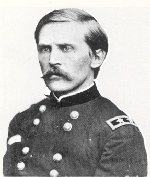
Reports of Capt. Horace Jewett, Fifteenth U. S. Infantry, commanding First Battalion.
Hdqrs. First Battalion, Fifteenth Infantry,
Atlanta, Ga., September -, 1864.
Captain: I have the honor to report that a detachment of the Fifteenth Infantry, consisting of six companies of the
First Battalion and two companies of the Third Battalion, under the command of Maj. Albert Tracy, broke up their winter
encampment at Graysville, Ga., the 3d day of May, and marched to Ringgold, a distance of six miles. On the 7th it marched
to Tunnel Hill, where it bivouacked. The 9th it took up position in front of Buzzard Roost, where it was subjected to a severe
shelling by the enemy, having 1 private killed and 1 corporal and 1 private wounded.
May 12, it marched to Snake Creek Gap, distance thirteen miles. On the 13th, 14th, and 15th was skirmishing with the
enemy, losing in the various skirmishes 1 private killed and 4 wounded. On the 16th marched through Resaca and bivouacked.
17th, marched in pursuit of the enemy through Calhoun, encamping near Adairsville. 18th, marched a distance of four and a
half miles on the road to Kingston, from whence, on the 19th, it marched to the Etowah River. Forded the river on the 24th,
and marched six miles on the road to Huntsville. On the 26th it marched into position near Dallas, Ga.
May 27, marched three miles in the direction of New Hope Church, took up position, and was shelled by the enemy. From
this time to the 5th of June we were constantly skirmishing with the enemy, losing during the time 1 corporal and 6 privates
killed, and 1 corporal and 10 privates wounded. The enemy having left their position on the 6th, the battalion marched
toward Acworth, and encamped.
June 10, marched two miles and intrenched, remaiining in this position the 11th, 12th, and 13th. From this time to July 3 we
were constantly engaged in skirmishing and making approaches to the enemy�s position on Kenesaw Mountain, losing in the
various skirmishes 1 corporal and 2 privates killed, and 1 corporal and 5 privates wounded. July 3 marched a distance of five
miles, through Marietta, Ga., driving their shirmishers from a position at an old house on a hill near Neal Dow Station, our loss
being 1 corporal and 1 private killed, and 1 corporal, 1 musician and 5 privates wounded.
July 4, in reserve, and subjected to a severe shelling, losing 3 privates killed and 3 wounded.
July 5, marched three miles toward the Chattahoochee River and went into camp. On the 17th crossed the river and
bivouacked. 20th, marched eight miles and took a position in front of Atlanta.
July 22, marched six miles and took up another position, in which it remained during the month, losing 1 private killed and 4
wounded.
August 1, the battalion marched four miles to the right. 2d, marched two miles and took up position. 3d, fortified, and in the
morning moved back two miles to the left, and took our position in the front line. 4th, 5th, and 6th, remained in camp.
August 7, charged the enemy�s works, capturing a few prisoners and advancing our lines one-quarter of a mile. Our loss in
the engagement was 1 sergeant, 2 corporals, and 9 privates killed; 1 officer, 6 sergeants, 2 corporals, and 50 privates
wounded. Here we fortified and remained in camp until the 26th, when we broke up camp, marching six miles to the right.
28th, marched to the Atlanta and West Point Railroad, a part of which we destroyed on the next day. 30th, marched four
miles. 31st, marched three miles to. the right, returning at night to the camp we left in the morning. September 1, marched
two and a half miles and took pert. in the battle of Jonesborough, of which I send you a report, appended. 2d, marched to
Jonesborough, encamping in the outskirts of the town. 6th, marched two miles on the Atlanta road and bivouacked. 7th,
marched to Rough and Ready. 8th, marched. to our present position near Atlanta.
This command left Graysville with 9 commissioned officers and 380 enlisted men. Company C, Third Battalion, joined from Fort
Adams, R. I., with one officer and eighty-nine enlisted men. At Tunnel Hill a leave of absence was granted to Maj. Albert
Tracy, and the command devolved upon Capt. A. B. Dod, who retained command until August 1. At this date, Captain Dod
receiving a leave of absence to await the acceptation of his resignation, Capt. James Curtis relieved him. When we were
drawn up in line behind our breast-works, before making the charge of August 7, I was notified that Captain Curtis had been
wounded, and being the ranking officer present assumed command.
From the commencement to the ending of this campaign, which had resulted in the capture of Atlanta, it has been one
continual series of skirmishes and approaches to the enemy�s position, alternately marching, fighting, and fortifying. At least
two-thirds of the time we have been subjected to the fire of their artillery and musketry, and our proportion in killed to
wounded has been much above the average. Our loss in the various skirmishes and battles is 39 enlisted men killed, 2
officers, 101 enlisted men wounded, and 2 privates missing (supposed to have been captured). The greatest loss and most
severe fire sustained at any one time was on the 7th of August. In that charge we were subjected to a direct oblique and
enfilading fire of both artillery and musketry from the time we left our works till we took possession of their rifle-pits. The
conduct of the officers and men of this battalion during this campaign was entirely satisfactory to myself and highly
creditable to them.
I am, sir, very respectfully, your obedient servant,
Horace Jewett,
Captain, Fifteenth Infantry, Comdg. First Battalion.
Capt. W. J. Fetterman,
Actg. Asst. Adjt. Gen., 2d Brig., 1st Div., 14th Army Corps.
CAMP FIRST BATTALION, FIFTEENTH INFANTRY,
September 3, 1864.
SIR: I have the honor to report that on the 1st of September a detachment of the Fifteenth Infantry, consisting of
four companies of the First, namely, C, F, G, and H, consolidated, and Companies A, B, and C of the Third Battalion, under
my command, were in bivouac about five miles from Jonesborough. Between the hours of and 8 in the morning the brigade to
which I am attached was ordered to move in the direction of Jonesborough, following the Third Brigade of the division, the
detachment taking the right of the brigade. We had marched about two and a half miles on the road when we were ordered
into the woods to the left of the road, forming a line of battle facing about southeast, some regiment of the Third
Brigade�name unknown�being on my right, the Second Battalion, of the Fifteenth, on my left. After forming line we
moved by the right of companies through an open field to the crest of a hill, about 1,000 yards in our front, and here halted,
again forming line. We had been in this position about one hour when Prescott�s battery was moved forward to a hill 150
yards in our front, and I was ordered to move forward to the support of the battery, forming a line to the left and facing
nearly south, the extension of our lines being at an angle of ninety degrees, with the enemy�s works in our front. After
remaining in this position a short time the command was moved by the left flank about sixty yards, faced to the front, and
then ordered, together with the rest of the brigade, to advance upon the enemy�s works, which they had established on
the crest of a hill, about 600 yards in our front. Between us and them was an open field, descending the first 300 yards,
ascending the rest of the distance. Near the center of the field ran a brook, on the banks of which was an almost
impenetrable undergrowth of vines and bushes. We moved the first half of the distance at quick time, but the enemy�s fire
becoming rather severe, after passing the brook we double-quicked till we got up to their works. Not having support, we
were obliged to retire, reforming about 150 yards from their works. The second time we charged their line. Again we were
driven back from their works. Our line was reformed about 200 yards to the rear, and, fresh troops coming up to the attack,
we remained there the rest of the night. I went into the battle with 3 officers, 23 non-commissioned officers, and 113
privates. Out of this number I had 4 privates killed; 1 officer, 6 non-commissioned officers, and 4 privates wounded, and 2
privates missing.
To Lieutenants Honey, Harrison, and Williams I am indebted for valuable assistance rendered during the engagement, always
in front, leading and encouraging the men by their example. The non-commissioned officers displayed zeal in assisting to
carry out orders. Sergeants Lovejoy and Carson, in command of Companies A and B, Third Battalion, deserve a great deal of
credit for the manner in which they discharged their duties, the former being wounded within ten yards of the enemy�s works.
The men behaved with their usual gallantry, all seeming to be stimulated with the idea that upon his individual efforts
depended our final success.
Horace Jewett.
Capt. W. J. Fetterman,
Acting Assistant Adjutant-General.
Recapitulation of casualties during the campaign in Georgia ending September 2, 1864.
15th Infantry
1st Battalion...30 Enlisted men killed...2 Officers and 101 Enlisted men wounded...2 Enlisted men missing...144 Aggregate
2d Battalion...1 Officer and 14 Enlisted men killed...1 Officers and 93 Enlisted men wounded...8 Enlisted men missing...117 Aggregate
16th Infantry...16 Enlisted men killed...2 Officers and 92 Enlisted men wounded...10 Enlisted men missing...120 Aggregate
18th Infantry
1st Battalion...17 Enlisted men killed...4 Officers and 82 Enlisted men wounded...5 Enlisted men missing...108 Aggregate
2d Battalion...21 Enlisted men killed...6 Officers and 94 Enlisted men wounded...12 Enlisted men missing...123 Aggregate
19th Infantry, 1st Battalion...14 Enlisted men killed...1 Officers and 55 Enlisted men wounded...6 Enlisted men missing...76 Aggregate