Oceanography Chapter 1
Salinity is
the amount of salt dissolved in a liquid.
The salinity in most ocean
water is 35 salt per gram; in places such as the Dead Sea, where a
great deal of evaporation takes place, the salinity is higher, around
40 salt per gram.
Most icebergs are made up
of fresh water. Large icebergs float in ocean water because they are
less dense; ocean water is more dense than fresh water.
SCUBA divers do not venture
to depths lower than 300 feet because the pressure is too great.
Divers don't return quickly
to the surface after venturing to the depths of the ocean because nitrogen
bubbles can form in their blood and tissues, causing a condition known as
the bends.
Ocean life is classified
into 3 groups:
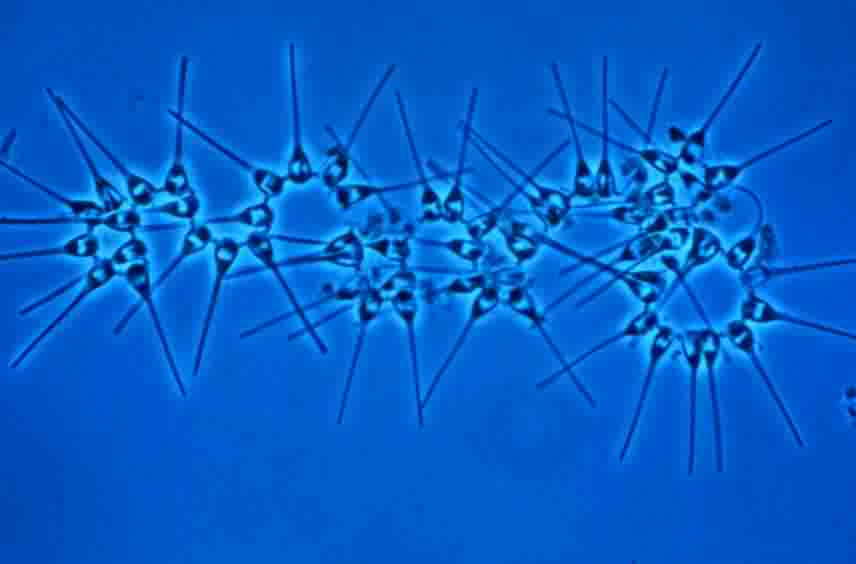


These groups are based on
the depth at which they live.
Phytoplankton produce 80
percent of the oxygen on our planet through a process called photosynthesis.
About 98 percent of ocean
life lives on the ocean floor.
All ocean food chains start
with phytoplankton.
 |
Ocean Properties |
|
 |
|
Light |
Temperature |
Density |
| Surface of the Ocean |
High |
High |
Low |
| Depths of the Ocean |
Low |
Low |
High |
|

